Category Archives: CRYPO SCEMES

BITCOIN BOMBS…HOW SAFE AND SECURE IS IT…IT HAS NO VALUE ANYWAY, ALL BASED ON GULLIBILITY OF “INVESTING PUBLIC”

OOPS: Crypto Company Accidentally Sent $40B in Bitcoin to Users PLEASE SEND ME SOME TOO!
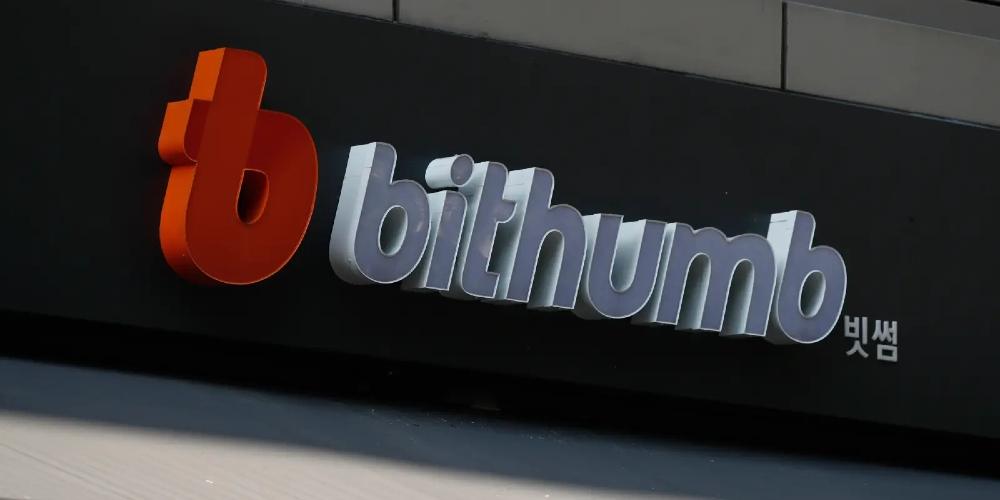
South Korean exchange Bithumb just delivered a masterclass in operational disaster. On Friday, what started as a routine promotional giveaway spiraled into one of the industry’s most embarrassing mishaps: the accidental crediting of over 620,000 Bitcoins—valued at more than $40 billion—to hundreds of users. This wasn’t a generous windfall but a ledger error that triggered a flash crash on the platform, exposing the fragility of centralized exchanges and igniting debates about their true reserves.

The incident unfolded during a promotional event intended to reward users with small cash prizes of around 2,000 Korean won, roughly $1.50. Instead, due to what Bithumb described as a staff input error—mistakenly entering “BTC” instead of “KRW”—select users saw their accounts balloon with phantom balances of up to 2,000 Bitcoins each.

Reports vary on the exact number of affected users, with some sources citing 695 and others 249, but the total credited amount consistently lands at 620,000 BTC, representing nearly 3% of Bitcoin’s entire supply. These weren’t actual transfers of real coins; they were “ghost balances” created in the exchange’s internal system, allowing users to attempt trades as if the funds were legitimate.

Chaos ensued almost immediately. Recipients, spotting the massive windfalls, rushed to sell, flooding the order books and driving Bitcoin’s price on Bithumb down by as much as 17% to about 81 million won, equivalent to $55,000—well below the global market rate of around $68,000 to $70,000. The exchange acted swiftly, halting trading and withdrawals for the affected accounts within 35 minutes, and claimed to have stabilized the situation in just five minutes after the price volatility began. Bithumb emphasized that no external hack or security breach was involved, pinning the blame squarely on internal human error.

Today, Bithumb issued a public apology: “We sincerely apologise for the inconvenience caused to our customers due to the confusion that occurred during the distribution process of this (promotional) event.”

The company reported recovering 99.7% of the erroneously credited Bitcoins, pledging to cover the remaining 0.3%—likely from small sales that slipped through before the freeze—using its own assets. This quick response mitigated immediate financial losses, but the damage to user trust and market stability was already done.

Social media erupted with a mix of amusement and alarm. One X user quipped about the “dream drop” turned nightmare, noting how a staff member’s typo turned $1.50 prizes into $133 million illusions. Others highlighted the operational risks, with posts warning that such errors underscore the perils of relying on centralized platforms. The incident even prompted discussions about market liquidity and the potential for similar glitches to cause broader disruptions.

Digging deeper, this blunder raises uncomfortable questions about Bithumb’s reserves. As of the third quarter of 2024, the exchange held only 42,619 BTC—far less than the 620,000 it “allocated” in error. How could a system allow for such massive over-crediting without safeguards? Critics in the crypto community are now debating whether this exposes fractional reserve practices, where exchanges might not hold full backing for user balances, echoing concerns from past scandals like FTX. South Korean regulators have launched an investigation, which could lead to stricter oversight on exchange operations.

This comes at a precarious time for Bitcoin, which has been reeling from a recent dip that erased much of the gains following President Donald Trump’s election victory in November 2024. Trump’s pro-crypto stance had initially buoyed the market, but ongoing volatility reminds investors of the asset’s inherent risks. Bithumb’s mishap amplifies those dangers, showing how even established players can falter spectacularly.

While Bithumb insists it was a simple mistake, some observers speculate it could reveal systemic flaws. There’s no concrete evidence of foul play, but history teaches us that dismissed “conspiracies” in finance—like hidden leverage or insider manipulations—sometimes prove true. For now, the facts point to incompetence rather than malice, but the episode demands accountability.

Users affected by the freeze and volatility deserve more than apologies; they need assurances that such errors won’t recur. Bithumb’s promise to self-fund losses is a start, but rebuilding confidence will require transparency about internal controls and reserves.

In the end, this $40 billion fiasco serves as a stark reminder: In crypto, where decentralization is the ideal, centralized exchanges remain a weak link. Investors should weigh the convenience against the risks, and regulators must step up to prevent the next blunder from becoming a catastrophe.

CRYPTO CURRENCIES HAVE NO VALUE, AND FINALLY DUMMY INVESTORS ARE FINDING OUT THE HARD WAY

Bitcoin drops below $67,000 as sell-off intensifies and pessimism grows about crypto’s function

WE WERE INTRIGUED HOW MANY “INVESTORS” thought that buying and paying for AIR was a great deal!
  • It’s the first time bitcoin has fallen below $67,000 since November 2024.
  • Some analysts said $70,000 was the key level to watch and a convincing break below there could lead the token to suffer even greater losses.
  • The latest downturn comes as investor confidence in bitcoin’s utility as a store of value, inflation hedge and digital currency falters.
  • “If we fail to hold it, a move toward” the $60,000 to $65,000 range “becomes quite likely,” said James Butterfill, head of research at Coinshares.
CHONGQING, CHINA  NOVEMBER 21: In this photo illustration, two gold-colored Bitcoin tokens are placed on a screen displaying a declining cryptocurrency price chart on November 21, 2025, in Chongqing, China. Bitcoin has recently dropped below the mid-US$80,000 level, extending a multi-day sell-off driven by rising interest-rate expectations, weakening market structure, and renewed movement of long-dormant supply. (Photo illustration by Cheng Xin/Getty Images)
Cheng Xin | Getty Images

Bitcoin sank below $67,000 on Thursday as investor confidence continued to falter in the asset once hailed as “digital gold” and a unique store of value. —

Digital assets, including bitcoin, have fallen deeper into the red as investors re-assess the practical utility of a token that has been championed not only as a hedge against inflation and macroeconomic uncertainties but also as an alternative to fiat currencies and traditional safe-havens such as gold.

That hasn’t panned out lately, since bitcoin peaked just north of $126,000 in early October.

On Thursday, bitcoin was last down to $67,675, its lowest since since November 2024. The cryptocurrency broke below $70,000 earlier in the session Thursday and then the selling increased. The cryptocurrency is down 20% this week alone.

This steady selling in our view signals that traditional investors are losing interest, and overall pessimism about crypto is growing,” Deutsche Bank analyst Marion Laboure said Wednesday in a note to clients.

Growing investor caution comes as many of the sensationalized claims about bitcoin have failed to materialize. The token has largely traded in the same direction as other risk-on assets, such as stocks, particularly during recent geopolitical and macroeconomic flare ups in Venezuela, the Middle East and Europe, and its adoption as a form of payment for goods and services has been minimal.

Bitcoin underperforming gold

Bitcoin is down nearly 30% over the past year, while gold has surged 68% in the same period..WHY IS IT NOW DOWN TO ZERO!!!?????

Other cryptocurrencies are cratering too. Ether has pulled back 23% this week, on track for its worst week since November 2022, when it slumped 24%. Solana hit $88.42 on Thursday, about a two-year low and off 24% on the week.

Some traders have suggested $70,000 is a key level to watch and a break below that could trigger further declines for bitcoin.

James Butterfill, head of research at Coinshares, said $70,000 is shaping up as a “key psychological level,” adding that “if we fail to hold it, a move toward” the $60,000 to $65,000 range “becomes quite likely.”

The price of bitcoin over the last year.

The latest move in bitcoin comes amid a worsening sell-off in U.S. tech stocks. The State Street Technology Select Sector SPDR ETF dropped 2.8% Wednesday, one day after losing 2.2%.

Meanwhile, precious metals continue to be volatile too, with silver plunging again on Thursday and gold under pressure.

Forced liquidations — when traders’ positions are automatically sold as bitcoin hits a set price — continue to weigh on markets. As of Thursday, more than $2 billion in long and short positions in cryptocurrencies have been liquidated this week, according to data from Coinglass.

Bitcoin has been on a steady decline for more than three months, and is now more than 45% below its October high. Other cryptocurrencies, including ether and XRP, have fallen even more.

”[The] straight line bull run that a lot of people expected hasn’t really materialized yet. Bitcoin isn’t trading on hype anymore, the story has lost a bit of that plot, it is trading on pure liquidity and capital flows,” Maja Vujinovic, CEO of digital assets at FG Nexus, told CNBC’s “Worldwide Exchange.”

Downside crypto volatility will persist as liquidations, falling equities hit sector: Citi's Saunders

VIDEO03:22
Downside crypto volatility will persist as liquidations, falling equities hit sector: Citi’s Saunders

Institutional demand reverses

While many in the crypto market have previously credited large institutional investors with supporting the price of bitcoin, now it is those same participants who appear to be selling.

“Institutional demand has reversed materially,” CryptoQuant said in a report on Wednesday.

U.S. exchange-traded funds, which purchased 46,000 bitcoin this time last year, are net sellers in 2026, CryptoQuant said.

The report notes other worrying signs. “Bitcoin has broken below its 365-day moving average for the first time since March 2022 and has declined 23% in the 83 days since the breakdown — worse than the early 2022 bear phase,” CryptoQuant analysts said.

A moving average tracks the price of an asset over a set number of periods, smoothing out short-term price fluctuations to identify trends.

The latest leg lower in bitcoin suggests “potential downside toward the $70K–$60K range,” CryptoQuant said.

CRYPTO SCHEMES CONTINUE TO STEAL BILLIONS!

More Nations Unite to Sanction Prince Group, a Huge Crypto Scam Organization Making Billions

Imagine scrolling through your social media feed, only to click on what seems like a golden opportunity—a friendly chat that blooms into a crypto investment tip promising quick riches. Before you know it, you’ve wired thousands to an offshore account, and poof, it’s gone. That’s the grim reality for countless Americans ensnared by “pig butchering” scams, those insidious operations where fraudsters groom victims online before bleeding them dry. Now, South Korea’s bold entry into the fray against these networks is a shot in the arm for U.S. efforts to reclaim our economic security from foreign predators.

On Thursday, Seoul dropped its first-ever independent sanctions aimed at transnational crime, targeting a whopping 15 individuals and 132 entities. This isn’t just paperwork—it’s the “largest single sanction measure in history,” as South Korea’s Ministry of Foreign Affairs put it in an official release. “It shows the government’s firm determination to actively respond to online organized crime in Southeast Asia that is causing serious damage at home and abroad.”

For everyday Americans, whose retirement savings and hard-earned cash fuel these scams to the tune of billions lost annually, this means fewer safe havens for the crooks.

At the heart of the crackdown sits the Prince Group, a Cambodia-based conglomerate led by Chen Zhi, a 38-year-old Chinese national also known as “Vincent.” U.S. authorities have painted a stark picture: Prince allegedly ran sprawling “scam centers” in Cambodia and Myanmar, stuffing them with trafficked workers—lured by bogus job ads—forced to man 1,250 mobile phones controlling 76,000 fake social media accounts.

These setups didn’t just target South Koreans; they preyed on folks worldwide, including a surge of American victims in recent years. The U.S. Treasury slapped Prince with a “Transnational Criminal Organization” label back in October, right alongside the UK, which detailed how these outfits peddle love scams and crypto cons under the shadow of torture threats.

Zhi himself faces federal charges in New York for wire fraud and money laundering conspiracies, with the Department of Justice seizing about $15 billion in bitcoin from his wallets on October 14. That’s real money—enough to fund entire communities back home—stolen from trusting Americans chasing the dream of financial independence.

And it’s not isolated: The same sanctions netted Huione Group, another Cambodian player the Treasury fingered in May as a key laundry for North Korean cyber heists and Southeast Asian fraud rings.

“Huione Group serves as a critical node for laundering proceeds of cyber heists carried out by the Democratic People’s Republic of Korea (DPRK), and for Transnational Criminal Organizations in Southeast Asia perpetrating virtual currency investment scams,” the department warned.

Prince, for its part, fired back through high-powered U.S. lawyers at Boies Schiller Flexner. “The recent allegations are baseless and appear aimed at justifying the unlawful seizure of assets worth billions of dollars,” the group claimed in a November 11 statement.

They’re lawyered up and denying it all—but the mounting evidence from Phnom Penh to Washington tells a different story. Singapore piled on last month, freezing over 150 million Singapore dollars in assets tied to the network, from bank accounts to cold hard cash.

This international pile-on didn’t happen in a vacuum. It kicked into high gear after a gut-wrenching incident in August: a South Korean university student tortured to death in a Cambodian scam compound. That tragedy spurred Seoul and Phnom Penh to launch a joint task force in October, a practical step toward dismantling these human-trafficking-fueled fraud factories. For the U.S., it’s a reminder of why we lead on sanctions—our Treasury’s moves often light the fuse for allies to follow, starving these operations of the global financial lifelines they need to thrive.

What does this mean for American families and businesses? Less tolerance for the kind of economic sabotage that erodes trust in our markets and drains wealth from Main Street. These scams aren’t victimless—they hit retirees in Florida, young investors in Texas, and small savers everywhere, turning the promise of American opportunity into a nightmare. By joining forces with Seoul, London, and beyond, we’re not just punishing the guilty; we’re fortifying our borders against digital thieves. It’s a win for free enterprise, where honest work and smart risks should pay off, not line the pockets of overseas kingpins.

As probes deepen, keep an eye on your inboxes and feeds—verify before you invest, and report the suspicious. In the end, cracking down on these empires isn’t charity; it’s essential to keeping America’s economic engine humming strong.