
Is GM Bringing Back the Two Stroke?
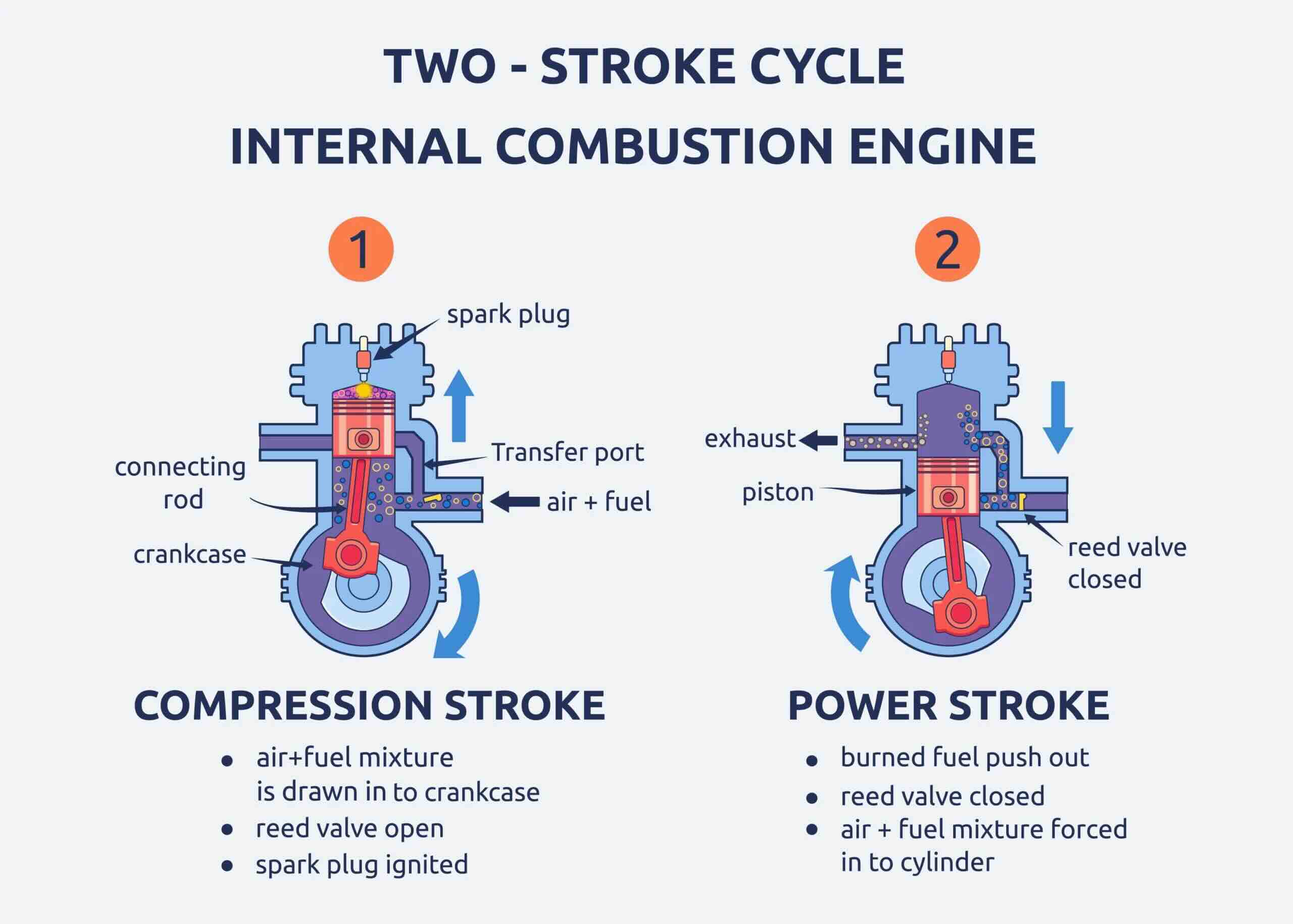

There are rumors afoot that GM is developing a two stroke engine, which is a type of engine not seen in cars (outside of the old Soviet Union) since before JFK was elected president.
Two strokes have many virtues, including simplicity – because they have no valvetrain – and low cost (because they have fewer moving parts) and high output for their displacement, relative to a four stroke engine of the same displacement, because two stroke engines make power every time a piston ascends to top dead center within the cylinder. A four stroke engine has four strokes – intake, compression, combustion, exhaust – but only one of those strokes (combustion) results in power.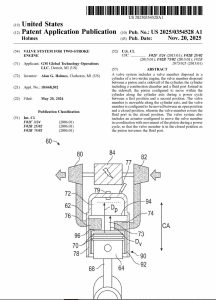
Two strokes also have some strikes against them. The main one being they are very difficult to make compliant – with emissions standards – because for one thing they burn oil on purpose (it is mixed with the gas, to provide engine lubrication) and for another because the nature of the design allows for contamination of the intake charge with exhaust gasses. which is a function of using ports that are covered and uncovered by the pistons as they go up and down in the cylinders. Four strokes also have ports but they are opened and closed by intake and exhaust valves that seal when closed.
There is also the related problem of piston ring wear caused by the piston going up and down in cylinders that have holes (those ports) in their sides. In a four stroke engine, the piston is surrounded completely by the cylinder wall, which compresses the piston and oil control rings evenly. In a two stroke engine, the open port on the side of the cylinder creates a spot where the rings are not compressed evenly, leading to faster wear and more blow-by (higher emissions). And that is why the only vehicles with two stroke engines that can still be legally sold are for use off-road only.
These being off-road dirt bikes.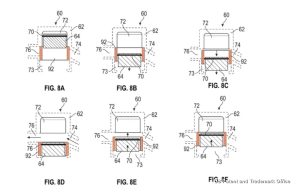
But a two stroke may be coming back on-road. The may be part is suggested by a new GM patent for a new-design two stroke engine that appears to have a sleeve-valve or linear system that creates a hole-less cylinder wall when the piston passes by the port, thereby improving sealing and reducing premature piston ring wear – which will (or ought to) help reduce emissions and make the engine compliant.
Maybe.
But don’t expect to see this engine powering a GM vehicle anytime soon – though it may be buried somewhere deep inside inside a future GM EV as a power source. More finely, as a generator, to produce the electricity you’d otherwise have to plug in (and wait) to get. This would eliminate not just the Range Anxiety you have heard people talk about but the arguably more serious problem – Wait Annoyance – that is much less-talked-about. Few people would give a flip about range if it were easy to get more. Have you ever heard of someone complaining about the range of a Hellcat Charger? It has a range of maybe 200 miles, if you are easy on the accelerator pedal. If you aren’t, you might burn up the contents of its tank in 150 miles or even less.
But it’s not a problem because it’s not a hassle to refill the tank. A five minute stop and you’re ready to go. With an EV, the wait is best-case at least 15-20 minutes for a partial charge and that’s just too much hassle for most people.
Hence the idea of what’s being marketed as a range extender by some purveyors of EVs. The range extender being a gas-burning engine. You never run low on charge because the engine is there to generate more as you drive – so long as you have some gas in the tank. That is the role GM’s new two-stroke is likely to play, if it ever sees the light of day – which it just might because there are certain advantages, as detailed earlier. A two-stroke range extender would be cheaper and so help reduce the cost of the EV. It also takes up less space and it’s simpler, all of that is good given it would likely be buried somewhere deep inside the EV’s guts and for that reason not easy to service.
Best to make it so that it needs service less often.
This isn’t a new concept, by the way. GM was first to market a range-extender equipped EV. It was called the Volt (old review of one is here). It could be driven about 50 miles on battery power but when that was exhausted you did not have to stop for a charge because it could charge itself. Some people, at the time, confused the Volt with a hybrid – which it technically was. But it was very different from other hybrids because unlike them, the Volt was primarily an electric car that happened to have a gas engine on board. In conventional hybrids, the gas engine provides both charge and propulsion; i.e., it powers electrically powered accessories and the wheels that move the car. In the Volt, the gas engine was there chiefly to generate the electricity that powered the electric motors that turned the wheels.
It was a fine idea with bad timing. The Volt came out in 2011, when there wasn’t much market for such a vehicle and no mandated “market” for EVs. That came too late to save the Volt, which got cancelled after 2019 – just as the “market” for EVs began to pick up. To borrow a line from On the Waterfront, it coulda been a contender.
The Volt wasn’t obnoxiously expensive – as the EVs that came later were (and are) and it was practical. More so, arguably, than an engine-only car because it could run for 50 miles entirely on battery power. This gave it dual fuel capability – as well as very long legs. Some owners had to get into the habit of using fuel stabilizer because it took months to burn through a tank.
It’s ironic to reflect that the one EV that maybe made some sense got cancelled at just the moment when everything else began to make no sense at all.
. . .