
Judge Ho Takes A Sledgehammer To Judicial Supremacy And Its ‘Elite’ Enablers
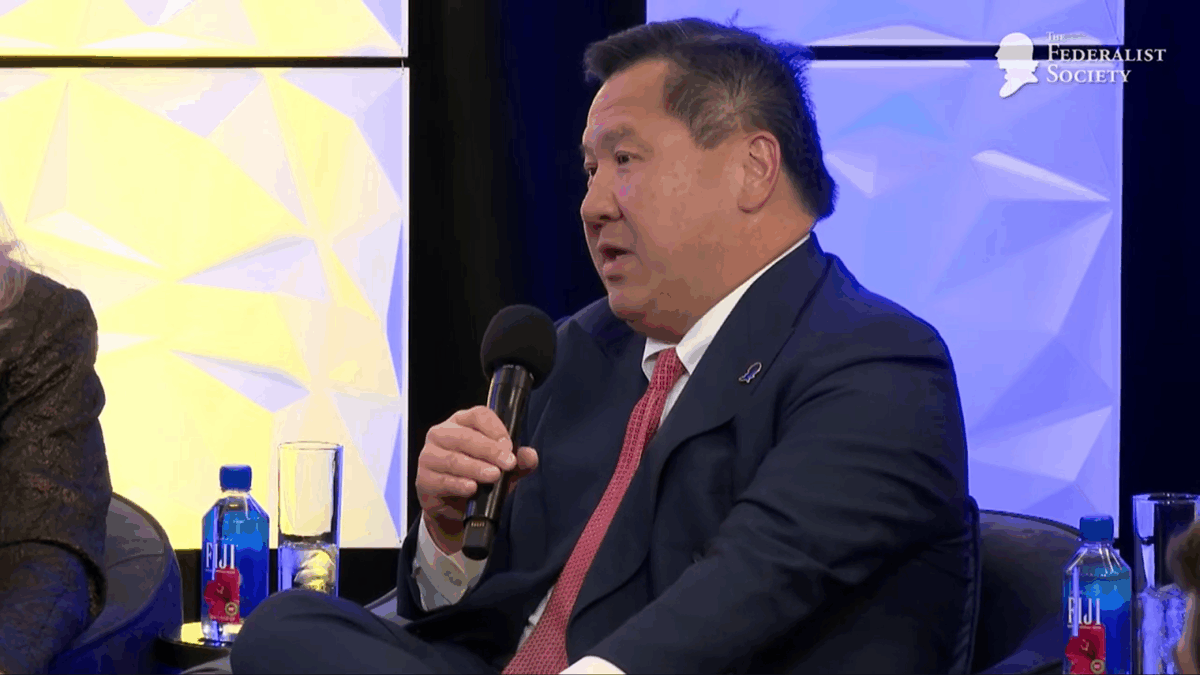
‘If the American people can’t expect the judiciary to stay in its lane, then federal judges shouldn’t expect the American people to follow them.’
Receiving little attention outside legal circles, Ho authored an article for the Harvard Journal of Law & Public Policy last week criticizing what he views to be an increasing “arrogance” among many federal judges — an arrogance he argues is downstream from judicial supremacy. As The Federalist previously described, judicial supremacy is the belief that the executive and legislative branches are subordinate to the Supreme Court and the judicial branch, meaning judges — rather than the people’s elected representatives — are the ultimate authority on law and policy.
Ho started his article by highlighting how many of the federal judges now supposedly concerned about “judicial independence” after President Trump’s return to office were silent as left-wing “cultural elites bombarded certain Justices and judges with absurd ethical complaints.” Their silence persisted, Ho added, even “[a]s the [Biden] Justice Department refused to prosecute individuals for harassing certain Justices at their own homes” after the leak of SCOTUS’s 2022 Dobbs draft decision, and “[a]s elite law schools allowed students to disrupt events to protest certain judicial decisions.”
“It wasn’t until this year — following the inauguration of a new President — that the Federal Judges Association suddenly found its voice, and suddenly discovered a crisis over judicial independence,” Ho wrote. “After years of silence, it’s obvious that these concerns are not sincere, but strategic. What they’re really championing is not judicial independence, but judicial supremacy. What we’re really seeing in the judiciary is not principle, but arrogance.”
Ho contended that much of this arrogance — which he argued entails an elitist mindset among “[t]oo many judges” — stems from judicial supremacy and a backward system that teaches rising legal minds “to venerate (if not worship) judges.” He then dispelled the notion of America having three “co-equal” branches of government, noting that while the judiciary “has an important role in our constitutional republic,” “it’s a limited one.”
“Judges don’t write the law. Judges don’t execute the law. And that’s for one simple reason. As Americans, we believe that we can govern ourselves,” Ho wrote. “Our Constitution begins ‘We the people’ — not we the few with life tenure. Our Founders didn’t fight a Revolutionary War to replace one king in royal garb with hundreds of kings in judicial robes. Judges are supposed to apply the law to whatever disputes are brought before us — and leave everything else to the other branches of government.”
Citing The Federalist Papers, the Trump appointee further underscored that the framers viewed the judiciary as the “least powerful branch,” as it lacks the “sword” and “purse” possessed by the other two branches. Only by issuing rulings “based on what the law is — and not on our personal views on what the law should be,” he reasoned, can the judiciary “earn the respect of the other branches.”
Ho subsequently directed his focus toward the hypocritical views of “cultural elites” suddenly concerned about “judicial independence” under Trump. He specifically criticized them for “prais[ing] and protect[ing] judges who do their bidding — and condemn[ing] and cancel[ing] those who don’t.”
“The double standards are everywhere. And they aren’t inadvertent. They’re intentional. Because the elites don’t want neutrality. They want conformity,” Ho wrote. “If you don’t conform, they’ll call you corrupt, unethical, racist, sexist. They’ll say and do whatever it takes to get you to bend the knee. And even if you still won’t conform, they’ll attack you anyway, because they know that others will get the message and comply. The double standards don’t trouble the elites, because to them, this isn’t a debate — it’s a war.”
Ho further chastised (left-wing) members of the ruling class for “fundamentally misunderstand[ing]” how the judicial system is supposed to operate and noted how many Americans support real judicial independence because they believe judges should be “impartial” — not “imperial.” He surmised that judges abusing their authority and abandoning impartiality will result in a loss of trust among the people, which he said would be “fatal to the rule of law” and “entirely our fault.”
Ho’s commentary also touched on originalism, which involves interpreting the Constitution as originally written at the time it was adopted. He highlighted three key areas he views as “threats” toward the philosophy, namely the “insubordination in the district courts”; “fair-weather originalism,” which is when “you’re an originalist only when elites won’t be upset with you” and “when it’s easy”; and the temptation among judges to “avoid the kinds of issues that most energize and anger cultural elites — cases about abortion, transgender ideology, religious liberty, and illegal immigration.”
While Ho concluded his article by voicing optimism about the future of the judiciary and judges faithfully interpreting the Constitution in the year ahead. Citing his more than a decade-long experience in the judicial selection process, he also suggested several “principles” to look for in potential future judges and reaffirmed the proper role of the judiciary in American life.
“My hope is that judicial supremacy will ultimately prove to be self-defeating — that the harder its proponents push, the more likely they’ll fail,” Ho wrote. “If the American people can’t expect the judiciary to stay in its lane, then federal judges shouldn’t expect the American people to follow them.”