Welcome to Sterling Cooper, Inc.
  • CALL US: +1-866-285-6572
  • CALL US: +1-866-285-6572
LOGO
  • INCREASE YOUR REVENUES
    50%-100% - FREE EVALUATION
  • WEF 2025 GLOBAL
    RISKS REPORT
  • CAPITAL GAINS
    TAX DEFERRED
  • INCORPORATE
    NOW FOR $39
  • RESEARCH
    REPORTS
  • ENGULF &
    DEVOUR
  • Home
  • Services
    • Selling a Business
    • Buying a Business
    • Public Relation
    • Cooper consulting
    • Advertising
    • Publishing
    • Web and IT Services
    • Loans
  • Seller
  • buyer
  • Advertising
  • Publishing
  • M&A Due Diligence
  • Blog
  • Contact
LOGO

WE HAVE WAY TOO MANY GENERALS-NO WONDER WE HAVE THE LARGEST MILITARY BUDGET IN THE WORLD-

List of active duty United States Army major generals

The list of active duty United States Army major generals comprises all officers currently serving in the rank of major general (O-8), the second-highest peacetime general officer grade in the Regular Army, who are assigned to commands, staff positions, or other duties within the United States Army as of November 2025.[1][2] Major generals, denoted by two silver stars, typically lead Army divisions of approximately 10,000 to 15,000 soldiers, serve as deputy commanding generals of corps or field armies, or hold principal staff roles at the Department of the Army or joint commands. The number of such officers is statutorily limited to a maximum of 90 in the Regular Army, excluding certain temporary assignments or positions designated for joint duty.[1] This list is maintained through official announcements and biographical updates issued by the U.S. Army’s General Officer Management Office (GOMO), which oversees the assignment, promotion, and retirement of general officers to ensure alignment with national defense priorities.[3] It excludes officers in the Army National Guard, Army Reserve, or those on the retired list, focusing solely on full-time active duty personnel whose roles contribute to operational readiness and strategic leadership across global theaters.[3]

Joint Assignments

Department of Defense

The Department of Defense (DoD) encompasses a range of high-level leadership positions that integrate military expertise from the U.S. Army into defense-wide functions, particularly in policy, intelligence, and acquisition. These roles, often within the Office of the Secretary of Defense (OSD) or combat support agencies, allow major generals to contribute to strategic decision-making, threat assessment, and interservice coordination outside traditional Army commands. Army major generals in these billets typically serve as deputies or directors, providing operational insights to civilian leadership and ensuring alignment with national security objectives.[4] A prominent example is in DoD intelligence, where Army major generals hold key positions within the Defense Intelligence Agency (DIA), a combat support agency under the Under Secretary of Defense for Intelligence and Security. The DIA director role, responsible for delivering all-source intelligence to warfighters, policymakers, and support personnel, has occasionally been filled on an acting basis by Army officers at the major general level during transitions. Major General Constantin E. Nicolet, U.S. Army, assumed duties as Acting Director of the DIA on August 22, 2025, leading a global workforce of approximately 16,500 personnel focused on military intelligence production, analysis, and counterintelligence support to DoD operations.[4][5] Nicolet, with a date of rank to major general of July 31, 2024, previously served as director of intelligence (J-2) for U.S. Central Command, bringing expertise in regional threat analysis and joint intelligence operations to the role.[6] In acquisition and logistics, Army major generals contribute to DoD-wide efforts through organizations like the Joint Improvised-Threat Defeat Organization (JIDO), now integrated under the Defense Threat Reduction Agency (DTRA), which addresses improvised threats such as IEDs and drones. These positions emphasize rapid technology development and field deployment to counter asymmetric risks, with responsibilities including coordination across DoD components and interagency partners. As of early 2025, transitions in these billets reflected broader DoD restructuring under Secretary Pete Hegseth, including a 20% reduction in four-star positions that indirectly impacted mid-level general officer assignments.[7][8]

Name Title Key Responsibilities Appointment Date
Constantin E. Nicolet Acting Director, Defense Intelligence Agency Oversees global intelligence collection, analysis, and dissemination for DoD; advises Secretary of Defense on intelligence matters August 22, 2025

Such assignments highlight the Army‘s role in bolstering DoD’s strategic depth, with major generals often rotating into these positions following combatant command or Army staff experience to foster joint warfighting capabilities.[9]

Joint Staff and Combatant Commands

The Joint Staff, headquartered at the Pentagon, supports the Chairman of the Joint Chiefs of Staff in providing military advice to the President, the Secretary of Defense, the National Security Council, and the Homeland Security Council, while facilitating cooperation among the services. Army major generals typically serve in deputy or vice director roles within key directorates such as J-3 (Operations), J-5 (Strategy, Plans, and Policy), and J-7 (Joint Force Development), ensuring the Army’s operational expertise informs joint planning, resource allocation, and capability development. These assignments are part of a deliberate rotation policy mandated by the Goldwater-Nichols Department of Defense Reorganization Act of 1986, which requires officers to complete joint duty tours—generally 24 to 36 months—to qualify for promotion to flag officer ranks and foster interservice collaboration.[10] In the unified combatant commands (COCOMs), Army major generals occupy operational and staff billets that integrate Army capabilities into joint and multinational operations, with approximately 2-3 such positions per geographic COCOM to balance service representation and mission requirements. These roles include chiefs of staff, deputy directors for operations, and directors of specific directorates, emphasizing tactical execution and service-specific support within the command’s area of responsibility. Recent 2024-2025 transfers highlight the emphasis on rotational experience, such as promotions and reassignments following retirements to maintain continuity in high-priority theaters like Europe and the Middle East.[11] Notable current assignments as of November 2025 include:

Name Billet Command Effective Date
Major General Richard A. Harrison Chief of Staff U.S. Central Command August 2025
Major General John L. Rafferty Jr. Chief of Staff U.S. European Command July 2025

These billets underscore the Army’s commitment to joint warfighting, with rotations designed to build senior leaders’ understanding of theater-level operations and allied partnerships. For instance, in U.S. Central Command, the chief of staff coordinates staff activities across the command’s 21-nation area of responsibility, focusing on counterterrorism and stability operations. Similarly, in U.S. European Command, the role supports deterrence against strategic adversaries through integrated planning with NATO allies.[12]

National Guard Bureau and Other Joint Roles

The National Guard Bureau (NGB) coordinates National Guard activities between the states, territories, the District of Columbia, and the Department of Defense, with the Army National Guard (ARNG) component focusing on readiness, training, and mobilization for federal missions. Major generals from the ARNG typically fill key deputy and special assistant roles within the NGB, often on full-time federal active duty while retaining state affiliations for dual-hatted responsibilities in both federal joint functions and state emergency responses. These positions emphasize integration of reserve component forces into joint operations, including homeland defense and support to combatant commands. In 2025, the NGB underwent several leadership transitions due to retirements and reassignments, contributing to temporary staffing gaps in senior roles. For instance, the retirement of Major General Gregory T. Day (Oregon National Guard) in June 2025 vacated his position as Special Assistant to the Combatant Commander, U.S. Northern Command/U.S. North American Aerospace Defense Command for National Guard Matters and Liaison to the Joint Staff, J-3, a role that facilitated ARNG coordination with joint operations for homeland security. Similarly, the ARNG Deputy Director position experienced a change when Major General Robert B. Davis (Rhode Island National Guard) departed in October 2025 for the Adjutant General of Colorado, leaving the role in transition as of November 2025; Davis had mobilized to the federal position in July 2025 after serving as National Guard Assistant to the Director of the ARNG Staff. These shifts highlight the dynamic nature of ARNG major general assignments, where officers often balance federal joint duties with state-level command, such as activations for disaster response or border security missions under Title 32 authority. Other joint roles for ARNG major generals include specialized liaisons and staff positions in inter-agency environments, such as those supporting the Department of Homeland Security for civil support operations. While specific 2025 assignments in areas like liaison to Joint Special Operations Command were not publicly detailed, ARNG major generals continue to fill hybrid roles that enhance reserve integration into special operations and homeland defense planning.

Name State Affiliation Position Mobilization/Assignment Date
Robert B. Davis Rhode Island Deputy Director, Army National Guard (prior to October 2025 reassignment) July 2025[13][14]
Jerry F. Prochaska Wyoming Special Assistant to the Chief, National Guard Bureau August 2025[15]
Joseph A. DiNonno Virginia Special Assistant to the Director, Army National Guard, for 18th Airborne Corps Matters August 2025

Department of the Army Headquarters

Office of the Secretary and Chief of Staff

The Office of the Secretary and Chief of Staff includes critical executive support roles filled by major generals, who provide specialized oversight in legal, religious, and administrative domains to the Army’s senior civilian and military leaders. These positions have evolved since the Army’s 2020 modernization initiatives, emphasizing enhanced personnel readiness, talent management, and integration of multi-domain operations into administrative functions, as part of broader efforts to adapt to great power competition.[16] A key billet is the Judge Advocate General (JAG), responsible for delivering legal counsel to the Secretary of the Army and Chief of Staff on matters including operational law, administrative actions, and international agreements, while managing the Army Judge Advocate General’s Corps. As of November 2025, Major General Bobby L. Christine serves in this role, having assumed duties on July 1, 2025, following his prior assignment as commanding general of the U.S. Army Legal Services Agency; he was promoted to major general in 2024 prior to this appointment.[17][18] Recent occupants, such as Lieutenant General Stuart W. Risch in the preceding years, highlighted the JAG’s growing focus on cyber and space law amid Army modernization, with Acting Major General Robert A. Borcherding serving immediately prior to Christine.[19] Another essential position is the Chief of Chaplains, which advises Army leadership on religious programs, spiritual fitness, and ethical guidance to support soldier resilience and unit cohesion, particularly in high-stress operational environments. Chaplain (Major General) William J. Green Jr. has held this office since December 5, 2023, when he was promoted to major general and installed as the 26th Chief of Chaplains; his tenure has emphasized integrating chaplain support into personnel management strategies post-2020 reforms.[16][20] Prior examples include Chaplain (Major General) Thomas L. Solhjem, who served from 2019 to 2023 and advanced religious accommodation policies during the Army‘s talent management overhaul.[21] In legislative affairs, major generals contribute through deputy roles supporting the Chief of Legislative Liaison, coordinating Army interactions with Congress on budgeting, policy, and oversight; for instance, 2025 appointees have focused on advocating for modernization funding in personnel and readiness programs, though the primary chief remains a brigadier general.[22] These roles collectively ensure seamless executive support, with broader Army Staff functions providing functional expertise in areas like G-1 personnel operations.[20]

Army Staff Elements

The Army Staff Elements encompass the specialized directorates under the Deputy Chiefs of Staff (DCS) at Department of the Army Headquarters, where major generals serve in key leadership roles such as directors and assistant deputies, supporting policy development, force management, and operational planning across the U.S. Army. These positions typically number 1-2 major general slots per element, with recent rotations often drawing from combatant commands to bring field experience to headquarters functions. As of November 2025, these officers contribute to implementing the Army‘s 2030 strategy, emphasizing modernization in areas like cyber operations and sustainment, amid structural changes such as the planned disestablishment of the DCS G-9 in January 2026, with its responsibilities redistributing to G-1 and G-4.[23] Major generals in these elements oversee core duties including force development, strategic operations, logistics readiness, and resource allocation to ensure the Army’s readiness for multi-domain operations. For instance, in the DCS G-3/5/7 (Operations, Plans, and Training), officers manage training programs and operational planning that align with joint force requirements. Similarly, in G-4 (Logistics), they focus on sustainment and mobilization to support global deployments, while G-8 (Programs) leaders drive force structure decisions tied to budgetary and technological priorities.

Position Name Assignment Date Core Duties
Director of Strategic Operations, DCS G-3/5/7 Major General Jake S. Kwon August 2023 Oversees strategic operations planning, force integration, and synchronization of Army capabilities with joint partners to enhance operational readiness and multi-domain warfighting.[24]
Assistant Deputy Chief of Staff, G-4 (Logistics and Mobilization) Major General John M. Dreska November 2024 Advises on logistics policy, mobilization readiness, and sustainment strategies, including integration of cyber and supply chain resilience for Army 2030 objectives.[25]
Director of Force Development, DCS G-8 Major General Thomas O’Connor July 2024 Leads force structure analysis, capability development, and resource prioritization to modernize Army units, incorporating updates to cyber and sustainment directorates.[26]

These roles exemplify the Army Staff’s focus on translating strategic guidance into actionable programs, with recent updates emphasizing cyber defense enhancements under G-6 oversight and sustainment reforms absorbing former G-9 functions.[23]

Major Army Organizations

Army Commands

The U.S. Army Commands (ACOMs) are major organizations responsible for generating and sustaining ready forces, developing doctrine and capabilities, and managing materiel readiness across the Army. As of 2025, the primary ACOMs include the U.S. Army Forces Command (FORSCOM), the U.S. Army Materiel Command (AMC), and the newly established U.S. Army Transformation and Training Command (T2COM), which absorbed the functions of the former U.S. Army Training and Doctrine Command (TRADOC) and U.S. Army Futures Command (AFC).[27] These commands play critical roles in advancing multi-domain operations (MDO), integrating emerging technologies like artificial intelligence and hypersonics into Army doctrine, and preparing forces for large-scale combat operations.[28] A significant development in 2024-2025 was the expansion of futures-oriented capabilities within what became T2COM, driven by the Army Transformation Initiative to accelerate tech integration and doctrinal evolution amid great power competition.[29] This merger, activated on November 14, 2025, following TRADOC’s inactivation on September 26, 2025, consolidated training, doctrine development, and modernization efforts under a single four-star command led by General David M. Hodne, enabling streamlined billets for major generals focused on MDO experimentation and capability prototyping.[30] The restructuring affected major general assignments by creating new deputy and staff roles emphasizing joint all-domain command and control (JADC2) systems and next-generation training simulations, with several promotions in late 2024 and early 2025 filling these positions to support rapid prototyping of multi-domain task forces. Recent assignments include roles in futures and concepts directorates, where promoted officers lead cross-functional teams prototyping integrated air-ground operations.[31][32] This expansion has increased major general billets by approximately 10% in capability development areas, reflecting the command’s priority on tech-driven transformation.[33] In FORSCOM, headquartered at Fort Liberty, North Carolina, major generals oversee force generation and readiness for conventional and contingency operations. This billet highlights the command’s role in scaling forces for theater-level maneuvers.[34] AMC, based at Redstone Arsenal, Alabama, focuses on logistics and sustainment capabilities, with major generals leading subordinate commands essential to MDO sustainment chains. Additionally, Major General Lori L. Robinson commands the U.S. Army Aviation and Missile Command (AMCOM), a key AMC subordinate, overseeing missile defense and aviation modernization critical to multi-domain fires integration since her assumption of command on July 10, 2024.[35]

Army Service Component Commands

The Army Service Component Commands (ASCCs) represent the U.S. Army’s operational arms within the geographic unified combatant commands, responsible for force provision, sustainment, and synchronization of Army contributions to joint and multinational missions across theaters. Major generals in these commands hold pivotal billets, including deputy commanding generals, chiefs of staff, and commanders of sustainment or task force elements, which facilitate the Army’s integration into broader joint force structures. These roles are essential for executing theater-specific strategies, such as bolstering deterrence in contested regions and adapting to 2025 force posture adjustments that emphasize agile, distributed operations amid global tensions.[36][37] ASCCs typically allocate 2-4 major general positions per theater, varying by operational demands; for instance, U.S. European Command maintains around three such billets to support forward presence and rapid response capabilities. Recent rotations reflect priorities like enhanced multi-domain integration in the Indo-Pacific and selective adjustments in Europe, including a minor troop reduction in Romania without diminishing overall readiness.[38][39] These leaders often have extensive deployment histories in their theaters, bringing expertise in joint exercises, partner capacity building, and logistics under austere conditions.

ASCC Position Incumbent Key Details and Citation
U.S. Army Europe and Africa (USAREUR-AF) Deputy Commanding General Maj. Gen. Christopher R. Norrie Assumed role October 3, 2025; oversees strategic operations and NATO integration.[40]
U.S. Army Europe and Africa (USAREUR-AF) Commanding General, 21st Theater Sustainment Command Maj. Gen. Michael B. Lalor Assumed command July 30, 2025; manages theater logistics for EUCOM and AFRICOM.[41]
U.S. Army Europe and Africa (USAREUR-AF) / SETAF-AF Commanding General, Southern European Task Force, Africa Maj. Gen. Andrew C. Gainey Leads Africa security cooperation; active in 2025 engagements like African Land Forces Summit.[42][43]
U.S. Army Central (ARCENT)
U.S. Army North (ARNORTH) Deputy Commanding General for Operations Maj. Gen. Niave F. Knell Manages NORTHCOM operational planning, including continuity of operations.[44]
U.S. Army South (USARSOUTH) Commanding General Maj. Gen. Philip J. Ryan Leads SOUTHCOM engagements; promoted August 2024, active in 2025 partner exercises.[45][46]

These assignments highlight the Army’s emphasis on experienced leaders with theater-specific deployment histories, such as multiple tours in joint environments, to address unique challenges like hybrid threats in Europe-Africa and great-power competition in the Indo-Pacific.[47][43]

Direct Reporting Units

Direct Reporting Units (DRUs) of the United States Army are specialized organizations that provide institutional and operational support across a wide range of functions, reporting directly to the Chief of Staff of the Army rather than through intermediate commands. These units focus on critical enablers such as engineering, intelligence, personnel management, testing, and education, ensuring the Army‘s readiness and sustainment without direct involvement in combat operations. Established to streamline support functions, DRUs evolved significantly following the 2005 Base Realignment and Closure (BRAC) process, which was largely implemented by 2010-2011, leading to consolidations like the relocation of human resources operations to Fort Knox and enhanced integration with Army Commands for efficiency.[48][49] Major generals in DRUs oversee specialized missions, including engineering projects vital to national infrastructure, intelligence synchronization for global operations, and strategic leader development. For instance, in engineering, major generals direct civil works and emergency response efforts that support disaster recovery and energy infrastructure. In intelligence, they manage all-source analysis and counterintelligence to protect Army assets worldwide. These roles emphasize oversight of policy implementation, resource allocation, and interagency coordination, with leadership updates in 2025 reflecting the Army‘s focus on modernization and resilience.[50][51] Key DRUs led by major generals include the U.S. Army Corps of Engineers (established 1802), where Maj. Gen. Jason E. Kelly serves as Deputy Commanding General for Civil and Emergency Operations, overseeing engineering missions such as flood control, environmental restoration, and infrastructure development that bolster national security.[50] The U.S. Army Test and Evaluation Command (ATEC, established 1999), commanded by Maj. Gen. Patrick L. Gaydon since July 2024, conducts independent testing of weapons systems and acquisition programs to ensure operational effectiveness, including evaluations of next-generation technologies like hypersonic systems.[52] The U.S. Army Human Resources Command (HRC, established 2006), led by Maj. Gen. Hope C. Rampy since July 2024, manages personnel readiness for over 1.3 million soldiers, handling assignments, promotions, and retirement services to maintain force strength amid post-2010 BRAC realignments that centralized operations.[53] In the U.S. Army Intelligence and Security Command (INSCOM, established 1977), Maj. Gen. Timothy D. Brown, as Commanding General, directs intelligence operations and security countermeasures, including cyber threat mitigation and support to combatant commands, with 2025 updates emphasizing integration with joint intelligence efforts.[51] The U.S. Army War College (USAWC, established 1901), under Commandant Maj. Gen. Trevor J. Bredenkamp since August 1, 2025, educates senior leaders on national security strategy, conducting research on landpower doctrine and fostering strategic thinking for future Army leaders. These major generals exemplify oversight roles by aligning DRU activities with Army priorities, such as the 2025 emphasis on multi-domain operations and talent management, while briefly referencing integration with Army Commands for shared sustainment functions.[54][55]

DRU Major General Position Establishment Date Key Mission Focus
U.S. Army Corps of Engineers Jason E. Kelly Deputy Commanding General for Civil and Emergency Operations 1802 Engineering support for infrastructure and disaster response[50]
U.S. Army Test and Evaluation Command Patrick L. Gaydon Commanding General 1999 System testing and acquisition validation[52]
U.S. Army Human Resources Command Hope C. Rampy Commanding General 2006 Personnel lifecycle management[53]
U.S. Army Intelligence and Security Command Timothy D. Brown Commanding General 1977 Intelligence and security operations[51]
U.S. Army War College Trevor J. Bredenkamp Commandant 1901 Strategic education and research[54]

Field Operating Commands

Army-Level Commands

Army-level commands encompass major operational organizations within the U.S. Army that provide critical sustainment, logistics, and personnel support to enable global force projection and readiness. These commands, often led by major generals, focus on synchronizing resources, managing supply chains, and ensuring personnel lifecycle support across theaters, distinct from tactical corps operations that emphasize direct battlefield maneuver. In 2025, these entities have adapted to heightened demands from multi-domain operations, incorporating advanced technologies for contested logistics environments.[56] The U.S. Army Sustainment Command (ASC), headquartered at Rock Island Arsenal, Illinois, oversees the integration of Army logistics, including materiel management, distribution, and maintenance, to support worldwide deployments. Major General Eric P. Shirley assumed command on July 10, 2025, bringing expertise from prior roles in theater sustainment to enhance supply chain resilience amid global tensions.[57] ASC’s operations in 2025 emphasized rapid deployment capabilities, aligning with Army-wide efforts to counter peer adversaries through prepositioned stocks and joint logistics partnerships.[58] Theater sustainment commands form the backbone of operational logistics, delivering fuel, ammunition, and transportation to forward forces in specific regions. The 1st Theater Sustainment Command (1st TSC), based at Fort Knox, Kentucky, supports U.S. Central Command operations in the Middle East, focusing on host-nation collaborations for sustained presence. Major General John B. Hinson took command on June 26, 2025, following his promotion to major general earlier that month to fill a vacancy from the previous commander’s reassignment.[59] Similarly, the 8th Theater Sustainment Command (8th TSC), under U.S. Army Pacific at Fort Shafter, Hawaii, provides logistics for Indo-Pacific contingencies, including multinational exercises like Khaan Quest 2025 to bolster regional alliances. Major General Gavin J. Gardner has commanded since July 3, 2024, overseeing expansions in prepositioned equipment to support distributed operations across vast maritime domains.[60][61] The 21st Theater Sustainment Command (21st TSC), located in Sembach, Germany, sustains U.S. Army Europe and Africa missions, managing port operations and medical logistics for NATO commitments. Major General Michael B. Lalor assumed command on July 30, 2025, succeeding Major General Ronald R. Ragin amid retirements that prompted targeted promotions to maintain continuity in European sustainment.[41] Lalor’s leadership has prioritized integration with allied forces, expanding data-driven sustainment for hybrid threats.[62] In personnel management, the U.S. Army Human Resources Command (HRC), at Fort Knox, Kentucky, handles soldier assignments, promotions, and transitions, ensuring manpower availability for operational needs. Major General Hope C. Rampy, commanding since July 10, 2024, has driven 2025 initiatives to streamline talent management, including digital tools for global personnel tracking to address recruitment and retention challenges. HRC’s role supports broader Army expansions, filling billets vacated by retirements through accelerated major general promotions.[63]

Command Commanding General Assumption Date Key Focus
U.S. Army Sustainment Command Maj. Gen. Eric P. Shirley July 10, 2025 Materiel synchronization for global readiness[57]
1st Theater Sustainment Command Maj. Gen. John B. Hinson June 26, 2025 Middle East logistics partnerships[59]
8th Theater Sustainment Command Maj. Gen. Gavin J. Gardner July 3, 2024 Indo-Pacific prepositioning[60]
21st Theater Sustainment Command Maj. Gen. Michael B. Lalor July 30, 2025 European NATO sustainment[41]
U.S. Army Human Resources Command Maj. Gen. Hope C. Rampy July 10, 2024 Talent management and assignments

Corps and Field Armies

Corps and field armies serve as the U.S. Army’s primary operational headquarters for conducting multi-domain operations at the theater level, commanding divisions and enabling rapid deployment for large-scale combat. Major generals in these formations typically hold key positions such as deputy commanding generals for maneuver or support, or chiefs of staff, focusing on operational planning, sustainment, and integration with joint and coalition forces. These roles are essential for maintaining readiness, with corps participating in exercises like Yudh Abhyas 25 to enhance interoperability with allies.[64] I Corps, headquartered at Joint Base Lewis-McChord, Washington, and activated on December 6, 1917, leads U.S. Army Pacific efforts, including rotational deployments to Japan and Korea for Indo-Pacific deterrence. In 2025, I Corps updated its rotation schedules to support large-scale combat training, with the deputy commanding general overseeing joint exercises such as the annual Stryker Leader Summit in Seoul. The position emphasizes maneuver and operations, often involving allied exchange officers, but U.S. major generals contribute to strategic readiness.[65][66] III Corps, based at Fort Cavazos, Texas, and activated on August 21, 1918, functions as the Army’s premier contingency corps for global response, prioritizing multi-domain readiness for peer competition. The chief of staff role coordinates staff functions and exercise participation, including joint operations that test large-scale combat capabilities. As of 2025, III Corps integrated enhanced Pacific rotation elements into its training, with the deputy commanding general for support managing logistics for deployments. Typically, corps like III Corps allocate 2-3 major general billets for these leadership functions, though exchange programs fill some with allied officers such as U.K. Maj. Gen. Andy Cox in the support role since April 2025.[67][68] V Corps, forward-headquartered at Camp Kościuszko, Poland, and activated on July 31, 1918 (reactivated in 2020), supports U.S. European Command through rotational forces and deterrence missions. Major generals in deputy roles facilitate joint exercises and NATO interoperability, with 2025 updates focusing on Arctic and European rotations for large-scale combat. The deputy commanding general for maneuver, often an exchange position (e.g., British Army Maj. Gen. Charles Grist as of August 2025), coordinates these efforts.[69][70] XVIII Airborne Corps, located at Fort Liberty, North Carolina, and activated on January 14, 1942, specializes in airborne and rapid global deployment, serving as the nation’s contingency corps. The deputy commanding general and chief of staff positions drive readiness for airborne operations and joint task force headquarters, including 2025 enhancements to Pacific and global rotations. As of November 2025, the deputy commanding general role is held by Brig. Gen. John P. Cogbill. Corps leadership participated in the 2025 Military Police Symposium to refine multi-domain tactics.[71][72] Eighth Army, a field army headquartered in Camp Humphreys, Republic of Korea, and activated on August 5, 1944, provides command and control for U.S. Forces Korea. Major generals in deputy roles support combined operations with Republic of Korea forces, with 2025 updates emphasizing sustainment for large-scale combat under Combined Forces Command. The deputy commanding general for operations oversees joint exercises like Freedom Shield. As of November 2025, deputy roles are held by brigadier generals such as Brig. Gen. Sean Crockett (operations) and Brig. Gen. William F. Wilkerson (sustainment).[73][74][75]

Corps/Field Army Role Current/Representative Holder (as of November 2025) Location Activation Date
I Corps Deputy Commanding General Brig. Gen. Bernard J. Harrington (U.S.; promoted from 2024 assignment; no U.S. MG) Joint Base Lewis-McChord, WA December 6, 1917
III Corps Deputy Commanding General – Maneuver Brig. Gen. Geoff R. Van Epps (U.S.; historical U.S. MG: Thomas M. Feltey, 2023-2024) Fort Cavazos, TX August 21, 1918
III Corps Deputy Commanding General – Support U.K. Maj. Gen. Andy Cox (exchange since April 2025; no U.S. MG) Fort Cavazos, TX August 21, 1918
V Corps Deputy Commanding General – Maneuver British Army Maj. Gen. Charles Grist (exchange since August 2025; no U.S. MG) Fort Knox, KY / Camp Kościuszko, Poland July 31, 1918
XVIII Airborne Corps Deputy Commanding General Brig. Gen. John P. Cogbill (U.S.; no U.S. MG) Fort Liberty, NC January 14, 1942
Eighth Army Deputy Commanding General – Operations Brig. Gen. Sean Crockett (U.S.; no U.S. MG) Camp Humphreys, Republic of Korea August 5, 1944

Division alignments under these corps, such as the 1st Cavalry Division under III Corps, are covered in the Regular Army Divisions section.

Division and Equivalent Commands

Regular Army Divisions

The Regular Army divisions form the core of the United States Army’s active component combat forces, comprising ten permanent divisions structured for multi-domain operations across various terrains and mission sets. These divisions are configured as armored, airborne, air assault, infantry, or Stryker-equipped units, enabling rapid deployment and sustained combat capabilities in support of national defense objectives. As of November 2025, commanding generals of these divisions are major generals, selected through a rigorous promotion process that typically involves prior service as brigade commanders and staff roles at higher echelons, followed by Senate confirmation. Recent handovers in 2025, such as those in the 1st Armored Division and 3rd Infantry Division, reflect ongoing leadership transitions amid Army modernization efforts under the 2024 Force Structure Transformation Initiative, which emphasizes enhanced mobility and lethality without altering division numbers.[76] Division missions vary by type: armored divisions like the 1st Armored Division focus on heavy maneuver warfare with Abrams tanks and Bradley vehicles for high-intensity conflicts; airborne divisions such as the 82nd Airborne Division specialize in forcible entry operations via parachute assault for crisis response; the 101st Airborne Division (Air Assault) excels in vertical envelopment using helicopters for expeditionary operations; Stryker-equipped elements in divisions like the 2nd Infantry Division provide wheeled mobility for rapid reinforcement in theater, such as the Indo-Pacific; and light infantry divisions like the 10th Mountain Division prioritize mountain and cold-weather warfare. Recent restructurings include the integration of multi-domain task forces within several divisions to incorporate cyber and space capabilities, as piloted in the 1st Cavalry Division during 2025 exercises. These divisions fall under corps oversight, such as III Corps for most CONUS-based units, ensuring alignment with joint force requirements.[77][78][76] The following table lists the current commanding generals (all major generals) of active Regular Army divisions as of November 2025, including bases and command timelines based on recent change-of-command ceremonies. Deputy commanding generals who hold the rank of major general are noted where applicable; most deputies are brigadier generals.

Division Type/Mission Focus Base Commanding General Command Timeline Deputy Commanding General (MG, if applicable) Source
1st Armored Division Armored (heavy maneuver) Fort Bliss, TX Maj. Gen. Curtis D. Taylor Assumed command August 2024; ongoing through 2025 Maj. Gen. Jared D. Bordwell (Support) [79] [77]
1st Cavalry Division Armored Cavalry (mechanized/air assault hybrid) Fort Cavazos, TX Maj. Gen. Thomas M. Feltey Assumed command September 2024; ongoing through 2025 None (deputies are BGs) [80] [81]
1st Infantry Division Infantry (multi-domain) Fort Riley, KS Maj. Gen. Monté L. Rone Assumed command June 2024; ongoing through 2025 None (deputies are BGs) [82] [83]
2nd Infantry Division Stryker/Infantry (theater sustainment, Korea-focused) Camp Humphreys, South Korea Maj. Gen. Charles T. Lombardo Assumed command June 2024; ongoing through 2025 None (deputies are BGs) [84] [85]
3rd Infantry Division Infantry (mechanized/light) Fort Stewart, GA Maj. Gen. John W. Lubas Assumed command July 25, 2025 (handover from Maj. Gen. Christopher R. Norrie) None (deputies are BGs) [86] [87]
4th Infantry Division Infantry (mountain/mechanized) Fort Carson, CO Maj. Gen. Patrick J. Ellis Assumed command June 18, 2025 (handover from Maj. Gen. David Doyle) None (deputies are BGs) [88] [89]
10th Mountain Division Light Infantry (mountain/cold weather) Fort Drum, NY Maj. Gen. Scott M. Naumann Assumed command March 2024; ongoing through 2025 None (deputies are BGs) [90] [78]
25th Infantry Division Light Infantry (Pacific/jungle) Schofield Barracks, HI Maj. Gen. James B. Bartholomees III Assumed command July 28, 2025 (handover from Maj. Gen. Marcus S. Evans) None (deputies are BGs) [91] [92]
82nd Airborne Division Airborne (forcible entry/global response) Fort Liberty, NC Maj. Gen. Brandon Tegtmeier Assumed command August 28, 2025 (handover from Maj. Gen. J. Patrick Work) None (deputies are BGs) [93] [94]
101st Airborne Division (Air Assault) Air Assault (vertical maneuver) Fort Campbell, KY Maj. Gen. David W. Gardner Assumed command May 30, 2025 (handover from Maj. Gen. Brett Sylvia) None (deputies are BGs) [95] [96]

Division-Sized Task Forces and Units

Division-sized task forces and units in the U.S. Army are flexible, mission-specific formations designed to address dynamic operational requirements, often rotational in nature to support theater commanders without relying on permanent standing divisions. These entities, typically led by major generals, enable rapid deployment, security cooperation, and deterrence in regions like Europe and Africa, contrasting with the fixed structures of regular Army divisions by emphasizing adaptability to emerging threats such as those arising from Russia’s 2022 invasion of Ukraine.[97][86] A prominent example is Task Force Marne, the current rotational division-equivalent headquarters under Operation Atlantic Resolve in Poland and the Baltic states, assumed on October 29, 2025, from Task Force Iron. Commanded by Maj. Gen. John W. Lubas of the 3rd Infantry Division, its mission focuses on multinational training, deterrence against Russian aggression, and integration with NATO allies through exercises like Defender-Europe 25, involving over 40,000 troops across the region. This task force’s temporary deployment structure allows for nine-month rotations of brigade combat teams from U.S. bases, enhancing forward presence without long-term basing commitments.[98][86][99] In Africa, the U.S. Army Southern European Task Force, Africa (SETAF-AF), serves as a division-equivalent operational headquarters under U.S. Army Europe and Africa, led by Maj. Gen. Andrew C. Gainey. Headquartered in Vicenza, Italy, SETAF-AF executes security cooperation, crisis response, and partner capacity-building across 54 African nations, including leading the annual African Lion exercise in 2025, which involved over 10,000 participants from 50 nations in Tunisia, Ghana, Senegal, and Morocco to improve interoperability and regional stability. While maintaining a core permanent staff, it incorporates rotational elements from Army National Guard and Reserve units for missions like Justified Accord in East Africa, addressing counterterrorism and humanitarian needs.[100][101][102] Post-2022 Ukraine response, the Army established additional ad hoc task forces, such as enhanced rotational deployments to Europe, directly impacting major general assignments by prioritizing experienced leaders for hybrid warfare scenarios. For instance, the creation of Security Assistance Group-Ukraine in 2022, now supporting NATO’s Security Assistance and Training for Ukraine, has drawn on major generals to coordinate training for over 100,000 Ukrainian forces since inception. These formations underscore the Army’s shift toward expeditionary, partner-focused operations in contested environments.[103]

Task Force/Unit Commanding Major General Mission Scope Key 2025 Activity
Task Force Marne (Europe Rotational) John W. Lubas Deterrence and NATO integration in Eastern Europe Assumed command October 29; supports Defender-Europe 25 with 40,000+ troops[98]
SETAF-AF (Africa Focus) Andrew C. Gainey Security cooperation and crisis response across Africa Led African Lion 25, training 10,000+ personnel in four nations[100]

Army National Guard Divisions

The Army National Guard (ARNG) divisions form a critical component of the U.S. Army’s reserve forces, consisting of eight modular infantry divisions headquartered across multiple states and capable of mobilizing up to 15,000 soldiers each for federal or state missions. These major generals, who command ARNG divisions, hold federally recognized ranks and serve in billets that emphasize readiness for rapid deployment, with headquarters typically located at state National Guard facilities such as Fort Indiantown Gap, Pennsylvania, for the 28th Infantry Division. Unlike commanders of active duty divisions, ARNG major generals operate under a dual-hatted authority structure: they report to their state’s adjutant general for state active duty (SAD) and Title 32 missions, such as disaster response, while transitioning to Title 10 federal command when mobilized for overseas operations, enabling seamless integration into the Total Army force. ARNG divisions routinely mobilize for domestic emergencies, including flood control, wildfire suppression, and hurricane recovery, as well as combat and stability operations abroad, with recent examples including support for Hurricane Helene recovery efforts involving over 6,300 guardsmen from multiple states in 2024 and ongoing storm response activations in 2025. This dual-role capability distinguishes ARNG units, allowing major generals to lead part-time soldiers in high-intensity training exercises like Warfighter while maintaining state-level responsiveness. Recent promotions from brigadier general to major general have filled these billets, reflecting the Army’s emphasis on experienced ARNG leaders; for instance, Brig. Gen. Martin M. Clay was promoted in August 2025 prior to assuming command of the 35th Infantry Division.[104][105] The following table lists the current major generals commanding ARNG divisions as of November 2025, including their primary state affiliation and assignment details:

Division State(s) Commanding General Headquarters Assignment Date Citation
28th Infantry Division Pennsylvania Maj. Gen. Michael E. Wegscheider Fort Indiantown Gap, PA March 2024 [106] [107]
29th Infantry Division Maryland, Virginia, DC Maj. Gen. Christopher J. Samulski Fort Belvoir, VA August 2025 [108] [109]
34th Infantry Division Minnesota Maj. Gen. Joseph J. Sharkey Arden Hills, MN July 2025 [110] [111]
35th Infantry Division Kansas, Missouri, Nebraska Maj. Gen. Martin M. Clay, Jr. Fort Leavenworth, KS September 2025 [112] [113]
36th Infantry Division Texas Maj. Gen. John B. Bowlin Austin, TX Prior to 2025 (ongoing) [114] [115]
38th Infantry Division Indiana, Illinois, Michigan, Ohio Maj. Gen. Joseph Gardner Indianapolis, IN September 2025 [116] [117]
40th Infantry Division California Maj. Gen. William J. Prendergast IV Los Alamitos, CA November 2024 (ongoing) [118] [119]
42nd Infantry Division New York Maj. Gen. Jack A. James Troy, NY November 2024 (ongoing) [120] [121]

These commanders oversee training for certifications like the Army’s Evaluation Program, ensuring division readiness for joint operations under the National Guard Bureau.

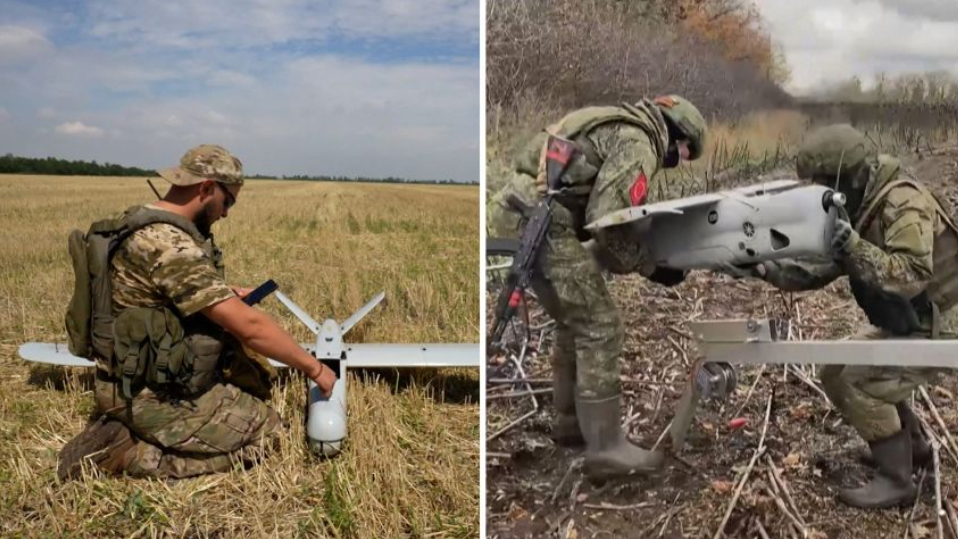
YET THEY HAVE NOT FIGURED  TO NOT USE $4 MILLION each cost PATRIOT MISSELES  TO SHOOT DOWN $20,000 drones!!!.


References

  1. 10 U.S. Code § 525 – Distribution of commissioned officers on active …
  2. Defense Primer: Military Officers – Congress.gov
  3. [PDF] Military Officers – Defense
This entry was posted in Government on May 20, 2026 by sterlingcooper.

CARMEL INDIANA CHOSEN AS THE BEST PLACE TO LIVE!!!

Why Carmel, Indiana, Is the Best Place to Live in 2026-2027

Carmel’s high marks for quality of life helped propel it to No. 1 in the U.S. News Best Places to Live rankings.

 Erika Giovanetti
|
Edited by Susannah Snider, CFP
|
Reviewed by Liz Opsitnik Archer
|
U.S. News & World Report
Aerial view of walkable residential neighborhoods in Carmel, Indiana.

Getty Images

Whether its walkability, good schools or access to quality healthcare, Carmel offers a little bit of something for everyone.

Key Takeaways

  • Carmel, Indiana, is the No. 1 Best Place to Live for 2026-2027.
  • Among more than 850 cities analyzed, Carmel ranks in the top 2% for quality of life. Carmel also earned high marks across all other scoring categories, including desirability, job market and value.
  • Residents of Carmel describe this small city as friendly and welcoming, with a walkable downtown and top-tier public schools.

Just about 20 miles north of Indianapolis is Carmel, Indiana, a fast-growing suburb of more than 100,000 residents that manages to retain its small-town charm. After earning the runner-up title last year, Carmel has taken the No. 1 spot in the 2026-2027 U.S. News Best Places to Live rankings.

Carmel is No. 1 thanks to its high scores across all the metrics we consider. Out of the 859 cities we analyzed, Carmel ranks No. 15 for quality of life, No. 40 for job market, No. 90 for desirability and No. 114 for value. Within these categories, scoring factors include quality of education, quality of healthcare, cost of living, climate, crime rates and other factors.

In earning the No. 1 spot, Carmel has shown it has a little bit of something for everyone.

Carrie Holle, a real estate agent and mother of three who has called Carmel home for over 30 years, refers to the city as “our little utopia.” She notes that people move to Carmel from all over the country. “They really are able to make a life for themselves here seamlessly,” she says.

“People are friendly, and it’s clean, and it’s safe, and the schools are wonderful, and the streets are well-kept and maintained,” Holle says.

The Distinctive Appeal of Life in Carmel

Suburban cities in the Midwest aren’t typically known for being pedestrian-friendly, but Carmel is an exception, designed with walkability in mind. Thoughtful civil engineering gives Carmel a vibe all its own.

Take the Monon Trail, for example. Affectionately abbreviated to “the Monon” by Carmelites, this 28.5-mile paved trail functions as an artery that transports pedestrians and bikers through the heart of Carmel.

“It goes all the way through downtown Indianapolis and well north of Carmel, but Carmel’s done a very good job developing our portion of the Monon with beautiful neighborhoods and restaurants and shops,” Holle says.

When you do have to drive, you’re not likely to hit much traffic. Although Carmel is one of the fastest-growing cities in America, getting across town is a breeze thanks to its network of more than 150 roundabouts. The city government even has a page on its website dedicated to roundabouts.

Carmel’s roundabouts don’t just save residents time behind the wheel. According to a report from Indiana University, the infrastructure in Carmel has improved pedestrian conditions, reduced traffic collisions, cut down on emissions and even translated to real fuel savings for drivers.

Of course, when talking about what makes Carmel such a desirable place to live, it’s less about the roundabouts themselves and more about the careful planning they represent. Holle says that in the late 1990s and early 2000s – a time of growth, but also of sprawl in many similarly sized cities – Carmel city officials were already thinking about creating density.

“Our downtown area is vibrant with these mixed-use developments that have created housing, office space, retail, and created activities and entertainment,” she says.

Photos: Carmel, Indiana

The Carmel water tower in Carmel, Ind., on May 14, 2026.

Why Families Are Drawn to This Indiana Suburb

To understand why Carmel has such a high quality of life for its residents, U.S. News analyzed the data on academic standards, access to healthcare and air quality. Unsurprisingly, Carmel excels in all these categories.

In practice, though, perhaps no one has better insights into the quality of life in Carmel than Tim Phares, principal at Carmel High School, who has lived in Carmel for about 25 years. Not only is Phares the school’s top administrator, but he has three daughters currently enrolled at the high school and a son who recently graduated.

“You have everything you need within this community to raise a family,” Phares says. “From an academic setting, from a community setting, from an amenity setting, there really is no greater place in my opinion.”

Carmel High School is ranked as one of U.S. News’ Best High Schools, thanks in part to high scores for college readiness. Many families choose Carmel over other cities in the Indianapolis area specifically to enroll their children in the highly rated Carmel Clay School District, Holle says.

While Carmel’s academic prestige is a primary draw, the city’s appeal extends far beyond the classroom. “There is always something to do as a family,” Phares says.

Residents rave about the Carmel Christkindlmarkt, an authentic German-style Christmas market centrally located in downtown that’s been hailed as one of the best in the country.

Another draw in the heart of the city center is the Palladium, a 1,600-seat performing arts center that’s hosted acts all across the entertainment spectrum – from Yo-Yo Ma to Weird Al Yankovic. The Palladium is built in the style of the Italian Renaissance, and it’s worth a visit if only to admire the architecture.

“It’s drop-dead gorgeous,” Holle says. “They’re very strict on the aesthetics of how the downtown was built, and it has a very European vibe to it.”

All Carmel Has to Offer Comes at a Tremendous Value

By Midwestern standards, Carmel isn’t the cheapest place to live. In fact, Carmel is one of the more sought-after Indianapolis suburbs with a median home cost of $477,625.

Compared with the other 850-plus cities that U.S. News analyzes in the Best Places to Live rankings, however, Carmel comes in at No. 114 for affordability. That puts it in the top 15% for value, which includes cost of living and housing affordability.

Still, there’s no question that the housing market in Carmel is competitive, Holle says. Land is scarce, and the city is “pretty much built out. So because of that, appreciation does well in Carmel, because the demand is always high.”

Considering the educational, safety and entertainment offerings, life in Carmel is a worthwhile investment for those fortunate enough to call it home.

“This place is bigger than any one individual,” Phares says. “We all have a role. We all have a part in it.”


This entry was posted in Uncategorized on May 20, 2026 by sterlingcooper.

XI JUST THREW PUTIN UNDER TE BUS!!!OPINION…

Newsweek
Xi Warns Trump That US And China ‘Should Be Partners, Not Rivals’
China and the United States both stand to gain from

A major outcome of President Donald Trump’s Beijing summit this week with Chinese President Xi Jinping had little to do with semiconductors or rare earths. According to the White House readout, Xi Jinping made clear China’s opposition to any Iranian effort to militarize the Strait of Hormuz or charge a toll on its use. Beijing’s own readout said nothing about Iran or the strait—and pointedly did not dispute the American account. That tacit acceptance exposed the so-called “axis” of China, Russia and Iran for what it actually is: a partnership of convenience that fractures the moment one partner’s interests get in the way.

The natural question is, what comes next? If Beijing can be pried loose from Tehran, can it be pried loose from Moscow, too? The answer requires understanding something Western policymakers have been slow to internalize: Russia already fears China far more than it lets on.

Since the end of World War II—with a brief, hopeful interlude after the Soviet collapse—Moscow has framed the West as its principal adversary. NATO enlargement, European Union accession, color revolutions and “Western values” have dominated Kremlin discourse. But this fixation avoids the real long-term threat to Russian power, which is, and always has been, to the south.

Russia’s President Vladimir Putin and China’s President Xi Jinping mark the 80th anniversary of victory over Japan and the end of World War II on September 3, 2025, in Tiananmen Square, Beijing, China.

That threat has accelerated dramatically since the invasion of Ukraine. As Moscow poured men and capital into keeping Kyiv in its orbit, Beijing quietly absorbed the rest of the post-Soviet space into its own. In 2023, China surpassed Russia as Central Asia’s largest trading partner. By 2025, China-Central Asia trade had hit a record $106 billion—more than double Moscow’s regional turnover. Chinese capital now finances Uzbek car factories, Kazakh logistics hubs and Tajik infrastructure that Beijing often happens to hold the debt on.

The South Caucasus tells the same story. In the last few years, China has signed strategic partnerships with Armenia, Georgia and Azerbaijan, while Chinese railway and infrastructure firms have become increasingly involved in Middle Corridor logistics. Beijing has prioritized the Middle Corridor, which runs from western China through Central Asia, across the Caspian, and through the South Caucasus into Turkey and Europe. Cargo volume along that route jumped roughly 70 percent in 2024 alone. Every kilometer of it bypasses Russia and Iran.

This is the part that should focus minds in Washington. The Middle Corridor is the rare geography where Chinese economic logic and American strategic logic point the same way—both want a trade route to Europe that bypasses Russia and Iran. The Trump administration’s TRIPP corridor and Beijing’s Trans-Caspian investments sit on the same map.

Inside Russia itself, the dependency is now structural. Chinese goods account for around 40 percent of Russian imports, up from roughly 20 percent before the war. China supplies between 60 and 90 percent of goods in key sectors that keep Russia’s sanctioned war economy running, such as machinery, vehicles, telecommunications and dual-use technology. Beijing has become Moscow’s largest creditor and largest energy customer—relationships that have repeatedly forced Russia to accept steep discounts on its oil and gas. China is Russia’s number one trading partner. Russia accounts for a bit more than three percent of China’s trade. The asymmetry is not subtle.

Moscow understands the danger. It simply refuses to say so out loud. Leaked Russian military files reviewed by the Financial Times in 2024—war-game scenarios from 2008 to 2014, still regarded by Western analysts as reflective of current doctrine—show the general staff rehearsing tactical nuclear strikes against China in the event of a southern invasion. One scenario imagines Beijing paying protesters to clash with police in the Russian Far East, deploying saboteurs against Russian infrastructure, and then massing the People’s Liberation Army on the border under the pretext of “genocide.” Russian planners have war-gamed nuclear strikes on Chinese cities. They simply prefer the West not know they think this way.

This is not a new pattern. Americans today have largely forgotten that the “red scare” of the 1950s assumed an unshakable Sino-Soviet bloc, codified in the 1950 friendship treaty between Stalin and Mao. Within a decade, the partnership had curdled—into ideological recrimination, border clashes over Xinjiang, and Mao’s open contempt for Khrushchev’s “weakness.” By 1972, Nixon and Kissinger had walked through the opening and reshaped the Cold War. The two communist giants discovered, as great powers always do, that proximity breeds rivalry.

Sponsored

The roles today are reversed. Russia is now the belligerent, declining junior partner; China is the cautious, ascendant one that prefers stability and trade flows over adventurism. That is precisely why the Hormuz line landed where it did. Iran’s regional belligerence had already collapsed it into near-total dependence on Beijing—China was, until Operation Epic Fury, the destination for roughly 90 percent of Iranian oil exports. When Tehran’s mining and tolling of the strait began to bite into Chinese energy security, Xi’s calculation was straightforward: a junior partner is not worth a tanker route. According to Trump, Xi went further, pledging that Beijing would not supply Iran with military equipment—a “big statement,” in the president’s words, and a devastating one for Tehran.

Beijing’s Eurasian strategy is not alliance-building but asymmetric dependence—leverage to use partners when convenient and to coerce them when necessary. Iran was the purest version of the model: useful while Tehran’s belligerence pressured Western adversaries, expendable the moment it pressured Chinese supply chains. Russia is on the same road, only larger and slower.

The Kremlin’s value to Beijing has always been instrumental: cheap energy, a useful distraction for Washington and a buffer to the north. The moment Russian behavior begins to threaten Chinese economic stability—through wrecked European trade routes, the secondary sanctions risk to Chinese banks, or a broader confrontation that drags in Beijing’s customers in the Gulf—China will recalibrate, just as it did with Tehran.

For Washington, the implication is not a grand reset with Moscow. Russia remains a hostile, revisionist power, and pretending otherwise would be strategic malpractice. But the Hormuz moment is a reminder that the “axis” is held together by Western pressure as much as by genuine alignment. Tighten the right screws—on sanctioned tech, on the Middle Corridor, on Gulf energy architecture—and the seams begin to show.

Joseph Epstein is director of the Turan Research Center and senior fellow at the Yorktown Institute.

The views expressed in this article are the writer’s own.

Related Articles

  • It’s Too Late for Jerome Powell, America Needs Kevin Warsh—Sen Rick Scott
  • South Dakota Governor: States Need to Come Clean on SNAP Fraud
  • Conventional Wisdom: Emergency Exit Edition

Start your unlimited Newsweek trial

This entry was posted in Uncategorized on May 17, 2026 by sterlingcooper.

SOME IDIOT PAID $9 MILLION TO “DINE” WITH WARREN BUFFETT? WHAT A MORON!

Warren Buffett© Vincent Tullo for WSJ

Warren Buffett is stepping out for his famed charity lunch again.

A mystery bidder paid just over $9 million to win an auction with the Oracle of Omaha, who last participated in the event in 2022.

DINE MAY MEAN MCDONALD’S ?  after all this is with the world’s biggest cheapskate.

The winner will meet the Berkshire Hathaway chairman for lunch on June 24 in Omaha, Neb. They will be joined by Golden State Warriors point-guard Steph Curry and his wife, entrepreneur Ayesha Curry. The winning bidder can bring up to seven guests.

This year’s winning bid amount is a steep drop from the last time Buffett participated in the lunch in 2022, when an anonymous bidder paid a record $19 million. Buffett, 95, has helped raise more than $50 million for Glide, a treasured cause of his first wife, Susie Buffett, who died in 2004.

Winning bids for Buffett lunches

“At 92, I ran out of gas. The spirit remained eager but the flesh became progressively weaker,” Buffett said. “Both the money and the message remain important.”

The charity lunch has long been seen in the business world as a rare chance to spend time with the legendary investor, who retired as CEO of Berkshire in December.

ed Weschler, now a Berkshire investment manager, won the auction twice when he was a hedge-fund manager, paying more than $2 million each time. Crypto entrepreneur Justin Sun is another previous winner. Sun said he gave crypto skeptic Buffett one bitcoin, as well as several Tron, the digital token of the blockchain he founded, during their meal in 2020.

Five bidders participated in this year’s auction on eBay, which opened at $50,000. Other items that were up for bidding include a $1 dollar bill signed by Buffett that sold for $9,100 and a signed Curry jersey that sold for $1,547.99.

The auction moved online in 2003, allowing Buffett fans around the world to participate. The winning price for the lunch has held above $1 million since 2008.

Proceeds from this year’s auction will be split between the charity Glide and the Currys’ Eat. Learn. Play. Foundation, which provides meals and reading resources to students in Oakland, Calif. Glide provides meals, healthcare and legal aid to homeless and other vulnerable individuals in San Francisco.


This entry was posted in BERKSHIRE HATHAWAY, Billionaires in the world on May 16, 2026 by sterlingcooper.

THE CUTE CAR DONATION SITE WE ALL HEARD IS REALLY FUNDING A JEWISH ORGANIZATION!

Judge Bars Kars4Kids From Broadcasting ‘Misleading’ Ads in California

The ads with a repetitive jingle encouraging people to donate cars do not disclose that most of the proceeds go to a Jewish organization in New Jersey, the judge ruled.

rs4Kids’s advertisements feature children singing a repetitive jingle with the organization’s phone number. Credit…Kars4Kids, via YouTube

By Michael Levenson

Kars4Kids, the charity known for its repetitive jingle that sticks like glue in a listener’s brain, must stop broadcasting its ads in California, a judge ruled.

Judge Gassia Apkarian of the Superior Court of California, in Orange County, found that Kars4Kids’s ads violated the state’s laws against false advertising and unfair competition.

For years, the charity has broadcast TV and radio ads featuring children singing a jingle with the organization’s phone number and urging listeners to “donate your car today.”

But evidence presented at a civil trial showed that “children, especially needy or underprivileged children,” were not the exclusive recipients of the proceeds of the donated cars, Judge Apkarian wrote in her decision on May 8.

Instead, Kars4Kids primarily funds a New Jersey-based Jewish organization, Oorah, which provides programs, including an adult matchmaking service, trips to Israel for teens and summer camps in New York, the judge wrote. The only program in California that Kars4Kids sponsored was a promotional giveaway of Kars4Kids-branded backpacks, she found.

Judge Apkarian said that Kars4Kids had 30 days to stop broadcasting its ads in California.

If Kars4Kids resumes advertising, she wrote, its ads must contain “an express, audible disclosure of its religious affiliation and the geographic location of its primary beneficiaries and the age of the beneficiaries, specifying whether they aim for children or families, or both.”

Kars4Kids, a nonprofit based in Lakewood, N.J., said it planned to seek a stay of the ruling and would seek to have it reversed on appeal.

“We believe this decision is deeply flawed, ignores the facts and misapplies the law,” the organization said in a statement. “It’s well known that we are a Jewish organization and our website makes it abundantly clear.”

Kars4Kids added that it helps “thousands of kids with youth development, mentoring and educational programs, including hundreds in the state of California, contrary to the judge’s complete mischaracterization of our work and of the testimony at trial.”

“Like many youth-serving organizations,” the statement said, “helping children often means engaging parents and families as well, and continuing support through young adulthood.”

The ruling was the result of a lawsuit filed by Bruce Puterbaugh, a California cabinetmaker in his 70s who had heard a Kars4Kids ad “over and over” on the radio and felt he had been misled by it after he donated a Volvo to the organization in 2021.

He testified that the ad led him to believe that Kars4Kids benefited “underprivileged kids” from around the country, including in California, the judge wrote. After donating the car, he learned from a neighbor that the proceeds would fund a Jewish organization based in the Northeast. Mr. Puterbaugh said he felt “taken advantage of.”

The judge admitted she had never heard the Kars4Kids ad until it was played in the courtroom, surprising one of Mr. Puterbaugh’s lawyer, Anthony G. Graham.

“Do you not have a television?” Mr. Graham asked, according to a trial transcript. Replied the judge: “Not the television I watch.”

But Judge Apkarian agreed that the ad was misleading, citing what she called “strikingly candid” testimony from the chief operating officer of Kars4Kids, Esti Landau.

According to the judge, Ms. Landau acknowledged that the 30-second ads, which have been running for two decades, do not “say anything” about the charity’s specific nature and do not mention the word Jewish, even though Kars4Kids is a Jewish organization.

Ms. Landau testified that Kars4Kids sends about $45 million a year, 60 percent of the money it raises, to Oorah, its sister organization, which operates out of the same office building in Lakewood, the judge said. Another 30 percent is spent on in-house advertising, and about 6 percent on administrative costs. Oorah has also spent money overseas, the judge wrote, including $16.5 million to buy a building in Israel.

Ms. Landau testified that while the children who benefit from the car donations come from a wide range of socioeconomic backgrounds, Kars4Kids’s mission is to “help Jewish children and their families and provide them with the support they need throughout their life.”

Judge Apkarian found the ads violated California’s law against false advertising because they were “misleading by omission” and that Kars4Kids sought to make the jingle memorable through “extreme repetition, while simultaneously stripping it of all substantive facts.”

The ads also violated the state’s law against unfair competition, the judge wrote, because “the public is misled into believing donations aid underprivileged children in California, when in fact the funds primarily support a separate organization benefiting specific families in New York, New Jersey, and abroad based on religious affiliation.”

In addition to barring Kars4Kids from broadcasting the ads in California, the judge ordered the charity to pay Mr. Puterbaugh $250 for the fair-market value of the nonworking Volvo he had donated.

“This ruling reinforces a fundamental principle: charitable organizations cannot mislead the public to create one impression while concealing material facts from the donating public,” Neal Roberts, one of Mr. Puterbaugh’s lawyers, said in a statement. “Transparency and honesty matters, and donors have a right to know exactly who their contributions are benefiting.”

This entry was posted in FRAUDS on May 16, 2026 by sterlingcooper.

TRUMP’S CHINA TRIP A DUD? WE WILL SEE WHAT HAPPENS NEXT!

U.S. President Donald Trump Departs China En Route To Washington© Getty Images

Many of the items handed out by Chinese officials to the American delegation were rounded up and dumped before they left the country on Air Force One.

US President Donald Trump is set to leave China after wrapping up critical talks with his Chinese counterpart, Xi Jinping, on Friday.

Despite the apparent warm state visit, big differences remain between the world’s two biggest powers on key geopolitical issues like China and Iran. It comes after a mystery blonde joined Trump on his trip to China after Melania’s anguish.

  • Trump has been given a new Chinese nickname with a nasty translation
  • CBS News halts Donald Trump’s China coverage due to ‘medical emergency’

Reports from the ground have revealed that before boarding Air Force One, staff from the American delegation took everything handed out by Chinese officials to the press pool and binned them.

According to New York Post’s Emily Goodin, this included “credentials, burner phones from WH staff, pins for delegation.”

She wrote on X: “Nothing from China allowed on the plane. We’re taking off shortly for America.”

The two-day visti saw Xi welcom Trump at his official residence, Zhongnanhai, for their final engagement of the summit before the US leader’s return to Washington.

The leaders took a short walk through the grounds that feature ancient trees and Chinese roses, and strolled through a covered passageway with green columns and archways painted with birds and traditional Chinese mountain scenes.

Over tea and lunch, Trump and Xi – with top aides and translators in tow – huddled for nearly three hours of talks before the US leader completed his three-day visit to China.

“It’s been really a great couple of days,” Trump told reporters.

CHINA-US-DIPLOMACY© AFP via Getty Images

Beijing has shown little public interest in US entreaties to get more involved in solving the conflict in Iran, even though Trump said in an interview with Fox News’ Sean Hannity that Xi had, in their conversations, offered to help.

Xi, meanwhile, warned Trump during private talks that their differences on the self-ruled island of Taiwan, if handled poorly, could hurtle the world’s dominant powers toward “clashes and even conflicts,” according to Chinese government officials.

Related video: A direct warning from China to the United States in the middle of a historic meeting (KREM-TV Spokane)

KREM-TV Spokane
A direct warning from China to the United States in the middle of a historic meeting
in the middle of a historic meeting between the
Video Player is loading.

Secretary of State Marco Rubio told NBC News that U.S. policy toward Taiwan was “unchanged” and cautioned that it would be “a terrible mistake” for China to try to take Taiwan by force. He also framed Xi’s comments as standard practice.

“They always raise it on their side. We always make clear our position, and we move on to the other topics,” said Rubio, who was among senior aides to join Trump for the talks.

It comes after angry Trump told a reporter ‘you should be ashamed of yourself’ after an ‘act of treason’.

This entry was posted in CHINA on May 16, 2026 by sterlingcooper.

BERKSHIRE HATHAWAY POWER COMPANY HEADED BY GREG ABEL LOOKS LIKE A RISKY BET NOW

Berkshire Hathaway’s Power Bet is Starting to Look Riskier

Greg Abel has replaced Warren Buffett as the head of Berkshire Hathaway. The company’s annual meeting last week was the first one helmed by him.  Mr Abel formerly headed Mid American Energy, a utility based in Des Moines, and then all of Berkshire Hathaway’s utility operations. When Mr Buffett spoke on issues of finance, investors listened attentively. Whether Mr Abel attracts the same reverential following remains to be seen. However, his views on electric utilities, based on his many years in the industry, are definitely worth reviewing. His comments can be divided into two parts, industry positives (high growth) and industry negatives (regulatory environment and related risks like wildfires).

AI and data centers are the main drivers of outsized demand for electricity right now. And this sudden demand is not evenly distributed. Berkshire owns utilities PacifCorp, NV Energy, and MidAmerican Energy along with gas pipeline and processing, and other unrelated assets. But Iowa, he pointed out, could see 50% demand growth in five years. He also emphasized his belief that new data center load should bear the full costs of its incremental demand on the system. These new costs should not be transferred to residential and commercial customers. (In the past, the cost of utility capital expenditures of this type were spread across all the ratepayers via the regulatory process.) And lastly Mr Abel touted the success of Mid American Energy, the company he formerly helmed, for both keeping up with accelerated demand growth and maintaining rates 45% below the US national average.

Having electricity rates roughly one-half that of the national average means that one’s service territory is blessed with either an abundance of hydroelectric power generating resources or a fleet of aging coal plants. In Mr Abel’s case, it is the latter. The MidAmerican fuel mix is 63% wind and 20+% coal plus a little gas, nuclear, and other resources. Needless to say, this aging coal fleet has drawn considerable scrutiny from environmental groups like the Sierra Club, who have advocated for expedited plant closures. The company’s position is that these plants will remain open until 2049, by which point the oldest facility in the present coal fleet will be 75 years old. For example, the George Neal South unit in Sioux City, Iowa was commissioned in 1975. The utility has one relatively new coal fired generating unit, commissioned in 2007, but apart from that, MidAmerican’s average coal unit entered service around 1980 which means that today these facilities are already about 45 years old. That is very old in power plant years.

Berkshire’s PacifiCorp unit is in a similar position with respect to coal fired power generation which comprises about 35% of its generation mix but is almost the exact same size as MidAmerican’s coal fleet. Only NV Energy of the Berkshire-owned US utilities has mostly completed the transition away from coal. We bring this up because it explains one reason why Mr Abel has stated his concerns regarding a potential degradation in his various regulatory environments.

We agree. If we owned over 9,000 megawatts of aging, polluting, politically unpopular coal-fired power generation in the US Midwest and Pacific Northwest, we’d have concerns about our regulatory environments too. And it gets worse. PacifiCorp has publicly stated that its litigation exposure from 2020 wildfires in California and Oregon could approach tens of billions of dollars. Berkshire has already paid over $500 million to settle various related lawsuits. Recently, the Oregon appeals court set aside the most financially damaging lower court ruling against the company, giving it some breathing room in this respect. Berkshire has been actively involved in getting state legislation passed that would limit its wildfire liability exposure. The Utah legislature passed a bill that management referred to as the “gold standard” with respect to liability mitigation. How many other states adopt this remains to be seen.

Related video: Berkshire cash pile (Dailymotion)

In his prepared remarks at the Berkshire annual meeting, Mr Abel reiterated that Berkshire might exit states that imposed arduous clean energy mandates. This is obviously no idle threat. In February of this year the company announced the sale of PacifiCorp’s Washington state assets to Portland General Electric for $1.9 billion, citing a desire to “improve our financial stability while simplifying our operations.” In this press release PacifiCorp’s CEO offered another reason for the impending asset sale: “Diverging policies among the six states PacifiCorp serves have created extraordinary pressure affecting the company’s ability to meet demand reliably and at the lowest cost to customers.” However, he did offer regulators a sort of olive branch, reaffirming his belief in the “regulatory compact”, where customers receive reliable service and pay a fair return on capital. He pointed out two things that stress this model, inflation (which  is increasing) and other high cost requirements— like pollution controls on aging coal plants. All we can say here is that PacifiCorp serves about 2 million customers while Washington state accounts for less than 10% of the total. So PacifiCorp is selling a relatively tiny piece of the company. The bulk of the customers are in Oregon and Utah. Selling this asset looks to us more like an outreach effort with respect to the rating agencies, Moody’s and S&P, both of which downgraded PacifiCorp’s fixed income security ratings based on wildfire risk.

Now let’s try to put this in some kind of perspective. The three US utilities that Berkshire Hathaway Enterprises (BHE) owns have assets of about $90 billion out of BHE’s roughly $152 billion of total assets. That’s a sizable percentage. But BHE is, of course, only one part of the Berkshire Hathaway conglomerate which listed assets of $1.25 trillion in its March 10Q. US electric utilities are only about 7% of Berkshire’s total assets. Financial commentators have been trying to find some way to differentiate Mr Abel from his legendary predecessor, Mr Buffett. We think this is asking the wrong question. The question for us is: are these the same utility businesses, with the same risk profiles, that were purchased by Mr Buffett more than two decades ago? Our answer is an emphatic no. The biggest risk we see relates to one of the oldest issues in the electric utility business—the huge cost differential between rural and urban utility customers. It’s much more expensive to serve low density rural customers. Always has been. And now those rural service areas also come with enormous, open ended wildfire liability risk. But what’s worse is that decentralized forms of power generation, like solar plus batteries, will now increasingly offer opportunities for rural customers to leave the grid while lowering their energy costs. If we were advising Mr Abel, we would tell him to keep selling.

This entry was posted in BERKSHIRE HATHAWAY on May 15, 2026 by sterlingcooper.

WALMART AND COCA COLA ARE DIVIDEND KINGS, PAYING DIVIDENDS FOR OVER 50 YEARS, AND ARE BEATING THE MARKET THIS YEAR TOO…UNLIKE WARREN BUFFET, THE CHEAPSKATE OF THE YEAR, AND HIS BERKSHIRE HATHAWAY, INC. , FAILING TO PAY ANY DIVIDENDS FOR 60 YEARS!

Key Points

  • Walmart has embraced e-commerce, where it has an edge in its existing massive store base.
  • Coca-Cola has taken various steps to keep its drinks affordable for its global fan base amid inflation.

The S&P 500 has rebounded from earlier-year losses and is back to hitting new highs. Conventional wisdom is that growth stocks drive the market higher in good times, and safe stocks outperform when the going gets tough.

But that’s not always the case. Consider that despite the market’s rise this year, Walmart (NASDAQ: WMT) and Coca-Cola (NYSE: KO) are both trouncing it right now. These stocks are Dividend Kings, meaning they have increased their dividends for at least the past 50 years. They offer tremendous value in their safety and dividends, and are demonstrating strength beyond that. Here’s why the market loves them.

^SPX© YCharts


  1. Walmart

Walmart is a simple retailer, but that’s all you need to dominate as a business. It’s the largest physical retailer in the world, with more than 5,000 U.S. stores and nearly 11,000 global locations. It has stores within 10 miles of 90% of the U.S. population, and since it’s a discount essentials retailer, it’s resilient no matter what’s happening in the economy.

But it’s not stagnating and relying on an old model, either. One of the reasons it’s been gaining recent momentum is the growth explosion in its e-commerce business. While Walmart has only 9.2% of the market, in contrast with Amazon‘s 40.1%, it has gained market share over the past few years and is the second-largest e-commerce company in the country.

And though it may not catch up to Amazon, it has a structural edge over it in its physical store network. It’s using its stores as distribution hubs without having to invest in creating a national fulfillment network, and having a storefront gives customers more options in delivery and pickup.

Having a strong online presence also gives it exposure to more people who may not generally come into a Walmart store, such as more affluent consumers. Walmart can feature a much larger assortment of merchandise on its website, which could appeal to a broader socioeconomic range of customers, and higher-income shoppers have accounted for a major portion of the company’s recent growth. Walmart is also targeting these customers through new product lines. In the 2026 fourth quarter (ended Jan. 31), sales increased 5.6% year over year, and e-commerce was up 24%.

Walmart has raised its dividend for the past 53 years, and the market is prizing its consistency, reliability, and growing dividend right now.

Walmart associate.© Walmart

  1. Coca-Cola

Coca-Cola is the largest all-beverage company in the world, and loyal fans continue to buy their favorite Coke-labeled drinks no matter what’s happening in the economy. That gives the company pricing power, and it has been able to successfully raise prices to counter increasing costs. It has also taken other actions to keep people buying, including changing product packaging and launching smaller sizes that are more affordable.

The company’s bottles and cans may seem ubiquitous to Americans, but management notes that it’s still a small presence globally. Although it has a major presence in developed regions, it holds only 14% of the global market share. It has an even wider opportunity in underdeveloped regions, where its market share is just 6%.

It also has opportunities in organic industry growth, new categories, and new brands. For example, it has a portfolio of about 200 brands right now, and although carbonated beverages like Coca-Cola and Sprite do a lot of the company’s heavy lifting, it also has brands in the dairy, juice, and tea categories that provide excellent growth springboards. Some of its more recent acquisitions include dairy brand Fairlife and sports drink brand BodyArmor.

Since Coca-Cola is dependable in times of pressure and pays a lucrative dividend, its stock tends to outperform in challenging times. But it has THAT AGING continued to outpace the market this year, even as the market rebounds, since it has reported very strong performance. In the first quarter, revenue increased 12% year over year.

Coca-Cola has raised its dividend for the past 64 years, giving it one of the longest track records on the market. It also yields 2.6% at the current price, providing shareholders with growing passive income at an attractive yield as well as the opportunity for price gains

SHAME ON THAT AGING CHEAPSKATE, WARREN BUFFETT, CHAIRMAN, WHO REFUSES TO SHARE THE WEALTH WITH THE STOCKHOLDERS OF BERKSHIRE HATHAWAY, INC., while receiving over $800 million in dividend payments annually from its Coca Cola stock position.

This entry was posted in BERKSHIRE HATHAWAY on May 14, 2026 by sterlingcooper.

AMAZING TRANSFORMATION IN SWEDEN!!TO CAPITALIST SYSTEM!!!

The World’s Most Surprising Capitalist Makeover Is Under Way in Sweden

The shake-up of cradle-to-grave care is lowering government spending, spurring innovation and stirring fears about those left behind

Sweden—This paragon of collectivism is pivoting toward rugged individualism.

For decades, Sweden was shorthand for the brand of high-tax, high-spend government that managed people’s lives from cradle to grave through state-run hospitals, schools and care homes.

No longer. With little fanfare, this Nordic country of 11 million has embraced capitalism.

Today, nearly half of primary healthcare clinics are privately owned, many by private-equity firms. One in three public high schools is privately run, up from 20% in 2011. School operators are listed on the stock exchange.

Sweden’s experience has lessons—good and bad—for other rich countries, including the U.S., where New York City Mayor Zohran Mamdani is looking to emulate parts of the state-centric model such as universal child care and city-run stores.

The capitalist makeover has allowed Sweden to do what few industrialized countries have managed in recent years: shrink the size of the state. That has enabled the government to sharply lower taxes and, economists say, sparked a surge in entrepreneurship and economic growth.

Its total public social spending bill—which includes healthcare, education and all welfare payments—has fallen to 24% of gross domestic product, similar to the U.S. and well below the over 30% for nations like France and Italy.

Public social spending as a proportion of GDP, 2022 or most recent year
France
31.6%
Italy
30.1%
Austria
29.4%
Finland
29.0%
Belgium
29.0%
Spain
28.1%
Germany
26.7%
Denmark
26.2%
Japan†
24.9%
Canada†
24.9%
Portugal
24.6%
Greece
24.1%
Sweden
23.7%
Slovenia
22.8%
U.S.*
22.7%
Poland
22.7%
U.K.*
22.1%
Czech Republic
22.0%
Luxembourg
21.9%
New Zealand*
20.8%
Iceland
20.8%
Norway
20.7%
Australia‡
20.5%
Data for *2021 †2020 ‡2019
Source: OECD

Sweden’s economy is expected to grow by around 2% a year through 2030, roughly the same pace as the U.S. and double the growth rates of France and Germany, according to an April forecast by the International Monetary Fund.

“Sweden is a real land of opportunity,” said Elisabeth Svantesson, the country’s finance minister. “I want people and capital to stay here and grow.”

While many European countries are raising taxes, Svantesson has cut them three years in a row. Sweden’s top income-tax rate has fallen close to 50% from nearly 90% in the 1980s.

Considering the overall tax burden, “it’s more attractive here…than the U.S.,” said Conni Jonsson, the billionaire founder of EQT, a Stockholm-based private-equity firm.

Critics say the paring back has gone too far. Inequality is soaring in this traditionally egalitarian country. Gang violence has surged in dozens of immigrant-heavy suburbs, creating areas where local criminal networks challenge state authority and hinder policing. A public debate is raging over for-profit schools, which critics say make money by skimping on playgrounds, libraries and staff.

“The American perspective of Sweden is so far off from reality,” said Andreas Cervenka, a Swedish author who recently returned home after living in California. “We are going from a society which is like, ‘One for all, all for one,’ to ‘Everybody is on their own.’”

Spurring entrepreneurs

Sweden didn’t always have a big public sector. The country climbed from being one of the poorest to the third-richest country in Europe over 100 years through 1970 without high levels of taxation.

But starting in the 1960s, the center-left Social Democratic Party—which dominated the country’s postwar politics—sharply raised taxes and spending, ultimately taking government spending as high as 70% of GDP by the 1990s.

The changes triggered a long period of weak growth, stagnant after-tax incomes and ballooning budget deficits and debt that culminated in a banking crisis in the early ’90s.

Under pressure from investors, the government instituted sweeping economic reforms over the next two decades. They included cuts to unemployment benefits and housing subsidies and the privatization of public services, as well as tax cuts and a reform of the pension system to make it more affordable. Strict limits were imposed on government debt. (Sweden’s debt to GDP is a meager 36%, compared with 129% for the U.S.) In the mid-2000s, the government eliminated wealth and inheritance taxes.

The result: Wealthy entrepreneurs who had fled Sweden’s high taxes have been returning, said Jacob Wallenberg, a member of the Swedish industrial dynasty that owns big stakes in Ericsson, Saab and other large companies.

When Wallenberg was growing up in the 1960s and ’70s, Swedes weren’t very wealthy, he said. The country, he noted, famously only had one Rolls-Royce car.

Today, international polling suggests Swedes are far more open to wealth than the French, Germans, Spanish or Italians, and more positive about the market economy than any European country except Poland. Sweden’s Rolls-Royce count is now over 800, and when the automaker decided to open its first showroom in Scandinavia in 2016, it chose Stockholm.

As the state retreated, the private sector expanded. A study published in April by the Stockholm School of Economics found that after Sweden removed inheritance and gift taxes in 2005, private firms with potential family successors grew faster, invested more and paid higher corporate taxes than firms without natural heirs.

Businesses championed new technologies in a bout of risk-taking with few equivalents in a region dominated by older industries and ambivalent about tech.

Niklas Zennström, the billionaire founder of internet-telecommunications pioneer Skype, said the privatizations helped fuel innovation in sectors like telecoms, which have underpinned the country’s tech boom. Zennström himself started his career building fiber-optic networks for a private telecom operator in the 1990s.

“Sweden was very early with mobile phones, with a high penetration of 3G and competition in mobile networks,” Zennström said. “There was a sense of entrepreneurship.”

The country saw more than 500 initial public offerings over the 10 years through 2024, more than Germany, France, the Netherlands and Spain combined, according to a landmark 2024 report on Europe’s economy by former European Central Bank President Mario Draghi. It has now moved ahead of the U.S. in the number of billionaires per capita, thanks to a thriving tech startup scene and videogame industry that has produced hits like Minecraft and Candy Crush.

‘More for less’

At St. Göran’s hospital in downtown Stockholm, radiologist Karin Dembrower huddled over a computer screen, pointing to tiny light spots indicating cancer on a black-and-white image.

“We cannot see with our eyes that there is something going on here but somehow the AI is seeing” it, she said.

This entry was posted in Government on May 12, 2026 by sterlingcooper.

CHINA IS ROLLING-OVER USA AND THE EU..DANGER???

China expanding its industrial dominance, warns US business group

Chamber of Commerce says west is running out of time to sever its growing reliance on Chinese supply chain
China is rapidly expanding its capabilities in high-tech fields such as robotics © Hector Retamal/AFP/Getty Images
The US Chamber of Commerce has warned that countries have only a “finite” window to respond to Chinese policies that are deepening reliance on its supply chains and harming the global economy.
The Washington-based lobby group said Beijing was “doubling down” on state intervention in manufacturing, services and frontier technologies.
It said China was ushering in a “new phase of global impact” marked by rising trade dependence and a rapid global expansion by its companies. It is also using tools such as export controls to entrench its position in global supply chains and counter foreign diversification strategies.
The warning came in the preface to a report on new Chinese industrial policies produced for the chamber by Rhodium Group, a consultancy. The chamber said the world had underestimated previous Chinese policies, including the Made in China 2025 programme to make the country more self-reliant in critical technologies.
“The challenge the world now faces is not the result of an intelligence gap . . . Reports were published. The warnings reached senior levels of government and industry across major economies. Yet in too many cases, the response was insufficient,” the chamber concluded.
The report comes as President Donald Trump prepares to visit Beijing this week for a two-day summit with his counterpart Xi Jinping. Immediately after the leaders met in South Korea in October, Treasury secretary Scott Bessent told the FT he had warned Europe and others that Chinese exports would flow elsewhere after the US erected a “tariff wall”.
Rhodium said China’s industrial policy was evolving from sectoral intervention to an “industrial policy of everything”. It said Beijing wanted to extend its dominance in industries such as critical minerals and magnets to a broader range of industrial products. Beijing was also putting more attention on services, it added.
The report said sustained government support and weak domestic demand had driven a rapid expansion of its goods trade surplus — doubling to $2tn since 2019 — in what some have dubbed “China Shock 2.0” as the country rapidly moves away from an economy based on low-cost manufacturing.
It said China was making significant gains in industries such as chemicals, machinery and industrial equipment, following earlier significant expansion of market share in industries such as electric vehicles and clean energy.
“Global reliance on Chinese supply chains is deepening across a growing number of critical products,” Rhodium said, adding that China was using regulation and economic coercion to reinforce control over key supply chains. “The window for effective policy response is narrowing,” it added.
Camille Boullenois, lead author of the report, told the FT that China’s evolving industrial policies posed a “real threat” to the economic engine of countries such as Germany and other advanced industrial economies.
“China’s rise is broadly eroding some of the last areas where they still have a technological and industrial edge, like chemicals, autos, machinery and robotics,” she said. “China is gaining market share incredibly fast in these sectors. If countries don’t react now, the industrial landscape could look very different in just a few years.”
The report noted that China’s most recent five-year plan had for the first time included a focus on advanced technologies such as biomanufacturing, nuclear fusion energy and brain-computer interfaces. This suggested that its industrial policy was evolving from focusing on strategic sectors to a “broader effort to reshape the entire industrial ecosystem”.
The trade surplus growth represented success moving up the production value chain and exporting high-tech goods but also its success substituting domestic products for imports.
China shock 2.0: the flood of high-tech goods that will change the world
Workers on the assembly line for electric vehicles at the BYD Co. factory in Zhengzhou, Henan province, China; on the right, solar panels at a photovoltaic power station at the Dunhuang Photovoltaic Industrial Park in Dunhuang, Gansu Province, China
Chinese companies are also becoming more reliant on revenues from sales outside China. It said the share of total revenue from overseas for the top 500 Chinese companies reached an average of 47 per cent by 2024, roughly equivalent to the figure for US groups.
Jörg Wuttke, former head of the European Chamber of Commerce in China, said the threat was particularly acute for manufacturing and export-focused economies such as Japan and South Korea. But he said Europe faced an economic juggernaut driven by overcapacity in China in addition to a strong euro versus the renminbi.
“The Chinese are always kind enough to tell us how they will roll over us, but we never want to hear it,” said Wuttke, partner at the DGA-Albright Stonebridge consultancy. “We cannot go on like this. If you are in the Eurozone you’re a dead duck.”
This entry was posted in CHINA on May 12, 2026 by sterlingcooper.

Post navigation

← Older posts
Newer posts →

Recent Posts

  • ONLY FANS OWNER RECEIVED $700 MILLION IN DIVIDENDS BEFORE DEATH
  • LEBRON BORROWS $300 MILLION FROM INSURANCE COMPANIES
  • ROBOT BEATS WORLD TIME IN A RUN, ROBOTS WILL DOMINATE ALL SPORTS SOON?
  • DRONE DELIVERIES FROM AMAZON ARE COMING!!!
  • ROBOTS WILL REPLACE 65 MILLION HUMANS IN USA BY 2050

Sterling Cooper, Inc. © 2023,  Privacy Policy