Welcome to Sterling Cooper, Inc.
  • CALL US: +1-866-285-6572
  • CALL US: +1-866-285-6572
LOGO
  • INCREASE YOUR REVENUES
    50%-100% - FREE EVALUATION
  • WEF 2025 GLOBAL
    RISKS REPORT
  • CAPITAL GAINS
    TAX DEFERRED
  • INCORPORATE
    NOW FOR $39
  • RESEARCH
    REPORTS
  • ENGULF &
    DEVOUR
  • Home
  • Services
    • Selling a Business
    • Buying a Business
    • Public Relation
    • Cooper consulting
    • Advertising
    • Publishing
    • Web and IT Services
    • Loans
  • Seller
  • buyer
  • Advertising
  • Publishing
  • M&A Due Diligence
  • Blog
  • Contact
LOGO

Category Archives: Uncategorized

CARMEL INDIANA CHOSEN AS THE BEST PLACE TO LIVE!!!

Why Carmel, Indiana, Is the Best Place to Live in 2026-2027

Carmel’s high marks for quality of life helped propel it to No. 1 in the U.S. News Best Places to Live rankings.

 Erika Giovanetti
|
Edited by Susannah Snider, CFP
|
Reviewed by Liz Opsitnik Archer
|
U.S. News & World Report
Aerial view of walkable residential neighborhoods in Carmel, Indiana.

Getty Images

Whether its walkability, good schools or access to quality healthcare, Carmel offers a little bit of something for everyone.

Key Takeaways

  • Carmel, Indiana, is the No. 1 Best Place to Live for 2026-2027.
  • Among more than 850 cities analyzed, Carmel ranks in the top 2% for quality of life. Carmel also earned high marks across all other scoring categories, including desirability, job market and value.
  • Residents of Carmel describe this small city as friendly and welcoming, with a walkable downtown and top-tier public schools.

Just about 20 miles north of Indianapolis is Carmel, Indiana, a fast-growing suburb of more than 100,000 residents that manages to retain its small-town charm. After earning the runner-up title last year, Carmel has taken the No. 1 spot in the 2026-2027 U.S. News Best Places to Live rankings.

Carmel is No. 1 thanks to its high scores across all the metrics we consider. Out of the 859 cities we analyzed, Carmel ranks No. 15 for quality of life, No. 40 for job market, No. 90 for desirability and No. 114 for value. Within these categories, scoring factors include quality of education, quality of healthcare, cost of living, climate, crime rates and other factors.

In earning the No. 1 spot, Carmel has shown it has a little bit of something for everyone.

Carrie Holle, a real estate agent and mother of three who has called Carmel home for over 30 years, refers to the city as “our little utopia.” She notes that people move to Carmel from all over the country. “They really are able to make a life for themselves here seamlessly,” she says.

“People are friendly, and it’s clean, and it’s safe, and the schools are wonderful, and the streets are well-kept and maintained,” Holle says.

The Distinctive Appeal of Life in Carmel

Suburban cities in the Midwest aren’t typically known for being pedestrian-friendly, but Carmel is an exception, designed with walkability in mind. Thoughtful civil engineering gives Carmel a vibe all its own.

Take the Monon Trail, for example. Affectionately abbreviated to “the Monon” by Carmelites, this 28.5-mile paved trail functions as an artery that transports pedestrians and bikers through the heart of Carmel.

“It goes all the way through downtown Indianapolis and well north of Carmel, but Carmel’s done a very good job developing our portion of the Monon with beautiful neighborhoods and restaurants and shops,” Holle says.

When you do have to drive, you’re not likely to hit much traffic. Although Carmel is one of the fastest-growing cities in America, getting across town is a breeze thanks to its network of more than 150 roundabouts. The city government even has a page on its website dedicated to roundabouts.

Carmel’s roundabouts don’t just save residents time behind the wheel. According to a report from Indiana University, the infrastructure in Carmel has improved pedestrian conditions, reduced traffic collisions, cut down on emissions and even translated to real fuel savings for drivers.

Of course, when talking about what makes Carmel such a desirable place to live, it’s less about the roundabouts themselves and more about the careful planning they represent. Holle says that in the late 1990s and early 2000s – a time of growth, but also of sprawl in many similarly sized cities – Carmel city officials were already thinking about creating density.

“Our downtown area is vibrant with these mixed-use developments that have created housing, office space, retail, and created activities and entertainment,” she says.

Photos: Carmel, Indiana

The Carmel water tower in Carmel, Ind., on May 14, 2026.

Why Families Are Drawn to This Indiana Suburb

To understand why Carmel has such a high quality of life for its residents, U.S. News analyzed the data on academic standards, access to healthcare and air quality. Unsurprisingly, Carmel excels in all these categories.

In practice, though, perhaps no one has better insights into the quality of life in Carmel than Tim Phares, principal at Carmel High School, who has lived in Carmel for about 25 years. Not only is Phares the school’s top administrator, but he has three daughters currently enrolled at the high school and a son who recently graduated.

“You have everything you need within this community to raise a family,” Phares says. “From an academic setting, from a community setting, from an amenity setting, there really is no greater place in my opinion.”

Carmel High School is ranked as one of U.S. News’ Best High Schools, thanks in part to high scores for college readiness. Many families choose Carmel over other cities in the Indianapolis area specifically to enroll their children in the highly rated Carmel Clay School District, Holle says.

While Carmel’s academic prestige is a primary draw, the city’s appeal extends far beyond the classroom. “There is always something to do as a family,” Phares says.

Residents rave about the Carmel Christkindlmarkt, an authentic German-style Christmas market centrally located in downtown that’s been hailed as one of the best in the country.

Another draw in the heart of the city center is the Palladium, a 1,600-seat performing arts center that’s hosted acts all across the entertainment spectrum – from Yo-Yo Ma to Weird Al Yankovic. The Palladium is built in the style of the Italian Renaissance, and it’s worth a visit if only to admire the architecture.

“It’s drop-dead gorgeous,” Holle says. “They’re very strict on the aesthetics of how the downtown was built, and it has a very European vibe to it.”

All Carmel Has to Offer Comes at a Tremendous Value

By Midwestern standards, Carmel isn’t the cheapest place to live. In fact, Carmel is one of the more sought-after Indianapolis suburbs with a median home cost of $477,625.

Compared with the other 850-plus cities that U.S. News analyzes in the Best Places to Live rankings, however, Carmel comes in at No. 114 for affordability. That puts it in the top 15% for value, which includes cost of living and housing affordability.

Still, there’s no question that the housing market in Carmel is competitive, Holle says. Land is scarce, and the city is “pretty much built out. So because of that, appreciation does well in Carmel, because the demand is always high.”

Considering the educational, safety and entertainment offerings, life in Carmel is a worthwhile investment for those fortunate enough to call it home.

“This place is bigger than any one individual,” Phares says. “We all have a role. We all have a part in it.”


This entry was posted in Uncategorized on May 20, 2026 by sterlingcooper.

XI JUST THREW PUTIN UNDER TE BUS!!!OPINION…

Newsweek
Xi Warns Trump That US And China ‘Should Be Partners, Not Rivals’
China and the United States both stand to gain from

A major outcome of President Donald Trump’s Beijing summit this week with Chinese President Xi Jinping had little to do with semiconductors or rare earths. According to the White House readout, Xi Jinping made clear China’s opposition to any Iranian effort to militarize the Strait of Hormuz or charge a toll on its use. Beijing’s own readout said nothing about Iran or the strait—and pointedly did not dispute the American account. That tacit acceptance exposed the so-called “axis” of China, Russia and Iran for what it actually is: a partnership of convenience that fractures the moment one partner’s interests get in the way.

The natural question is, what comes next? If Beijing can be pried loose from Tehran, can it be pried loose from Moscow, too? The answer requires understanding something Western policymakers have been slow to internalize: Russia already fears China far more than it lets on.

Since the end of World War II—with a brief, hopeful interlude after the Soviet collapse—Moscow has framed the West as its principal adversary. NATO enlargement, European Union accession, color revolutions and “Western values” have dominated Kremlin discourse. But this fixation avoids the real long-term threat to Russian power, which is, and always has been, to the south.

Russia’s President Vladimir Putin and China’s President Xi Jinping mark the 80th anniversary of victory over Japan and the end of World War II on September 3, 2025, in Tiananmen Square, Beijing, China.

That threat has accelerated dramatically since the invasion of Ukraine. As Moscow poured men and capital into keeping Kyiv in its orbit, Beijing quietly absorbed the rest of the post-Soviet space into its own. In 2023, China surpassed Russia as Central Asia’s largest trading partner. By 2025, China-Central Asia trade had hit a record $106 billion—more than double Moscow’s regional turnover. Chinese capital now finances Uzbek car factories, Kazakh logistics hubs and Tajik infrastructure that Beijing often happens to hold the debt on.

The South Caucasus tells the same story. In the last few years, China has signed strategic partnerships with Armenia, Georgia and Azerbaijan, while Chinese railway and infrastructure firms have become increasingly involved in Middle Corridor logistics. Beijing has prioritized the Middle Corridor, which runs from western China through Central Asia, across the Caspian, and through the South Caucasus into Turkey and Europe. Cargo volume along that route jumped roughly 70 percent in 2024 alone. Every kilometer of it bypasses Russia and Iran.

This is the part that should focus minds in Washington. The Middle Corridor is the rare geography where Chinese economic logic and American strategic logic point the same way—both want a trade route to Europe that bypasses Russia and Iran. The Trump administration’s TRIPP corridor and Beijing’s Trans-Caspian investments sit on the same map.

Inside Russia itself, the dependency is now structural. Chinese goods account for around 40 percent of Russian imports, up from roughly 20 percent before the war. China supplies between 60 and 90 percent of goods in key sectors that keep Russia’s sanctioned war economy running, such as machinery, vehicles, telecommunications and dual-use technology. Beijing has become Moscow’s largest creditor and largest energy customer—relationships that have repeatedly forced Russia to accept steep discounts on its oil and gas. China is Russia’s number one trading partner. Russia accounts for a bit more than three percent of China’s trade. The asymmetry is not subtle.

Moscow understands the danger. It simply refuses to say so out loud. Leaked Russian military files reviewed by the Financial Times in 2024—war-game scenarios from 2008 to 2014, still regarded by Western analysts as reflective of current doctrine—show the general staff rehearsing tactical nuclear strikes against China in the event of a southern invasion. One scenario imagines Beijing paying protesters to clash with police in the Russian Far East, deploying saboteurs against Russian infrastructure, and then massing the People’s Liberation Army on the border under the pretext of “genocide.” Russian planners have war-gamed nuclear strikes on Chinese cities. They simply prefer the West not know they think this way.

This is not a new pattern. Americans today have largely forgotten that the “red scare” of the 1950s assumed an unshakable Sino-Soviet bloc, codified in the 1950 friendship treaty between Stalin and Mao. Within a decade, the partnership had curdled—into ideological recrimination, border clashes over Xinjiang, and Mao’s open contempt for Khrushchev’s “weakness.” By 1972, Nixon and Kissinger had walked through the opening and reshaped the Cold War. The two communist giants discovered, as great powers always do, that proximity breeds rivalry.

Sponsored

The roles today are reversed. Russia is now the belligerent, declining junior partner; China is the cautious, ascendant one that prefers stability and trade flows over adventurism. That is precisely why the Hormuz line landed where it did. Iran’s regional belligerence had already collapsed it into near-total dependence on Beijing—China was, until Operation Epic Fury, the destination for roughly 90 percent of Iranian oil exports. When Tehran’s mining and tolling of the strait began to bite into Chinese energy security, Xi’s calculation was straightforward: a junior partner is not worth a tanker route. According to Trump, Xi went further, pledging that Beijing would not supply Iran with military equipment—a “big statement,” in the president’s words, and a devastating one for Tehran.

Beijing’s Eurasian strategy is not alliance-building but asymmetric dependence—leverage to use partners when convenient and to coerce them when necessary. Iran was the purest version of the model: useful while Tehran’s belligerence pressured Western adversaries, expendable the moment it pressured Chinese supply chains. Russia is on the same road, only larger and slower.

The Kremlin’s value to Beijing has always been instrumental: cheap energy, a useful distraction for Washington and a buffer to the north. The moment Russian behavior begins to threaten Chinese economic stability—through wrecked European trade routes, the secondary sanctions risk to Chinese banks, or a broader confrontation that drags in Beijing’s customers in the Gulf—China will recalibrate, just as it did with Tehran.

For Washington, the implication is not a grand reset with Moscow. Russia remains a hostile, revisionist power, and pretending otherwise would be strategic malpractice. But the Hormuz moment is a reminder that the “axis” is held together by Western pressure as much as by genuine alignment. Tighten the right screws—on sanctioned tech, on the Middle Corridor, on Gulf energy architecture—and the seams begin to show.

Joseph Epstein is director of the Turan Research Center and senior fellow at the Yorktown Institute.

The views expressed in this article are the writer’s own.

Related Articles

  • It’s Too Late for Jerome Powell, America Needs Kevin Warsh—Sen Rick Scott
  • South Dakota Governor: States Need to Come Clean on SNAP Fraud
  • Conventional Wisdom: Emergency Exit Edition

Start your unlimited Newsweek trial

This entry was posted in Uncategorized on May 17, 2026 by sterlingcooper.

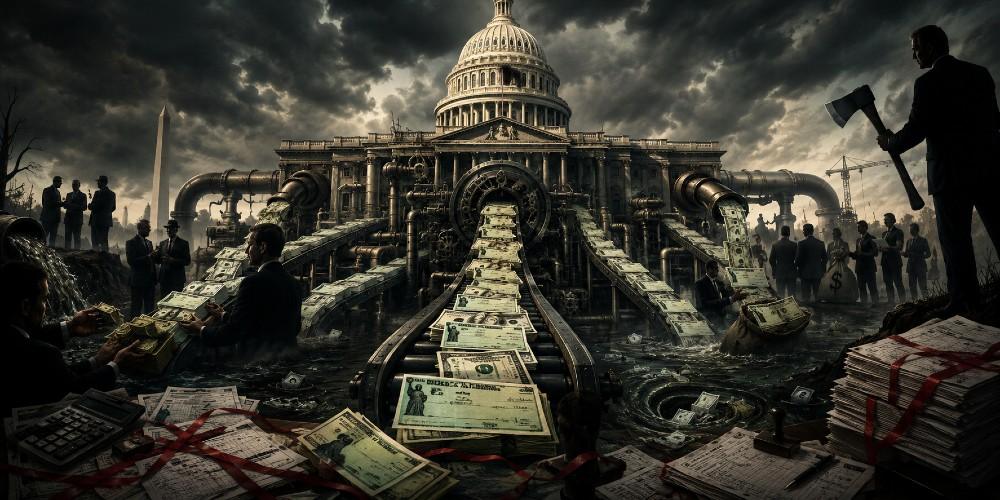
UNITED NATIONS IS A JUST A MONEY PIT AND AMERICAN TAXPAYERS ARE PAYING FOR THE WASTE!

Projects—and No One’s Watching

AP Photo/Evan Vucci

The federal government’s own watchdog has confirmed what the numbers have long made clear: the United Nations cannot be trusted to manage the money it receives, and the State Department has been complicit in letting it happen.

A new Government Accountability Office (GAO) report released in April examined 11 U.N. capital projects worth more than $4 billion combined. It found a predictable mess: years-long delays and nine-figure cost overruns, coupled with contractor failures and unusable designs, and a State Department bureau with no formal system for monitoring any of it.

American taxpayers are left footing the bill, though. GAO confirmed the U.S. was the largest financial contributor to the U.N. in 2023. As of early 2026, the U.S. owed approximately $2.2 billion in unpaid dues, a figure the U.N. has been loudly publicizing while simultaneously running construction projects into the ground. An organization pleading poverty while mismanaging billions in active construction budgets is not a victim of underfunding. It’s a management failure dressed up as a cash crisis.


Read More: Who Really Needs the United Nations Anyway?

The United States Must Stop Supporting the United Nations


The single biggest disaster is the U.N.’s “Strategic Heritage Plan” in Geneva, a renovation now four years behind schedule and $91 million over its original $871.4 million budget. COVID, supply chain issues, contractor failures: GAO cites them all. So does every private construction firm that still manages to finish buildings. The U.N. has no competitive pressure and no consequences for failure, and it shows. The report, linked above, noted:

“Costs increased by 27 percent from the baseline because of the SHP’s schedule extensions.”

The project’s risk firm calculated that for every month of delay, the costs rise about $1 million.

It gets worse. The contractor on Building H, part of the same Geneva project, couldn’t manage its own subcontractors, finished two years late, and then left behind a defect list that kept growing long after “completion.”

“In December 2022, the list of minor defects that were not addressed included 10,588 issues that the SHP team had identified. By February 2024, the list had increased to 11,350 issues and included 412 on which there was disagreement with the contractor.”

Then there’s the International Telecommunication Union headquarters project. Member states approved architectural blueprints without anyone considering “cost and functionality.” Architects had “free rein,” billed for designs that were never buildable, and walked away. The GAO reported the U.N. burned through more than $20 million before scrapping the original plan entirely — not one wall built, not one foundation poured. In any organization accountable to someone, that would be a career-ending failure. Here, it barely registers.

The State Department’s Bureau of International Organization Affairs had no formal guidance for monitoring any of it. No written indicators. No threshold for when to intervene. No chain of accountability. Staff rotated every few years and largely made it up as they went.

“State IO officials said they do not systematically monitor key indicators, such as budget and schedule, and do not have clear triggers, such as percentage over budget or time behind schedule, for when to take action.”

GAO recommended State develop formal oversight guidance. And State agreed, a basic step that somehow required a congressional audit to produce.

Now consider the timing. In January, U.N. Secretary General António Guterres warned all 196 member states of “imminent financial collapse” if the U.S. didn’t pay its dues, claiming the organization would run out of money by July. Pay up, or else.

What Guterres didn’t dwell on: his organization was four years behind schedule in Geneva, had torched $20 million on unusable designs, and let a defect list balloon past 11,000 unresolved issues. This is the same organization demanding to know why Washington is hesitating.

President Trump has already pulled the U.S. from several U.N. agencies. He should keep going. The GAO report makes the case without any editorializing: $4 billion in projects, years behind schedule, $20 million torched before a shovel hit dirt, and a State Department with no system to catch any of it. We need to stop paying, and start leaving them for good.

Editor’s Note: The Democrat Party has never been less popular as voters reject its globalist agenda.

This entry was posted in Uncategorized on May 10, 2026 by sterlingcooper.

HOW RUDY MADE NEW YORK GREAT AGAIN!!!

When Rudy Giuliani Made New York Great Again


New York Former Mayor Rudy Giuliani’s recent brush with mortality reminds us how clearly his administration showed that people, not impersonal forces, make history— especially men of vision and courage like him. His mayoralty also offers today’s floundering New York the fundamental lesson that good government can make a city flourish, while bad government impairs it.

Reigning wisdom when Mr. Giuliani took office in 1994 was that the problem-ridden city was “ungovernable.” Crime had skyrocketed in the preceding decades, with murders doubling in the 1960s and doubling once more over the next two decades before reaching 2,154 in 1991—one every four hours, roughly. Dope dealers hustled on the street alongside pushy panhandlers and prostitutes. Derelicts slept alongside graffiti-smeared buildings. An epidemic of car break-ins led owners to post “No Radio” signs in their windows, and auto alarms blared indignantly at all hours. Businesses fled: The 116 major corporate headquarters in Gotham in 1971 had dwindled to 49 by 1995. Small-business owners buzzed customers in through locked doors and, at closing time, rolled down metal security gates, luring graffiti vandals.

Mr. Giuliani, a former federal prosecutor, ignored the cliché that you could cut crime only by addressing so-called root causes, poverty and racism. He instinctively grasped the theory of social scientists James Q. Wilson and George Kelling that stopping small crimes would prevent more serious crimes, just as replacing a broken window halts more window-breaking by showing that somebody watches and acts. He had seen this theory proven in the subways in the two years before his election, when Robert Kiley, head of the Metropolitan Transportation Authority, kept subway trains and stations hosed clean of graffiti and transit police chief William Bratton started arresting turnstile jumpers and graffiti vandals. Crime in the subways began to fall. When Mr. Giuliani entered City Hall, he named Mr. Bratton the city’s police commissioner.

With the mayor’s vocal support, Mr. Bratton put broken-windows policing to work, arresting “squeegee men” who smeared dirty rags across motorists’ windshields, holding them hostage for a “contribution.” Even minor crime, he showed, had no place in Mr. Giuliani’s New York—a lesson he amplified by arresting graffiti taggers and public urinators. Police stopped, questioned and frisked those suspected of carrying weapons or casing a business, dissuading the ill-intentioned from packing guns while reducing shootings. Mr. Bratton made computer maps of crime hot spots and concentrated cops where thugs operated. City Hall’s revolutionary idea was that cops should prevent crime, not solve it after it happened.

The results were spectacular. Murders fell 20% to 1,561 the first year and a further 58% to 649 in 2001, Mr. Giuliani’s last year in office. With newly safe streets and subways, New York roared back to life. As the mayor cleared sex and smut businesses out of Times Square, he enticed Disney to restore a stately vacant theater as that area’s anchor. A visionary private effort had turned Bryant Park from a dope dealers’ den into a green oasis, and that district now thronged with tourists and office workers.

Restaurants and theaters boomed. Old businesses grew, and new ones opened, including even a tech Silicon Alley. Columbia and New York University became hot schools once parents stopped fearing urban crime. With opportunity burgeoning and the city’s rich inheritance of museums, concert halls, and landmark buildings safe to use, property values skyrocketed. Global tycoons looked to city real estate as a glamorous safe haven for money. New development proliferated, and construction workers, service staff and luxury retailers all profited. New York became once more the capital of the world.

Policy can change culture, Mr. Giuliani showed. It wasn’t the legacy of slavery that had created the disproportionately black urban underclass, he understood, but the message of victimhood and helplessness sent by framing crime as an inevitable response to oppression and welfare as deserved reparations. Criminals, not society, were to blame for crime, and welfare recipients were also citizens with agency who were responsible for their own fates.

Seizing on the 1996 welfare reform act, the Giuliani administration started an ambitious workfare program. Welfare offices became “job centers” and set welfare recipients to painting park benches, raking leaves and cleaning courtrooms. Recipients learned discipline and gained self-respect. Many moved into conventional jobs and, as in the nation as a whole, caseloads dropped dramatically.

A remarkable dividend of the new approaches to crime and welfare, one with only anecdotal rather than social- science evidence, was a dramatic thaw in race relations, as fear and resentment abated. But it didn’t last.

Beginning with the De Blasio administration in 2014, the Giuliani reforms slipped away while Amazon and then Covid and Zoom sharply challenged New York’s economic model of retail stores and office towers. As it holds on to old economic engines and searches for new ones, the city urgently needs the culture of personal agency and public safety that Mr. Giuliani fostered.

Mayor Zohran Mamdani evidently believes that legacy businesses and institutions are inexhaustible wealth-generators that, even as lowtax states beckon, will enable him to cultivate the tax-eaters and punish the taxpayers. That will prove a costly and tragic mistake.

This entry was posted in Uncategorized on May 9, 2026 by sterlingcooper.

SOUTHERN POVERTY LAW CENTER IS JUST ANOTHER SCAM!

Fake Perils Make Real Money

You didn’t need a legal case to know that the Southern Poverty Law Center, to stay alive, badly needs the perils it claims to deplore. The federal indictment, which charges the nonprofit with wire fraud, false statements and conspiracy to conceal money laundering, alleges that the Montgomery, Ala.-based group paid hefty sums to “informants” supposedly operating inside extremist groups. Millions of dollars allegedly went to these “field sources”—Klan members, neo-Nazis—even as the SPLC labeled the same organizations dangerous extremists on its website.

One of the indictment’s claims, if borne out, so perfectly captures the cynicism of radical politics in the 2020s that you’d call it far-fetched if you read it in a novel by Christopher Buckley. The indictment alleges that one source “was a member of the online leadership chat group that planned the 2017 ‘Unite the Right’ event in Charlottesville, Virginia and attended the event at the direction of the SPLC.” This person, say prosecutors, “made racist postings under the supervision of the SPLC and helped coordinate transportation to the event for several attendees.” Between 2015 and 2023, the nonprofit paid this informant $270,000.

The SPLC’s lack of compunction amazes, but its intrigues flow from the nature of the activist nonprofit enterprise. Like almost all advocacy organizations, the SPLC faces the temptation to exaggerate the urgency of its mission and the extent of its accomplishments. Donors respond to big claims and menacing specters. Hence the SPLC’s desperate effort to defame people and organizations on the political right—Charles Murray, Prager University—as promoters of ” hate” and “extremism.” The war for America’s soul may go well or poorly, but the money’s got to keep flowing.

Which is why that Unite the Right rally was the best thing ever to happen to the SPLC. A gathering of, at most, 500 young nincompoops high on racist humbug metamorphosed, in the minds of anxious Americans—and with the media’s help—into a mass movement of brownshirts ready to seize the country’s institutions and overthrow its government. Donations to the nonprofit ballooned in the year after the rally.

The SPLC didn’t create the Charlottesville rally, though its machinations probably helped at the margins. The import of the episode, though, lies in the fact that the nonprofit’s leaders plainly felt it had an interest in making the threat of white racial bigotry appear to hold more sway over American life than it does. “Interest” in the crassest, monetary sense.

The modern liberal outlook, to borrow the political philosopher Kenneth Minogue’s metaphor, must have dragons to slay. When the dragons diminish in size or die out altogether, the civic-minded liberal naturally wants to invent bigger ones, if only to have things to worry about. As with every such mental pathology, this one offers financial rewards to determined exploiters.

The late Jesse Jackson based a lucrative career on the fiction that America in the 1980s and ’90s still excluded black Americans from opportunity in the way the South had under Jim Crow. The static

history of racist America he helped to propagate allowed Jackson, in the 2000s and 2010s, to threaten large companies with boycotts on the grounds that they hadn’t done enough to mitigate racism. His attacks would conveniently cease when the companies agreed to donate to Jackson’s political operation.

Al Sharpton followed the same path. Only Mr. Sharpton, unapologetic perpetrator of the 1987 Tawana Brawley hoax, spun the perception of perennial racism into a decadeslong media career. Ibram X. Kendi, Robin DiAngelo and other “antiracist” theorizers attained celebrity status by persuading millions of well-meaning people to fear and loathe nonexistent monsters.

The District of Columbia teems with nonprofits dedicated to the proposition that one thing or another menaces the citizenry. Human Rights Campaign, to take one example, regularly informs its followers and donors that gay, “trans” and “gender-expansive” Americans suffer from routine violence and bigotry at the hands of their countrymen. In 2025, HRC brought in $46 million in contributions.

Climate catastrophism has grown into a global grift, with poor countries demanding billions in “reparations” from nations with functioning markets, but consider climate alarmism’s role in American politics. For decades, the Environmental Protection Agency and related government bodies have doled out grants to climate- related nonprofits that return the favor by churning out apocalyptic reports about an always-imminent climate crisis. The 2022 Inflation Reduction Act supersized that effort. In 2023, the Biden administration came up with what it called the American Climate Corps, to “mobilize the next generation of clean energy, conservation and resilience workers”: that is, to send millions of public dollars sluicing through climate nonprofits around the country.

To its credit, the Trump administration canceled the program, but similar funding streams proliferate across federal and state agencies. A cynical observer might feel inclined to use the word “racket”: Environmental agencies fund activist groups, which make apocalyptic claims more credible, thus enabling the agencies to demand more funding and regulatory authority from government budgetwriters. Now that’s what I call sustainability.


This entry was posted in Uncategorized on May 2, 2026 by sterlingcooper.

MEET THE LOCAL CELEBRITIES TWO OF THE HARDEST WORKING DOGS AT THE AIRPORT…WHO NEEDS PEOPLE!?

The hardest-working staff at the airport? These two good boys.

Border collies Hercules and Ned help protect planes and passengers from bird strikes. We spent a day with the local celebrities at work.

Yesterday at 5:00 a.m. EDT
Ned, left, and Hercules take a break from work at the West Virginia International Yeager Airport, where they patrol and clear wildlife on the airport runways. (Rich-Joseph Facun for The Washington Post)

Five days a week, and sometimes weekends, the herding dogs punch the clock and go to work clearing birds and woodland creatures from the mountaintop airfield at CRW. Their job as “wildlife canines” is critical to protecting planes and passengers from potentially dangerous wildlife strikes.

.

“My co-workers are all about the safety of the people flying in and out of the airport,” said Chris Keyser, 59, the airport’s wildlife specialist and dog handler. “They always want to do their job to make everybody safe.”

Collisions with local fauna is a real and rising threat. Between 1990 and 2024, the Federal Aviation Administration received reports of 313,716 strikes, including 25 accidents that caused 52 human deaths. In 2024, the agency registered 22,372 collisions, a 14 percent increase from the previous year.

Since the dogs joined CRW’s wildlife management team — Hercules in 2018 and Ned in 2024 — Keyser said bird strikes have declined by more than 70 percent. As of January, according to the FAA Wildlife Strike Database, the airport has submitted only one incident to the agency, a brush with a common grackle.

A portrait of Hercules, along with his various work gear (blue pilot’s cap, goggles) and honorary patches. (Rich-Joseph Facun for The Washington Post)

“Border collies are so intelligent and can endure the heat and cold really well,” said Keyser, who owns seven dogs. “They are full of energy and they like doing their job, because they’re herding dogs. It’s born in them.”

The 9-year-old Hercules owes his livelihood to Piper, the border collie who chased 9,347 birds over 6,206 hours at Cherry Capital Airport in Traverse City, Michigan. Piper died of cancer in 2018.

CRW airport authorities, inspired by Piper’s accomplishments, decided to recruit a border collie of their own. After graduating from Flyaway Geese, a North Carolina dog-training facility, Hercules moved to the Charleston airport. When he was 7 years old and starting to slow down, Keyser drove back to North Carolina and returned with Ned, a tireless go-getter with a shiny black coat and pointy bat ears.

“Herc is a working dog and loving dog,” Keyser said. “And Ned is all about work, but he likes to play ball, too.”

Since introducing Hercules and later Ned, 4, on social media, the pups have gained celebrity status with about 72,000 followers on Instagram and TikTok. Passengers and flight crew members passing through Charleston often request a cuddle session with the pups. The dogs even have their own apparel line as well as souvenir swag sold at the airport gift shop.

I count myself a fan and was delighted when Keyser invited me to accompany the pups on a daily patrol earlier this month. Unlike many working dogs at airports, petting Hercules and Ned is allowed. The wildlife team, in fact, encourages it.

Preparing the dogs for duty

Hercules, left, and Ned prepare for another shift of work with wildlife specialist Chris Keyser. (Rich-Joseph Facun for The Washington Post)

6:49 a.m. Keyser arrives in the pre-security departures hall a few minutes after the first plane of the day, a Chicago-bound United flight, has lifted off. He dashes outside to grab a biscuit from a friend who asks if, in return, he can say hello to the dogs.

Unfortunately, Hercules and Ned have not clocked in yet.

7:04 a.m. In a back office inside the Airport Response Coordination Center, a creature stirs.

“I can see a little nose,” says Keyser, peering through a crack in the blinds covering the door to their den.

Hercules and Ned live at the airport full-time, in an all-white room furnished with dog beds and kennels, hooks for their leashes, harnesses, pilot hats and coats, and a shrine to them. Portraits by admirers adorn the walls, and a display case contains military patches that soldiers traded in exchange for a Wildlife Patrol CRW badge embossed with a cartoon image of the pups.

After a breakfast of kibble and fish oil, Keyser says the magic words: “Are you ready to run some birds?”

First runs of the day

Keyser patrols the airport in his SUV, with Ned and Hercules in tow. (Rich-Joseph Facun for The Washington Post)

7:30 a.m. Hercules and Ned jump into the back seat of a white SUV emblazoned with a logo of the goggled dogs — the same graphic that appears on the back of Keyser’s hoodie and the patches as well as the magnets and mugs sold in the airport gift shop. (Some of the products predate Ned and feature only Hercules.)

Inside the vehicle, the air conditioning blasting on a crisp April morning, Keyser describes the four seasons through the lens of a border collie.

In the spring, when migratory birds are flying north, the dogs can disperse flocks of up to 200 crows, rafters of turkeys and nimbus clouds of starlings, one of the most dangerous hazards for planes. If starlings make contact with an aircraft, Keyser said it is like “getting hit with a shotgun.” April rains turn the grassy airfield into an all-you-can-eat buffet for birds.

“If we make it unpleasant, they won’t want to come here to eat,” he said.

Ned, left, and Hercules wait for another flock of birds or other wildlife to chase. (Rich-Joseph Facun for The Washington Post)

Summer slows down, as birds seek shade from the heat. Fall picks up with birds of prey, such as barn and screech owls and red-tail hawks. On gusty days, upward of 50 turkey vultures can surf the wind currents overhead. Anytime of the year, the dogs might come across a whitetail deer, coyote or turtle, which can derail a taxiing plane.

7:45 a.m. Before driving onto the airfield, Keyser calls the air-traffic control tower to check in. Ned, upon hearing a voice crackle over the radio, joins the conversation, whining and barking.

Keyser runs the dogs on all four taxiways, plus the perimeter and the one runway, totaling five or six miles a day. Though the 767-acre airport is small — it served 423,000 passengers last year, nearly 106 million fewer than Hartsfield-Jackson Atlanta International Airport — it can be busy.

In addition to three major airlines and one budget carrier, CRW serves the West Virginia Air National Guard’s 130th Airlift Wing; private jets, military and cargo planes from the Capital Jet Center; and Marshall University’s flight school.

7:50 a.m. On their first lap, the dogs speed by a parking lot of C-130 Hercules aircraft, the namesake of the elder border collie. (Keyser had tried to rename Ned, but the young pup ignored any commands directed at “Charlie.”)

Hercules, left, and Ned wait for a command at CRW as Keyser checks the perimeter of the property. (Rich-Joseph Facun for The Washington Post)

“Shake ’em out. Flush ’em out. Get the stubborn ones,” Keyser shouted at the blur of fur. “Look, look, look. Look, look, look. Shh, shh, shh.”

So many birds are migrating that they’re appearing on weather radar
 
Some prep for bear invasions, but little environmental policy expected at G…

June 17, 2025

“Good job!” Keyser shouts, their reward for being such good dogs.

This entry was posted in Uncategorized on April 27, 2026 by sterlingcooper.

CRAZY APARTMENT PRICES IN MONACO, CAN IT BE DIRTY MONEY? SAY IT IS NOT SO!

Three Bedrooms for €60 Million Shows Monaco’s Dirty Money Headache

A leaked trove of emails regarding the world’s priciest real estate offers a window into how the principality grapples with money laundering.
  • The Mareterra development in Monaco features 114 waterfront homes that initially sold for €16 million to almost €500 million, making it one of the most expensive and exclusive addresses on the planet.
  • Monaco has been added to the “grey list” for being deemed insufficiently vigilant about dirty money, and has since strengthened regulation and set up a financial intelligence and anti-money-laundering watchdog.
  • The principality’s new laws and greater oversight, including a tightening of know-your-customer rules, have led to penalties for firms that fail to flag suspicious activities, and may be diminishing Monaco’s appeal for some wealthy individuals.
Standing on the windswept balcony of the expansive apartment in Monaco’s Mareterra development feels a little like being on a superyacht heading out to sea. The unobstructed view of the Mediterranean stretches to the horizon, the pale ash floors evoke a ship’s deck, and fresh breezes keep things cool even on the hottest summer days.
The other thing the flat shares with a floating luxury palace: its price. Listed at more than €60 million ($70 million), the three-bedroom home costs more than many billionaires might spend on a sumptuous schooner or cruiser.
Those prices haven’t stopped the world’s ultrawealthy from snapping up Mareterra properties since they were first listed while still under construction in 2017. The 114 waterfront homes initially sold for €16 million to almost €500 million, and they would now likely cost even more. That makes Mareterra one of the most expensive and exclusive addresses on the planet, with views of the winding Grand Prix circuit, just a 10-minute walk from the storied casino and a few minutes farther from the yacht harbor.
The problem is, some prospective buyers of those properties have trouble establishing they’re the kind of residents the principality wants. For more than a century, Monaco has attracted tycoons, movie stars and sports legends—not to mention some less-savory types whose fortunes can’t always be traced to legitimate sources. A century ago, Somerset Maugham purportedly dubbed the area “a sunny place for shady people.” But Monaco, under increasing pressure to crack down on financial misdeeds, says those buyers are no longer welcome.
Those concerns came to a head in June 2024, just six months before Mareterra’s inauguration, when the country of 39,000 residents was added to the “grey list,” a roster of jurisdictions such as Syria, Venezuela and Yemen deemed insufficiently vigilant about dirty money.
The designation by the Paris-based Financial Action Task Force, a global watchdog created by the Group of Seven in 1989, sent Monaco into panic mode. As concern about being added to the list grew, the reigning monarch, Prince Albert II, shook up the Finance Ministry and strengthened regulation. The hit to Monaco’s image was “a wake-up call,” says Pierre-André Chiappori, who served as finance minister from March 2024 until last month. “We were maybe not alert enough in the past.”
Four areas were singled out as potential fronts for money laundering: real estate, yachting, sporting agents and private banks. The principality has started clamping down on companies that fail to flag suspicious activities, and it has set up the Autorité Monégasque de Sécurité Financière, a financial intelligence and anti-money-laundering watchdog. There are signs, though, that the actions are diminishing Monaco’s appeal for some people wealthy enough to afford the eye-popping prices at Mareterra, built on nearly 15 acres reclaimed from the sea.
The fresh laws and greater oversight include a tightening of so-called know-your-customer rules, which require businesses to understand where their clients’ money comes from and alert authorities about any suspicions. In the past year the regulator has penalized six firms for deficiencies, including two real estate agencies deemed to have insufficiently vetted buyers, including one that handled a Mareterra transaction.
As Monaco works to shake the grey-list designation, it’s instructive to look at the real estate sector, the heart of Monaco’s economy.
The principality’s property records as well as a stash of emails and preliminary deeds from Mareterra offer a snapshot of early sales and the vast sums at play. Bloomberg Businessweek reviewed documents from Distributed Denial of Secrets, a nonprofit that preserves hacked and leaked materials believed to be in the public interest. While there’s no suggestion that the developer or any individuals named in the materials were involved in any wrongdoing, the documents provide insight into the inner workings of the highest end of the property market, its broad geographic reach and Monaco’s concerns about money laundering.
The information included hundreds of messages between developer L’Anse du Portier, a local notary, bankers and several dozen prospective buyers or their representatives. They date from 2017, when construction of the seabed infrastructure was still underway, through mid-2022, more than two years before people began to move in. Interested parties included storied names such as UK chemicals billionaire Jim Ratcliffe; Formula One star Max Verstappen (he wanted six bedrooms and 14 parking spots); and Ukraine’s richest man, Rinat Akhmetov, who shelled out €471 million—almost certainly the priciest flat ever sold—for five full floors in an 18-story ceramic-and-glass structure (called “Le Renzo,” for its designer, starchitect Renzo Piano) that appears to float over the neighborhood.
Buyers had to be approved by Patrice Pastor, the head of Monaco’s most powerful property dynasty and the man who spearheaded the development. A L’Anse du Portier executive told the French daily Nice-Matin in 2022 that Mareterra required personal interviews with prospective buyers, and not just their legal representatives, with the aim of getting “the best people for the neighborhood.” That restriction, the executive said, would effectively rule out “clients from the Middle East, Asia and most Russians,” who tend to be less interested in dealing with such details on their own.
Yet among the first transactions in the cache of emails were deals by individuals with links to Russia that added up to more than €1 billion. Little-known aviation executives Konstantin Krivchenko and Dmitry Kuptsov—Russian-born, but with Irish passports—wanted to acquire four villas at €100 million each through specially created companies that Monaco authorities approved over Christmas 2017. Later emails indicate the pair missed payments on some properties, and they ultimately downsized to a single 2,300-square-meter (25,000-square-foot) villa with hammam, sauna, cinema, and massage and wine-tasting rooms. A representative for the men declined to comment.
In 2018, Valeriy Votinov, the then-21-year-old son of a former executive at oil giant Rosneft, offered more than €500 million for nine properties—among a flurry of transactions in the principality he was involved in around that time. In an email, Pastor described the largest of the prospective deals at Mareterra as “an important step” for the development. At the time his father, Andrey, was fighting extradition from the UK to Russia on charges of embezzlement (Russia’s request was turned down as British courts said the defendant might not get a fair trial).
Three years later, emails show the younger Votinov agreed to pay an additional €135 million for a five-story villa called Dream Catcher, with indoor and outdoor pools, a 10-car garage, and a disco in the basement. Yet when he left Rosneft in 2014 after two decades there, Andrey Votinov held a stake that would have been worth only about $1 million, according to company filings.
As Votinov tried to resell three of his flats after Russia’s full-scale invasion of Ukraine, the proposed buyer’s bank asked questions. A lawyer for Votinov wrote back: “Given the current context, it may be useful to point out that this shareholder is a Cypriot national and does not have Russian nationality.” Neither Votinov responded to requests for comment.
Russian steel tycoon Victor Rashnikov and his daughter had planned before the war to purchase Mareterra properties worth tens of millions of euros involving a Cyprus company and a Geneva bank. Rashnikov subsequently faced sanctions, and his attorney says his sale never went through and that he owns no property in the principality.
The Monaco government declined to comment on any particular transactions but says that it applies all EU sanctions and that any significant real estate purchases are subject to review, particularly those in Mareterra. Guy-Thomas Levy-Soussan, a lead executive behind the development, says “the sale of properties in Mareterra adhered to the highest standards of compliance,” in particular when it comes to money laundering and international sanctions. He says L’Anse du Portier gathered information on prospective buyers—the origin of their wealth, whether they’re legal residents of the principality, and if they already owned property there—to guide its selection, and that many were turned down.
Even before Monaco landed on the grey list, authorities say they were trying to root out so-called letter-box residents—people benefiting from the country’s zero income tax rate who didn’t really live there for the required six months annually. Newcomers must open a bank account and find housing before getting a residence permit. Homes must be big enough to house everyone who’s said to be living there, and authorities sometimes monitor utility bills and credit card expenses as evidence. “Monaco is a lot less of a ghost town compared to 10 years ago,” says Florian Valeri, head of real estate brokerage Barnes Valeri Agency.
Get the Singapore Edition newsletter in your inbox.
Go beyond the headlines with insights into one of Asia’s most dynamic economies. Delivered weekly.
By continuing, I agree to the Privacy Policy and Terms of Service.
The grey-list designation adds to growing concerns among some locals that Monaco has lost ground as an international wealth destination, though the war in the Persian Gulf may change those calculations. An annual index from Barnes’ global parent, conducted before the hostilities, showed Monaco dropping 10 spots this year to 14th among cities with the greatest appeal for the ultrarich. Property consultant Knight Frank says that while Monaco remains the planet’s priciest real estate market, Dubai led growth in high-end residential property purchases over the past five years. And citizenship adviser Henley & Partners’ 2026 list of leading destinations for millionaires is topped by the United Arab Emirates and includes Portugal, Greece, Italy and Switzerland—but not Monaco.
The slide risks cooling a property market that’s as hot as you’d expect in a country smaller than Central Park with the world’s highest per capita income. But the stronger rules for banking, starting businesses and applying for residence permits are also becoming impediments to investment. “It’s a real challenge to open a bank account in Monaco,” says Remi Delforge, a lawyer who advises foreigners moving to the principality.
One person working in the Monaco property sector says a wealthy person from the Middle East recently gave up trying to gain residency after being asked for bank statements dating back decades, including from institutions that no longer exist. Some banks are reluctant to take on any new Chinese and Russian clients, says the person, who asked not to be identified discussing private transactions.
Chiappori, the former finance minister, says Monaco has carried out a sweeping inventory of property companies and that further money-laundering-related sanctions are in the pipeline. While it’s uncertain how long it will take to get off the grey list, he says the tougher restrictions are permanent. And if that means some potential buyers decide against Mareterra or Monaco’s next hyper-expensive project, that’s OK. “We don’t need dirty money,” he says. “The cost of tarnishing our image would be much higher than the benefits of selling an expensive apartment.” —
This entry was posted in Uncategorized on April 22, 2026 by sterlingcooper.

NEW YORKERS NOW LEARN ALL ABOUT SOCIALISM, ALWAYS STEAL OTHER PEOPLES MONEY, NEVER USE THEIR OWN!

“Mamdani Mart” Exposes The Inefficiency Of Socialism In One Chart

Saturday, Apr 18, 2026 – 05:05 PM

Andreessen Horowitz’s a16z New Media published the most popular charts of the week on financial markets, but the most revealing one came at the end of the note: a comparison suggesting that New York City’s first grocery store, which will soon be run by unhinged socialists, will be structurally less efficient than private-sector supermarkets.

But who cares when it’s not taxpayer monies?

According to the New York Post, Mayor Zohran Mamdani’s proposed city-owned grocery store in East Harlem would require roughly $30 million in taxpayer funding.

At just 9,000 square feet, the project implies a construction cost of about $3,000 per square foot – an exceptionally and alarmingly high number by grocery industry standards.

From an economic standpoint, the “Mamdani Mart” underscores a familiar pattern: state-directed supermarkets often fail to achieve the cost discipline, operational efficiency, and scale seen in private-sector chains.

xperimented with socialism:

  • “There’s No Nothing”: Empty Shelves, Rotten Odors Plague Gov’t-Funded Supermarket In Missouri

The end result is Cuba.


When taxpayer-funded stores fail, socialists will never blame themselves but will merely say they didn’t experiment hard enough.

  • nd The Radicalization Of America’s Nonprofit Left

Socialism is inherently parasitic, abusing productive taxpayers to subsidize left-wing experiments. It always tend to fail. Let’s not forget CNBC’s Sara Eisen blasted the far-left mayor after he filmed a promotional video touting a proposed new tax on luxury properties.

50,480302
This entry was posted in Uncategorized on April 19, 2026 by sterlingcooper.

OBAMA PRESIDENTIAL LIBRARY LOOKS LIKE A PRISON!!!

image_0The Obama center sits on 19.3 acres in Chicago and contains a basketball court, two-level playground, recording studio and newly commissioned public art.

CHICAGO—Barack Obama’s new presidential center isn’t a cheap date, and neither is his adopted hometown.

When it opens June 19, it will set at least three modernera records for a former White House occupant: time taken to be completed, project cost and the price to get inside.

At $30, adult admission to see the 44th president’s story is more than at any other U.S. presidential library, a Wall Street Journal review shows. That is 59% higher than the average for presidents from John F. Kennedy through George W. Bush.

The top admission for the Obama Presidential Center is in keeping with the record expense of the project in a city known for complex and costly urban development, steep taxes and premium cultural attractions.

Chicago is certain to become a Democratic mecca for those eager to reconnect with their party’s most popular living former president. The center is expected to attract approximately 700,000 visitors annually and be an economic engine for the city, while also potentially helping transform the surrounding lower-income neighborhood.

The crowds and fundraising success (the Obama Foundation has disclosed donors of $1,001 or more) contrast with the struggles of the next Democratic president after Obama.

Former President Joe Biden has gotten off to a slow fundraising start for a center in Delaware, with some donors saying raising the necessary funds will be a heavy lift given how his presidency ended.

While the Obama project was initially estimated at $300 million, the final price tag hit about $850 million. The 19.3-acre campus includes a museum, foundation offices, a public library and recreational spaces.

Roughly $500 million was raised for the most recently built presidential shrine, the George W. Bush Presidential Library and Museum in Dallas.

Illinois residents, who helped underwrite some infrastructure costs, will get in free on Tuesdays and receive a $4 discount other days.

“Our campus is free and open to the public, with the exception of the four floors of the museum,” said Emily Bittner, a foundation spokeswoman. “We offer tremendous new amenities that no other presidential center provides, like an NBA-regulation-size basketball court, two-level playground, recording studio, classroom spaces and more than two dozen newly commissioned pieces of public art.”

Admission is in line with other major Chicago attractions. The Kenneth C. Griffin Museum of Science and Industry, not far away on the city’s South Side, is $25.95 for an adult. The Adler Planetarium is $25, while the Art Institute of Chicago is $32.

The Obama center’s opening is roughly five years behind what was originally planned after preservationists and activists slowed construction in court. Pandemic-related disruptions also delayed work.

Presidential libraries opened in recent decades in about half the time as this one, Wall Street Journal calculations show. The Ronald Reagan Presidential Library opened just more than 1,000 days after he left office. Bill Clinton’s took 1,398 days. The libraries of George H.W. Bush and George W. Bush averaged 1,653 days. Obama’s is set for 3,437 days.

Obama’s center won’t technically be a library. Instead, his foundation is paying $5 million to support digitizing millions of pages of unclassified records for online use. It will be run by the foundation rather than the National Archives and Records Administration, the federal agency that traditionally operates the libraries and museums.

This entry was posted in Uncategorized on April 18, 2026 by sterlingcooper.

HUMANOID ROBOTS ARE BECOMING THE NEXT WORKFORCE? CHINA IS LEADING THE WAY!

Humanoid robots show off their language and boxing skills in Hong Kong

HONG KONG (AP) — A humanoid robot about the size of a primary school student had something to share in Hong Kong — it sang songs and spoke to people in Mandarin and English, answering whatever questions they posed and delighting the audience around it.

More than 100 robots were showcased at two exhibitions starting Monday at the Hong Kong Convention and Exhibition Center. The X2 Ultra robot from China’s prominent humanoid robot manufacturer AGIBOT Innovation (Shanghai) Technology Co. was among them.

When asked about its hobbies, the robot’s list went from doing sports and dancing to studying technology and listening to music. Describing the people in front of it is no challenge either: “a woman holding a phone, a woman holding a bag and a phone, a man holding a camera,” it said at one point.

Calvin Chiu, the chief operating officer of Novautek Autonomous Driving, AGIBOT’s agent in Hong Kong, said that the robot can provide emotional satisfaction to humans through conversations and serve as a teacher to older adults and children. Different robots can be programmed with different personalities, too.

“It would be like a friend,” Chiu said.

Chinese manufacturers among leading players

In China, technology has evolved into an area of competition with the U.S., with national security implications. Beijing’s latest five-year plan vows to “target the frontiers of science and technology.” Speeding up the development of products like humanoid robots and their applications is part of the 2026-2030 plan for the world’s second-largest economy.

Official data showed China had more than 140 humanoid-robot manufacturers and more than 330 models in 2025.

London-based technology research and advisory group Omdia recently ranked three of them — AGIBOT, Unitree Robotics and UBTech Robotics Corp. — as the only first-tier vendors in its global assessment in terms of shipment numbers. They all shipped more than 1,000 units of general-purpose embodied intelligent robots last year, with the first two companies shipping more than 5,000 units, the report said.

In February, humanoid robots were among the highlights of the CCTV Spring Festival  in China, a television show celebrating the Lunar New Year. A martial arts performance by children and robots stole the spotlight.

s a bill allowing closed-door trials for national security reasons

Diverse applications and manufacturing advantages

Some Chinese exhibitors flexed their advances at the Hong Kong Convention and Exhibition Center on Monday, showing robotic capabilities that ranged from talking to humans, punching and sand painting to doing backflips and catching suspects with nets during security patrol demonstrations.

Robert Chan, global strategy officer at EngineAI, based in Shenzhen, brought its PM01 robot to showcase its mobility, including doing a front flip. His company plans to launch two factories in China for mass production this year.

He said that China enjoys advantages in certain areas, such as low-cost engineering. He also pointed to the pattern of sharing know-how between companies, unlike in the United States and Europe, where companies typically shield their own technology.

Human-looking robots

Chan foresaw that the next stage of robotics would move toward robots featuring bodies looking like people, with more emotional exchanges and facial expressions, or even looking like they can breathe. That is about plugging the gap in robots’ interactions with humans, he said.

“The warmth and emotion exchange with the human being. Besides, helping humans to make the decision and helping humans to complete their task,” he said.

One company in the exhibition appears to be moving toward that direction.

From a distance, three women appear to be greeting guests at an exhibition booth at one corner. Up close, they turn out to be humanoid robots that could be the future of customer service and museum tour guides.

Wang Zuhua, business director at Shenzhen DX Intech Technology Co., said that the company sold more than 400 robots designed with female features and soft synthetic faces. Some are already working in museums and government venues on the mainland, where they can lead guests to washrooms and offices or provide venue tours, he said.

Malaysian visitor Russel Lupang was amazed by their appearances and movements.

“It’s beautiful, but not real feeling,” he said.


This entry was posted in Uncategorized on April 14, 2026 by sterlingcooper.

Post navigation

← Older posts
Newer posts →

Recent Posts

  • FIVE JOBS THAT ARE STRESSFUL AND NOT WORTH IT INCLUDING ONE FOR $9 MILLION ANNUAL COMPENSATION!
  • CALIFORNIA’S PROPOSED WEALTH TAX IS MAKING SOME LEAVE ALTOGETHER; WHY LIVE IS A STATE THAT WANTS TO STEL YOUR WEALTH AND GIVE IT TO ILLEGAL ALIENS OTHERS PLAN STRATEGIES TO AVOID IT
  • UFC WHITE HOUSE OCTAGON FIGHT RING GIRLS EXPLAINED…
  • SULTAN OF BRUNEI OWNS THE WORLD’S LARGEST HOME? DOES HE REALLY NED THAT MUCH SPACE?
  • CHINESE ELECTRIC CARS ARE POPULAR ALL OVER THE WORLD, EXCEPT IN CHINA!!!!

Sterling Cooper, Inc. © 2023,  Privacy Policy