Welcome to Sterling Cooper, Inc.
  • CALL US: +1-866-285-6572
  • CALL US: +1-866-285-6572
LOGO
  • INCREASE YOUR REVENUES
    50%-100% - FREE EVALUATION
  • WEF 2025 GLOBAL
    RISKS REPORT
  • CAPITAL GAINS
    TAX DEFERRED
  • INCORPORATE
    NOW FOR $39
  • RESEARCH
    REPORTS
  • ENGULF &
    DEVOUR
  • Home
  • Services
    • Selling a Business
    • Buying a Business
    • Public Relation
    • Cooper consulting
    • Advertising
    • Publishing
    • Web and IT Services
    • Loans
  • Seller
  • buyer
  • Advertising
  • Publishing
  • M&A Due Diligence
  • Blog
  • Contact
LOGO
Featured post

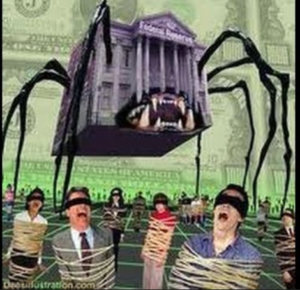
ALL SMALL BUSINESSES ARE CRIMINALS ACCORDING TO THE GOVERNMENT!

Get this, our nasty Senators and Congressmen have now activated a LAW that considers all businesses with less than $5 million in revenue and 20 employees or less to be FIRST considered as financial criminals.
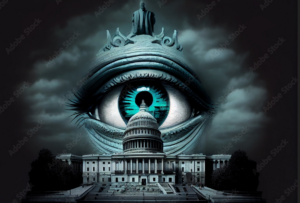
LUCKILY PRESIDENT TRUMP STOPPED THIS FARCE!

On March 21, 2025, the Financial Crimes Enforcement Network (FinCEN) announced that, consistent with the Department of the Treasury’s March 2, 2025, announcement it was issuing an interim final rule that removes the requirement for U.S. companies and U.S. persons to report beneficial ownership information (BOI) to FinCEN under the Corporate Transparency Act. FinCEN published this interim final rule on March 26, 2025.

In the interim final rule, FinCEN revises the regulatory definition of “reporting company” to mean only those entities that are formed under the law of a foreign country and that have registered to do business in any U.S. State or Tribal jurisdiction by the filing of a document with a secretary of state or similar office (formerly known as “foreign reporting companies”). FinCEN also exempts entities previously known as “domestic reporting companies” from BOI reporting requirements. Thus, through this interim final rule, all entities created in the United States — including those previously known as “domestic reporting companies” — and their beneficial owners will be exempt from the requirement to report BOI to FinCEN.

The law now mandates reporting of the BENEFICIAL OWNERS of ALL companies and businesses operating in the USA FINANCIAL CRIMES ENFORCEMENT NETWORK (FInCEN) or face fines and JAIL!

AS SMALL BUSINESS YOU ARE ALL SUSPECTED CRIMINALS1

Financial Crimes Enforcement Network (FinCEN) issued a final rule implementing the bipartisan Corporate Transparency Act’s (CTA) beneficial ownership information (BOI) reporting provisions. The rule will enhance the ability of FinCEN and other agencies to protect U.S. national security and the U.S. financial system from illicit use and provide essential information to national security, intelligence, and law enforcement agencies; state, local, and Tribal officials; and financial institutions to help prevent drug traffickers, fraudsters, corrupt actors such as oligarchs, and proliferators from laundering or hiding money and other assets in the United States.

Illicit actors frequently use corporate structures such as shell and front companies to obfuscate their identities and launder their ill-gotten gains through the United States. Not only do such acts undermine U.S. national security, they also threaten U.S. economic prosperity: shell and front companies can shield beneficial owners’ identities and allow criminals to illegally access and transact in the U.S. economy, while disadvantaging small U.S. businesses who are playing by the rules. This rule will strengthen the integrity of the U.S. financial system by making it harder for illicit actors to use shell companies to launder their money or hide assets.

Recent geopolitical events have reinforced the point that abuse of corporate entities, including shell or front companies, by illicit actors and corrupt officials presents a direct threat to the U.S. national security and the U.S. and international financial systems. For example, Russia’s illegal invasion of Ukraine in February 2022 further underscored that Russian elites, state-owned enterprises, and organized crime, as well as Russian government proxies have attempted to use U.S. and non-U.S. shell companies to evade sanctions imposed on Russia. This rule will enhance U.S national security by making it more difficult for criminals to exploit opaque legal structures to launder money, traffic humans and drugs, and commit serious tax fraud and other crimes that harm the American taxpayer.

At the same time, the rule aims to minimize burdens on small businesses and other reporting companies. Millions of businesses are formed in the United States each year. These businesses play an essential and important economic role. In particular, small businesses are a backbone of the U.S. economy, accounting for a large share of U.S. economic activity and driving U.S. innovation and competitiveness. U.S. small businesses also generate millions of jobs, and in 2021, created jobs at the highest rate on record. It is anticipated that it will cost reporting companies with simple management and ownership structures—which FinCEN expects to be the majority of reporting companies—approximately $85 apiece to prepare and submit an initial BOI report. In comparison, the state formation fee for creating a limited liability company (LLC) can cost between $40 and $500, depending on the state.

Beyond the direct benefits to law enforcement and other authorized users, the collection of BOI will help to shed light on criminals who evade taxes, hide their illicit wealth, and defraud employees and customers and hurt honest U.S. businesses through their misuse of shell companies.

The rule describes who must file a BOI report, what information must be reported, and when a report is due. Specifically, the rule requires reporting companies to file reports with FinCEN that identify two categories of individuals: (1) the beneficial owners of the entity; and (2) the company applicants of the entity.

The final rule reflects FinCEN’s careful consideration of detailed public comments received in response to its December 8, 2021 Notice of Proposed Rulemaking on the same topic, and extensive interagency consultations. FinCEN received comments from a broad array of individuals and organizations, including Members of Congress, government officials, groups representing small business interests, corporate transparency advocacy groups, the financial industry and trade associations representing its members, law enforcement representatives, and other interested groups and individuals.

Balancing both benefits and burden, the following are the key elements of the BOI reporting rule:
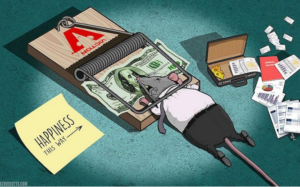
Reporting Companies

  • The rule identifies two types of reporting companies: domestic and foreign. A domestic reporting company is a corporation, limited liability company (LLC), or any entity created by the filing of a document with a secretary of state or any similar office under the law of a state or Indian tribe. A foreign reporting company is a corporation, LLC, or other entity formed under the law of a foreign country that is registered to do business in any state or tribal jurisdiction by the filing of a document with a secretary of state or any similar office. Under the rule, and in keeping with the CTA, twenty-three types of entities are exempt from the definition of “reporting company.”
  • FinCEN expects that these definitions mean that reporting companies will include (subject to the applicability of specific exemptions) limited liability partnerships, limited liability limited partnerships, business trusts, and most limited partnerships, in addition to corporations and LLCs, because such entities are generally created by a filing with a secretary of state or similar office.
  • Other types of legal entities, including certain trusts, are excluded from the definitions to the extent that they are not created by the filing of a document with a secretary of state or similar office. FinCEN recognizes that in many states the creation of most trusts typically does not involve the filing of such a formation document.

Beneficial Owners

  • Under the rule, a beneficial owner includes any individual who, directly or indirectly, either (1) exercises substantial control over a reporting company, or (2) owns or controls at least 25 percent of the ownership interests of a reporting company. The rule defines the terms “substantial control” and “ownership interest.” In keeping with the CTA, the rule exempts five types of individuals from the definition of “beneficial owner.”
  • In defining the contours of who has substantial control, the rule sets forth a range of activities that could constitute substantial control of a reporting company. This list captures anyone who is able to make important decisions on behalf of the entity. FinCEN’s approach is designed to close loopholes that allow corporate structuring that obscures owners or decision-makers. This is crucial to unmasking anonymous shell companies.
  • The rule provides standards and mechanisms for determining whether an individual owns or controls 25 percent of the ownership interests of a reporting company. Among other things, these standards and mechanisms address how a reporting company should handle a situation in which ownership interests are held in trust.
  • These definitions have been drafted to account for the various ownership or control structures reporting companies may adopt. However, for reporting companies that have simple organizational structures it should be a straightforward process to identify and report their beneficial owners. FinCEN expects the majority of reporting companies will have simple ownership structures.
Company Applicants

  • The rule defines a company applicant to be only two persons:
    1. the individual who directly files the document that creates the entity, or in the case of a foreign reporting company, the document that first registers the entity to do business in the United States.
    2. the individual who is primarily responsible for directing or controlling the filing of the relevant document by another.
  • The rule, however, does not require reporting companies existing or registered at the time of the effective date of the rule to identify and report on their company applicants. In addition, reporting companies formed or registered after the effective date of the rule also do not need to update company applicant information.

Beneficial Ownership Information Reports

  • When filing BOI reports with FinCEN, the rule requires a reporting company to identify itself and report four pieces of information about each of its beneficial owners: name, birthdate, address, and a unique identifying number and issuing jurisdiction from an acceptable identification document (and the image of such document). Additionally, the rule requires that reporting companies created after January 1, 2024, provide the four pieces of information and document image for company applicants.
  • If an individual provides their four pieces of information to FinCEN directly, the individual may obtain a “FinCEN identifier,” which can then be provided to FinCEN on a BOI report in lieu of the required information about the individual.

Timing

  • The effective date for the rule is January 1, 2024.
  • Reporting companies created or registered before January 1, 2024 will have one year (until January 1, 2025) to file their initial reports, while reporting companies created or registered after January 1, 2024, will have 30 days after receiving notice of their creation or registration to file their initial reports.
  • Reporting companies have 30 days to report changes to the information in their previously filed reports and must correct inaccurate information in previously filed reports within 30 days of when the reporting company becomes aware or has reason to know of the inaccuracy of information in earlier reports.

Next Steps

  • The BOI reporting rule is one of three rulemakings planned to implement the CTA. FinCEN will engage in additional rulemakings to (1) establish rules for who may access BOI, for what purposes, and what safeguards will be required to ensure that the information is secured and protected; and (2) revise FinCEN’s customer due diligence rule following the promulgation of the BOI reporting final rule.
  • In addition, FinCEN continues to develop the infrastructure to administer these requirements in accordance with the strict security and confidentiality requirements of the CTA, including the information technology system that will be used to store beneficial ownership information: the Beneficial Ownership Secure System (BOSS).
  • Consistent with its obligations under the Paperwork Reduction Act, FinCEN will publish in the Federal Register for public comment the reporting forms that persons will use to comply with their obligations under the BOI reporting rule. FinCEN will publish these forms well in advance of the effective date of the BOI reporting rule.
  • FinCEN will develop compliance and guidance documents to assist reporting companies in complying with this rule. Some of these materials will be aimed directly at, and made available to, reporting companies themselves. FinCEN will issue a Small Entity Compliance Guide, pursuant to section 212 of the Small Business Regulatory Enforcement Fairness Act of 1996, in order to inform small entities about their responsibilities under the rule. Other materials will be aimed at a wide range of stakeholders that are likely to receive questions about the rule, such as secretaries of state and similar offices. FinCEN also intends to conduct extensive outreach to all stakeholders, including industry associations as well as secretaries of state and similar offices to ensure the effective implementation of the rule.
  • THIS RULE HAS BEEN STAYED FOR NOW:
  • jansen@sterlingcooper.us sent you this article.

    Comment:

    Benficial owmersip rul

    Monday, January 13, 2025

    The law aims to curtail the use of anonymous shells and track illicit money.

    Ownership-Reporting Law’s Return Sought

    Supreme Court is asked to stay an injunction pausing its implementation

    The U.S. Supreme Court is expected to rule soon on the national injunction issued by a lower court that paused the implementation of the Corporate Transparency Act, a law requiring companies to disclose their true ownership.

    The Justice Department, on behalf of the Financial Crimes Enforcement Network, in an application filed on New Year’s Eve asked the Supreme Court to stay the injunction issued by a Texas district judge in early December.

    The attorneys representing FinCEN said the government is likely to succeed in defending the constitutionality of the law and that the district court’s injunction was “vastly overbroad,” according to the filing.

    The lawyers said the Supreme Court, at a minimum, should narrow the injunction to the plaintiffs in the case.


.

This entry was posted in Government on December 14, 2023 by sterlingcooper.

FRAUDULENT COMMERCIAL DRIVER LICENSES ISSUED BY CALIFORNIA ARE BEING CANCELLED!

California to Revoke 17,000 CDLs for Immigrants

Move Follows Criticism From Trump Administration

Trucks in California

Key Takeaways:Toggle View of Key Takeaways

California plans to revoke 17,000 commercial driver licenses given to immigrants after discovering the expiration dates went past when the drivers were legally allowed to be in the U.S., state officials said Nov. 12.

Federal Criticism and High-Profile Crashes Intensify Scrutiny

The announcement follows harsh criticism from the Trump administration about California and other states granting licenses to people in the country illegally. The issue was thrust into the public’s consciousness in August, when a tractor-trailer driver not authorized to be in the U.S. made an illegal U-turn and caused a crash in Florida that killed three people.

Transportation Secretary Sean Duffy said Nov. 12 that California’s action to revoke these licenses is an admission that the state acted improperly even though it previously defended its licensing standards. California launched its review of CDLs it issued after Duffy raised concerns.

State and Federal Officials Dispute Responsibility

“After weeks of claiming they did nothing wrong, Gavin Newsom and California have been caught red-handed. Now that we’ve exposed their lies, 17,000 illegally issued trucking licenses are being revoked,” Duffy said, referring to the state’s governor. “This is just the tip of the iceberg. My team will continue to force California to prove they have removed every illegal immigrant from behind the wheel of semitrucks and school buses.”

Image
Sean Duffy

Duffy

Newsom’s office said that every one of the drivers whose license is being revoked had valid work authorizations from the federal government. At first, his office declined to disclose the exact reason for revoking the licenses, saying only they violated state law. Later, his office revealed the state law it was referring to was one that requires the licenses expire on or before a person’s legal status to be in the United States ends, as reported to the DMV.

Still, Newsom’s spokesperson Brandon Richards shot back at Duffy in a statement.

“Once again, the Sean ‘Road Rules’ Duffy fails to share the truth — spreading easily disproven falsehoods in a sad and desperate attempt to please his dear leader,” Richards said.

Fatal truck crashes in Texas and Alabama earlier this year also highlight questions about these licenses. A fiery California crash that killed three people last month involved a truck driver in the country illegally, only adding to the concerns.

Image
Gavin Newsom

Newsom

Duffy previously imposed new restrictions on which immigrants can qualify for CDLs. He said earlier this fall that California and five other states had improperly issued CDLs to non-citizens, but California is the only state Duffy has taken action against because it was the first one where an audit was completed. The reviews in the other states have been delayed by the government shutdown, but the Transportation Department is urging all of them to tighten their standards.

Duffy revoked $40 million in federal funding because he said California isn’t enforcing English-language requirements for truckers, and he reiterated Nov. 12 that he will take another $160 million from the state over these improperly issued licenses if they don’t invalidate every illegal license and address all the concerns. But revoking these licenses is part of the state’s effort to comply.

New Federal CDL Rules Significantly Limit Immigrant Eligibility

The new rules for CDLs that Duffy announced in September make getting them extremely hard for immigrants because only three specific classes of visa holders will be eligible. States will also have to verify an applicant’s immigration status in a federal database. The licenses will be valid for up to one year unless the applicant’s visa expires sooner.

Impact on Current Non-citizen Drivers and License Renewals

Under the new rules, only 10,000 of the 200,000 non-citizens who have commercial licenses would qualify for them, which would only be available to drivers who have an H-2a, H-2b or E-2 visa. H-2a is for temporary agricultural workers while H-2b is for temporary non-agricultural workers, and E-2 is for people who make substantial investments in a U.S. business. But the rules won’t be enforced retroactively, so those 190,000 drivers will be allowed to keep their commercial licenses at least until they come up for renewal.

Those new requirements were not in place at the time the 17,000 California licenses were issued. But those drivers were given notices that their licenses will expire in 60 days.

Audit Findings Show Long-Expired Work Permits on Valid CDLs

Duffy said in September that investigators found that one quarter of the 145 licenses they reviewed in California shouldn’t have been issued. He cited four California licenses that remained valid after the driver’s work permit expired — sometimes years after.

California Says It Followed Federal Guidance

Newsom’s office said the state followed guidance it received from the U.S. Department of Homeland Security about issuing these licenses to non-citizens.


This entry was posted in Illegals on November 16, 2025 by sterlingcooper.

REGULATIONS CAUSING NEW HOME BUILDING TO BE SO EXPENSIVE!

Reasons Home Buying Has Become So Expensive

Home Ownership

America’s housing market is in deep trouble, with prices soaring beyond the reach of everyday families chasing the dream of homeownership. This isn’t just a market glitch—it’s a man-made mess rooted in decades of poor decisions that have strangled supply and inflated costs. Market experts lay out three core culprits behind this affordability nightmare, and fixing them could restore opportunity for millions.

First off, zoning rules across the country act like iron gates, blocking new homes from being built where they’re needed most. Communities cling to outdated restrictions that favor the status quo over growth, leaving potential buyers out in the cold.

“There are just many, many ways to halt and stop development,” said Joseph Gyourko, professor of real estate and finance at the Wharton School at the University of Pennsylvania. “And we’ve gotten very, very good at it in the United States.”

Then come the land-use hurdles, a tangled web of regulations that pile on expenses and drag out timelines for builders. From local mandates forcing developers to foot the bill for infrastructure like roads and utilities, to outright efforts to slow down progress, these barriers turn affordable projects into luxury-priced realities.

Jim Tobin, president and CEO of the National Association of Home Builders, put it plainly: “Regulatory burdens really do add up on the unaffordability index. We estimate that 24% of the cost of a single-family home is embedded in regulations at all three levels of local, state and federal government. That comes out to roughly $94,000 in regulatory costs.” He added, “Sometimes there are communities that just regulate because they want to impede growth, they don’t want more homes built.” And on the delays: “Time is money in real estate. You own the land, you’re paying taxes and, while you wait for local approvals, costs keep rising. Then many communities require developers to install sewer, water, roads and electrical infrastructure and all of that gets folded into the final price of the home.”

Financial policies round out the trio, keeping interest rates elevated and regulations tight, which chokes off new construction. Cutting back on wasteful government spending could ease borrowing costs and clear the path for more homes, revitalizing the market that underpins American wealth-building.

E.J. Antoni, chief economist at the Heritage Foundation, explained: “The best way to thaw this frozen housing market is to reduce government spending to relieve pressure on interest rates and roll back burdensome regulations. [He added that such steps] would in turn increase production of new homes.”

This crisis hits hard at the heart of what makes America strong—families building equity through their homes, passing on stability to the next generation. As Tobin warned, “The more we delay ownership, the later we delay wealth creation in this country. And that’s the challenge ahead of everybody right now.”

Without bold action to boost supply, we risk a generation locked out of the prosperity that homeownership brings, weakening the economic foundation we’ve fought to build.

This entry was posted in Government on November 12, 2025 by sterlingcooper.

ISLAMIC CANDIDATES WIN ALL OVER THE COUNTRY! ANYBODY NOTICED?

WARNING: 42 Muslim Candidates Have Seized Control of U.S. Elections — CAIR’s Political Army Has Arrived

RAIR Foundation

In the span of one election, CAIR’s decades-long blueprint for political domination has come to life — forty-two Muslim candidates, backed by a Hamas-linked network, have seized key offices across America, proving that the Muslim Brotherhood’s plan to infiltrate from mosque to city hall is no longer a warning, but a reality.

They told us the plan. Now we’re watching it unfold — in real time.

This week, terror-linked Islamic organizations are celebrating a stunning milestone: a record forty-two Muslim candidates elected to public office across the United States, the most significant wave of Muslim political victories in American history.

According to the Council on American-Islamic Relations’ (CAIR) own data, the newly elected officials span at least nine states — New York, Virginia, Michigan, New Jersey, Maryland, Washington, Ohio, Pennsylvania, and North Carolina. The list includes five mayors, four state legislators, two judges, and dozens of city council, county, and school board members.

While establishment media frame this as “representation,” the organizations behind it are anything but benign. CAIR — named by the U.S. Department of Justice as an unindicted co-conspirator in the largest terrorism-financing trial in American history — is openly boasting that their decades-long political strategy is succeeding.

CAIR’s Founder Publicly Revealed the Plan

Just weeks ago, RAIR Foundation USA exposed CAIR founder Nihad Awad preaching from a California mosque, where he unveiled a decades-long blueprint to embed Islamic influence inside America’s core institutions.

“We have 4,000 mosques in the country… If each mosque funds five students in journalism, filmmaking, political science, and law… by 2050, we will have 100,000 of each — and we will run for office at all levels of government.”

That was not a sermon. That was a mobilization order. Awad instructed American Muslims to stop donating to overseas relief and instead fund political power inside the United States.

He declared that “political engagement must become the norm” and named CAIR as the vehicle to carry out the strategy.

The Political Machine: CAIR’s New Super PAC

To turn Awad’s vision into political reality, CAIR quietly launched its own federal Super PAC, the Unity & Justice Fund, giving the Islamic network a powerful financial engine to capture U.S. elections.

Within months of its creation, the PAC was already funneling six-figure sums into key races — including the New York City mayoral election that propelled Zohran K. Mamdani to victory, making him the city’s first Muslim mayor.

Awad and CAIR leaders have openly taught congregants how to use mosques as political launchpads — leveraging tax-exempt religious institutions and CAIR’s 501(c)(4) network to build campaign infrastructure. The result is a political machine operating from the pulpit to the ballot box, financed through the same Islamic centers that claim to be apolitical houses of worship.


From the Pulpit to Power: Who They Just Elected

The 2025 elections shattered every record for Muslim representation in American politics — marking a historic leap from mosque activism to municipal and state power.

Among the most prominent victories:

  • Zohran K. Mamdani (New York City, NY) — the first Muslim mayor of New York City, a self-described socialist who campaigned on housing reform, police defunding, and immigrant rights.
  • Ghazala Hashmi (Virginia) — the first Muslim lieutenant governor in U.S. history and the first Muslim woman ever elected statewide.
  • Abdullah Hammoud (Dearborn, MI) and Mo Baydoun (Dearborn Heights, MI) — mayors of Michigan’s two largest Muslim-majority cities.
  • Faizul Kabir (College Park, MD) — software engineer turned activist, now mayor.
  • Ted Green (East Orange, NJ) — reelected with CAIR Action backing.
  • Adam Alharbi (Hamtramck, MI) — officially certified November 9, 2025, winning the state’s closest race and ensuring Hamtramck remains under Muslim leadership.
  • Ajmeri Hoque (Franklin County, OH) and Soma S. Syed (New York) — newly elected judges.
  • Yusef Salaam (New York City Council, District 9) — one of the “Exonerated Five,” now a major progressive voice in city politics.

CAIR celebrated these victories as the culmination of a decade-long campaign to embed Muslim activists across the civic and political mainstream. In 2010, fewer than twenty Muslims held elected office nationwide; by 2020, that number had tripled. In 2025, it has more than doubled again — a transformation powered by relentless organizing and strategic messaging.


Numbers Behind the Milestone

According to CAIR’s updated report, 76 Muslim candidates ran for office nationwide and 43 have been declared winners, with three races still pending recounts or certification.

Breakdown of wins:

  • Mayors: 6 (including Mamdani, Hammoud, Baydoun, Kabir, Green, Alharbi)
  • Statewide & Legislative Offices: 4
  • City & Town Councils / Commissioners: 20
  • Judicial & County Offices: 2
  • Education & School Boards: 6
  • Other Positions: 3

CAIR and its political arm, CAIR Action, say totals may still rise as final certifications are completed.


The “Normalization” Strategy

CAIR’s narrative is that these wins represent a triumph of “democracy over hate.” But behind the language of “justice” and “representation” lies a deliberate effort to normalize Islamic political power within the U.S. system — replacing integration with influence.

In Western ears, words like “justice” and “representation” sound civic and inclusive. But within Islamic political thought, they carry a far deeper — and more strategic — meaning. Justice (ʿadl) is not equality under secular law; it is the realization of divine order under Sharia. Representation does not mean pluralism; it means advancing the Ummah’s collective strength to secure space for Islamic interests inside non-Muslim societies. When CAIR leaders invoke “justice” and “representation,” they are speaking in dual language — offering Americans a vocabulary of rights while signaling to their base a mission of ideological empowerment.

Awad and his affiliates have reframed mosque participation as a political duty. Muslim Network TV, which heavily promoted the election results, hailed the rise as proof that American democracy is “big enough for all of us.” But CAIR’s own founders and international partners trace their lineage directly to the Muslim Brotherhood — an organization whose stated goal is to establish global Islamic governance under Sharia.

This is why CAIR invests so heavily in the four key fields Awad himself identified: media, education, law, and politics. These are the pillars through which culture, legislation, and public perception are reshaped from within — not to integrate Islam into the American system, but to gradually transform that system to accommodate and eventually defer to Islamic authority.


How They’re Doing ItCAIR’s “civil rights” facade conceals a coordinated infrastructure:

  • Mosques as political hubs: Awad’s speeches in Texas and California instruct imams to train and fund political candidates under the mosque’s 501(c)(3) umbrella, a direct violation of tax-exempt rules.
  • CAIR Action and the Unity & Justice Fund: Twin advocacy arms designed to fund campaigns, produce media, and conduct voter mobilization.
  • Media arms: Muslim Network TV, Islamic Relief, and Yaqeen Institute amplify the narrative of “Muslim empowerment,” providing free airtime and press coverage for endorsed candidates.
  • University networks: Muslim Student Associations (MSAs) and aligned campus groups groom the next wave of activists who will “run for office at all levels of government.”

This is not spontaneous civic engagement — it’s an orchestrated movement.


The Results: An Islamic Bloc in American Politics

The forty-two Muslim officials elected in 2025 now occupy positions in some of the most influential jurisdictions in the country — from the New York mayor’s office to Virginia’s executive branch, from Michigan’s heartland to local school boards.

Each of these victories represents a node of influence in a growing political network that transcends state lines. CAIR and its affiliates are already preparing a 2025–2026 Directory of Elected Muslim Officials and expanding civic-education programs to mobilize even more candidates before the 2026 midterms.

What the media calls a “historic first,” CAIR calls “phase one.”


America’s Institutions Are Being Rebuilt — by Design

The United States is witnessing a quiet political revolution. Under the banner of “inclusion” and “representation,” the Muslim Brotherhood’s ideological heirs are advancing a long-term strategy to embed Islamist influence in every layer of American governance.

They are not waiting for 2050. It is happening now.

While political leaders and journalists applaud the surface optics of “diversity,” they ignore the deeper infrastructure behind it — a network of mosques, PACs, nonprofit fronts, and activist pipelines engineered to transform America’s institutions from within.

The question is no longer whether this will happen. It’s whether Americans will wake up in time to stop it.

RAIR Foundation USA will continue to document CAIR’s political infiltration strategy — from its use of tax-exempt mosques to its manipulation of “civil rights” rhetoric — exposing how this Hamas-linked organization is quietly reshaping the civic landscape of the United States.


This entry was posted in MUSLIM TAKEOVER on November 9, 2025 by sterlingcooper.

NANCY PELOSI, THE GREEDY DEMOCRATIC OPPORTUNIST FINALLY LEAVING WASHINGTON!

How Nancy Pelosi Betrayed the People She Pretended to Protect
Pelosi leaves behind a party addicted to performance and a nation more cynical than ever.
by John Mac Ghlionn
Former House Speaker Nancy Pelosi will retire from Congress this year (Fox News/Youtube)

Nancy Pelosi’s farewell was less a retirement than an encore — one final pirouette in the long, exhausting pageant of American power. For nearly forty years, she ruled Washington like a monarch in pearls and Prada. A mistress of manipulation whose smile stretched wider than the chasm between her sermons and her sins. When Barack Obama gushed that she was “one of the best speakers the House has ever had,” he wasn’t lying. Pelosi could speak. She could sermonize, sanctify, and spin with unmatched flair. What she never managed was to see beyond herself.

Pelosi will be remembered as a pioneer…. What she truly built was a dynasty of deceit, a system where influence erases consequence.

Her gift was never governance; it was performance in its purest form. Pelosi turned morality into marketing, and the House into her own Broadway stage. The taxpayer was merely her patron. When she wasn’t preaching unity, she was kneeling in a Kente cloth beside Chuck Schumer, a tableau so contrived it made Hollywood blush. The moment was hailed as courage by the credulous and as comedy by everyone else. Yet it defined her perfectly: the politics of pose over purpose, where conviction is cosmetic and every crisis demands a wardrobe change.

Behind the podium, she preached compassion; behind closed doors, she perfected profit. Her husband, Paul Pelosi, traded stocks with timing so immaculate it bordered on clairvoyance. From Tesla to tech IPOs, the Pelosi portfolio outperformed the market like divine revelation. Any other citizen might have faced indictment; Pelosi faced applause. “We’re a free-market economy,” she quipped once, flashing that lacquered smile. Indeed — and few have freeloaded on freedom with such finesse.

In Washington, she ruled not by charm but by fear, flattery, and an inexhaustible supply of donor cash. Committee seats became favors; loyalty, currency. To her admirers, she was Saint Nancy, defender of democracy. To her detractors, Machiavelli in Manolo heels. Both descriptions fit. She was relentless, calculating, and convinced that virtue, like diamonds, mattered only when it caught the light.

Under her watch, the Democratic Party traded its working-class conscience for an identity crisis. The language of labor was replaced by the lexicon of grievance; solidarity gave way to sanctimony. She made politics about feelings, not fairness — optics, not outcomes. The party of Roosevelt became the party of hashtags, curated for social media rather than sustained by substance.

Pelosi learned early that outrage paid better than compromise. Every cultural wound became a weapon — every tragedy, a means to tighten her grip. When George Floyd’s death convulsed the nation, she moved quickly, not toward compassion but control. She spoke of justice while supporting policies that gutted police forces and left the poorest neighborhoods to fend for themselves. Businesses burned, families fled, and those meant to be helped were hurt most. Yet the fury persisted, because it served its purpose. Pelosi understood what few dared admit: outrage could be organized, monetized, and endlessly recycled. The country didn’t need healing — not when division had become the Democrats’ most dependable currency.

Her true genius, though, was survival. Scandal never stuck, but it should have. When she was caught sneaking into a shuttered San Francisco salon at the height of California’s COVID lockdowns, maskless and defiant, it wasn’t just vanity on display. In truth, it was hierarchy. Ordinary citizens were fined for walking their dogs without a face covering, but the Speaker of the House could stroll in for a blowout. And when caught, she didn’t apologize — she blamed the owner for “setting her up,” as though she were the victim of a sting, not the author of hypocrisy. It was a perfect parable of Pelosi’s power: the rules were for the ruled. The scandal should have ended her career; instead, it reminded Washington who still ran the show. The city forgave her not because it believed her, but because she was one of them — a creature of privilege thriving in a town where shame is optional and memory is short.

Meanwhile, the country she claimed to serve crumbled under her watch. Her San Francisco mansion — marble, manicured, and guarded — stood as a monument to the very inequities she railed against. Beyond its gates lay the city she abandoned, a wasteland of fentanyl, filth, and fear. She preached equality while presiding over decay, promising dignity to the same people left to step over needles and corpses. The contrast might have been tragic if it weren’t deliberate — progress for her class, paralysis for everyone else.

To her supporters, Pelosi’s retirement marks the end of an era. To history, it should mark the end of an illusion. She was the architect of a new American decay — one built on branding, not belief; on image, not integrity. Under her stewardship, the Democrats became a hall of mirrors: billionaires, bureaucrats, and activists echoing each other’s delusions, feeding each other’s arrogance, and scorning the very people they swore to serve. She presided over the death of dialogue, turning debate into denunciation. Every disagreement became a moral crime, every opponent a heretic to be hunted rather than heard.

Pelosi will be remembered as a pioneer, the first woman to wield the Speaker’s gavel. But titles are cheap. What she truly built was a dynasty of deceit, a system where influence erases consequence.

The curtain falls, the crowd disperses, but the stage remains — still propped up by patrons, lacquered in lies. Pelosi leaves behind a party addicted to performance and a nation more cynical than ever. She exits not as a leader, but as proof that corruption, when accessorized correctly, can pass for class.

This entry was posted in Government on November 9, 2025 by sterlingcooper.

HOW SHARIA LAW VIOLATES EVERYTHING OUR COUNTRY WAS FOUNDED ON!!!

Loving our neighbors does not mean compromising truth.

From the moment I first studied the United States Constitution through the lens of scripture, I’ve been struck by how carefully our founders embedded God-given liberty into the fabric of our nation. Freedom of conscience, equality before God, and protection from government overreach are not just political ideas; they are biblical principles.

The more I study, the clearer it becomes that Islamic systems like sharia law, enforced as government policy abroad, stand in sharp contrast to both the freedoms our Constitution guarantees and the liberties scripture upholds.

Christians must be informed, discerning, and proactive in defending freedoms that allow people to come to God freely.

Sharia law, when enforced as government policy, conflicts with constitutional freedom and biblical principles of liberty, including protections for personal conscience, speech, and moral choice.

Sharia law vs. constitutional liberty

Sharia law is a system derived from Islamic religious texts, guiding personal conduct and societal governance.

By signing up, you agree to our Privacy Policy and Terms of Use, and agree to receive content that may sometimes include advertisements. You may opt out at any time.

In countries where it is enforced, it often dictates punishments, civil law, and social norms based on religious authority rather than individual liberty. This approach contrasts sharply with the U.S. Constitution, which separates church and state, ensuring that government does not dictate religious belief or practice.

Scripture emphasizes the importance of freedom in Christ. Galatians 5:1 reminds us, “It is for freedom that Christ has set us free. Stand firm, then, and do not let yourselves be burdened again by a yoke of slavery.” The Constitution mirrors this principle, protecting Americans from coercion in matters of conscience, ensuring that individuals may follow God freely without fear of government reprisal.

Real-world examples of sharia governance

When we examine Muslim nations governed by sharia-based systems, the consequences for personal freedom are clear.

In countries like Saudi Arabia, Iran, and Afghanistan, civil and criminal codes often derive directly from religious texts. These laws enforce strict moral codes, restrict freedom of speech, and impose severe punishments on offenses such as theft, adultery, or apostasy.

RELATED: The Islamification of America is well under way

Punishments include public lashings, stonings, and even amputations for certain crimes. LGBTQ individuals face particularly harsh treatment, including imprisonment, corporal punishment, or death. Women’s rights and freedom of expression are often restricted as well.

These policies illustrate a system in which government enforces religious conformity, which directly conflicts with the freedom of conscience guaranteed by the Constitution. The U.S. founders recognized that human governments are fallible; they designed laws to protect liberty and allow people to make moral and spiritual choices voluntarily rather than under coercion.

The biblical perspective on liberty and government

Scripture provides a firm framework for understanding liberty. Romans 13:1-4 teaches that governments are instituted to punish wrongdoers and maintain order, but within limits. Civil authority is meant to restrain evil while upholding justice, not to enforce religious orthodoxy.

John 8:32 reminds us, “Then you will know the truth, and the truth will set you free.” True freedom, in both spiritual and civil contexts, comes from the ability to choose God and live according to His moral order voluntarily.

The Constitution’s protections for freedom of religion, speech, and equal protection under the law reflect these same biblical principles. They ensure that no one is coerced into adherence to a particular religious code, preserving liberty and human dignity.

Sharia-based governance, when implemented as law, replaces personal conscience with mandatory religious observance, undermining the freedoms that God and the founders intended.

How Christians should respond

Loving our neighbors does not mean ignoring the truth about systems of governance. But discernment calls us to distinguish between individuals and systems of law that impose religious authority on entire societies.

Christians are called to defend freedom and truth, speaking boldly yet compassionately.

Understanding the differences between sharia-based governance and constitutional liberty is not purely academic; it’s practical. Nations that merge religion and state often face suppression of speech, persecution of minorities, and human rights violations. Christians must be informed, discerning, and proactive in defending freedoms that allow people to come to God freely.

Practical engagement may include:

  • Praying for wisdom to navigate cultural and political issues.
  • Educating others about the value of freedom of conscience.
  • Participating in civic discourse in ways that honor God while upholding liberty.

Sharia law and the protection of minorities

One area that starkly highlights the contrast is treatment of LGBTQ individuals. In sharia-governed regions, homosexuality is often criminalized, with penalties ranging from imprisonment to corporal punishment, even death. Theft or other criminal offenses can result in amputations, and adultery may be punished by stoning.

Christians are charged to uphold liberty, educate themselves on systems that restrict freedom, and advocate for policies that reflect God’s justice while protecting human conscience.

These practices illustrate the deep conflict between enforced religious law and personal freedom, especially for vulnerable minorities.

In contrast, the U.S. Constitution protects all citizens, ensuring legal equality, freedom of conscience, and due process. The biblical principle that every person is made in the image of God (Genesis 1:27) supports the need to defend dignity and liberty for all.

Historical lessons and modern implications

History demonstrates that societies enforcing religious law as government policy often struggle with oppression and instability. By embedding freedom and separation of powers, the U.S. Constitution creates space for citizens to practice faith voluntarily, without fear of legal coercion.

As Christians, we can see how these principles align with biblical teaching and recognize why coercive religious legal systems are incompatible with God’s design for human freedom.

Standing for freedom with compassion

Understanding these contrasts calls us to vigilance, prayer, and action. Christians are charged to uphold liberty, educate themselves on systems that restrict freedom, and advocate for policies that reflect God’s justice while protecting human conscience.

Loving our neighbors does not mean compromising truth; it means defending freedom in a way that is rooted in Christ’s example of compassion and moral clarity.

By examining Islam as a governance system, we see clearly the importance of constitutional and biblical liberty. Freedom of conscience, protection of minorities, and the ability to choose God freely are not negotiable — they are foundational to both faith and the American experiment.

Standing for these freedoms is an act of love, truth, and obedience to God.

This article is adapted from an essay originally published at Arch Kennedy’s blog.

This entry was posted in Uncategorized on November 9, 2025 by sterlingcooper.

GLUTEN, THE “MANUFACTURED” FEAR ALLERGY THAT PEOPLE THINK THEY HAVE

Study Shows Vast Majority Who Think They Have Gluten Issues Really Don’t

For over a decade, gluten has been the bogeyman of modern diets — blamed for everything from fatigue to brain fog to mysterious stomach aches. Supermarkets built entire aisles around “gluten-free” products. Restaurants rushed to label their menus. Millions swore they felt better once they ditched bread. But new research suggests much of the panic was misplaced — and perhaps, orchestrated.

According to a new analysis published this week, the vast majority of people who believe they have gluten sensitivity actually don’t. Researchers found that only a small fraction of self-diagnosed “gluten intolerant” individuals display any measurable physiological reaction to gluten itself. For most, the culprit appears to be something else entirely — often the carbohydrates known as FODMAPs (fermentable short-chain carbohydrates) found in wheat and other foods, or even psychological conditioning from years of health scare marketing.

In short: many people have been avoiding bread for no reason.

The Gluten-Free Gold Rush

The study’s findings expose an uncomfortable truth: gluten-free living became a billion-dollar industry built on hype, not hard science. In the early 2010s, “gluten” became synonymous with poison. A handful of small studies and a wave of celebrity endorsements — from Gwyneth Paltrow to Tom Brady — helped cement the narrative that gluten caused inflammation, bloating, and mental fog.

But the science never quite caught up with the marketing. Celiac disease, a genuine autoimmune disorder triggered by gluten, affects only about 1% of the population. Yet surveys show up to 30% of Americans have tried a gluten-free diet, and nearly 10% claim to be gluten-sensitive. That’s tens of millions of people rejecting bread, pasta, and beer — often substituting heavily processed “gluten-free” alternatives that are lower in nutrients and higher in sugar.

Who benefited? Food conglomerates, health influencers, and pharmaceutical giants selling “gut repair” supplements. It was an easy narrative to sell: your body is broken, but we can fix it — for a price.

The Psychology of Manufactured Fear

Researchers now believe the “nocebo effect” — the negative counterpart of the placebo effect — plays a major role in perceived gluten intolerance. When people believe a substance will harm them, their body often produces real symptoms in response.

While about 10% of adults worldwide report bloating, fatigue or gut pain after eating foods containing gluten, only 16% to 30% of those cases show true gluten-specific reactions, the paper found.

For years, media outlets, wellness gurus, and even government-backed dietary guidelines fed this hysteria by emphasizing “food sensitivity” as a kind of catch-all diagnosis. It dovetailed perfectly with the modern health anxiety complex — a digitally fueled obsession with self-diagnosis, symptom tracking, and purity.

By the time the gluten-free movement peaked, it wasn’t just about health — it was about identity. Going gluten-free became a badge of awareness, a quiet rebellion against Big Food, and a form of social signaling. Ironically, it was Big Food itself that made it profitable. Even more ironically, the movement pushed many Americans deeper into ultraprocessed food consumption to achieve their gluten-free lifestyles.

The Real Issue May Be the System, Not the Wheat

If gluten isn’t the true villain, what is? The new study suggests many of the symptoms blamed on gluten may stem from something deeper: the industrialization of food itself.

Modern wheat is genetically modified, heavily treated with herbicides like glyphosate, and processed in ways that strip it of natural enzymes and micronutrients. Our gut health — devastated by antibiotics, processed oils, and chemical additives — is far less resilient than it was a generation ago. So while “gluten” might not be the sole trigger, the entire ecosystem around our food has changed.

In other words, people may not be reacting to gluten — they may be reacting to modern food. This is especially potent in western society’s addiction to heavily processed carbohydrates.

That’s a much harder problem to fix, because it implicates everything from corporate agriculture and seed monopolies to chemical regulators and profit-driven nutritionists. It’s easier to sell a gluten-free muffin than to reform a broken food system.

From Gluten Panic to Food Control

There’s also a darker angle here — one that fits the pattern of how health trends can be weaponized for profit and control. Just as “fat-free” and “low-sodium” campaigns of past decades laid the groundwork for processed food empires, the gluten-free wave served as a psychological and logistical trial run for centralized dietary influence.

Each new food scare — cholesterol, sugar, gluten, meat — helps train the public to comply with authority over their own choices. Every few years, a new “enemy ingredient” emerges. And every time, the same players — the food industry, the media, and government regulators — profit from the fear they spread.

Perhaps the deeper truth is this: gluten wasn’t the problem. Control was.

When you strip away the marketing, the fake science, and the fear campaigns, you’re left with something simple — human beings disconnected from the foods that once sustained them. Real bread made from stone-ground wheat, naturally fermented and free of chemical residue, doesn’t make people sick. It nourishes them. The sickness comes from a system that’s forgotten what food even means.


This entry was posted in Uncategorized on November 9, 2025 by sterlingcooper.

GERMANY IN PANIC MODE DUE TO MUSLIM MIGRATION FAILURE

The official results are in: Germany’s ‘Muslim Miracle’ was a catastrophic failure…

Germany’s mistake is a warning for every nation. Help Revolver keep sounding the alarm before it’s too late.

Germany’s grand “Muslim Miracle” was supposed to save the country’s future. Instead, it broke it into a million pieces.

About ten years ago, German leaders sold their citizens on a utopian plan: import millions of young Muslims to flood the workforce, rescue a collapsing pension system, and secure the nation’s prosperity for generations. The theory sounded far-fetched and absurd, but Germans bought into it. However, the reality was a total disaster.

Fast-forward to today, and Germany is now raising its retirement age to 70.

The German people were lied to.

Speaking on the ARD public broadcaster, Jens Spahn explained that as life expectancy rises, people will need to work longer to maintain the sustainability of the pension system without overburdening future generations.

He noted that the increase will happen gradually over the next 30 years, initially year by year and then month by month. While specific political discussions are not yet planned, Spahn stressed that the public must be informed about the long-term sustainability challenges of the system.

The plan to rebuild the workforce through mass immigration didn’t just fail; it cratered. It didn’t revive the economy; it created a whole new group of Muslim welfare mooches, and now everybody’s worse off for it.

Germany lost its culture and its financial stability. The Germans are now forced to work longer and pay more… but not for their future. They’re doing it to keep Muslim families afloat. Speaking of that, did you know “Mohammed” is the most popular name among German welfare recipients?

Go figure…

Germany’s welfare statistics have reignited the debate over migration and integration after new figures revealed that ‘Mohammed’ and its many spelling variants have become the most common first name among recipients of Bürgergeld, the country’s basic income support.

The revelation emerged after a follow-up parliamentary enquiry by AfD MP René Springer, who demanded clarification of earlier figures published by the federal government.

In the initial release, names were listed separately according to spelling, meaning that common variants of the same name appeared much further down the ranking. For example, ‘Mohammad’ was counted separately from ‘Mohamed’ or ‘Muhammad.’

Once all variations were grouped, Mohammed came first, with nearly 40,000 recorded entries across 19 different spellings. That total put it well ahead of ‘Michael’ (including Michel, Mischa, and Maik) with about 24,600 entries, and ‘Ahmad’ (including Achmet and Amed) with just over 20,600.

By comparison, traditionally German names such as Andreas and Thomas fell back in the rankings, despite their high frequency in single forms.

At the end of 2024, 5.42 million people in Germany received Bürgergeld, of whom 52% were German citizens and 48% foreign nationals. Officials emphasised that first names do not necessarily reveal a person’s nationality or migration status.

It’s the perfect irony. A country tried to fix its problems by outsourcing the responsibility to Muslims and ended up erasing its identity and paying the price for foreign bums.

This should be a warning to every Western nation flirting with the same failed idea. If you want to rebuild your country, do it with your own people. At least then, if things go wrong, you’ll still recognize the place you’re fighting for.

Maybe New York City should heed this warning?

What’s happening in New York right now has a lot of Americans on edge, and rightfully so. A massive group of Muslims gathered and publicly claimed the city for Islam. People who watched it unfold aren’t being “bigots” for feeling uneasy. They’re watching their country’s biggest city slip further from the culture that built it, just days after electing a Marxist mayor.

This issue is about assimilation, or the lack of it. New York City doesn’t belong to any Muslims, and stunts like this don’t create peace or understanding. They create fear, resentment, and deeper divides. Imagine if a group of Christians went to a Middle Eastern capital and declared it “for Christ”; the outrage would be global.

This is the real problem in America right now. We’re not demanding people assimilate to western culture. We’re watching competing groups publicly reject the very culture that made this country so amazing and calling it “diversity.”

A US Muslim Warns the people of America: “We Will Not Stop Until Islam Enters Every Home, Say it as if the Ummah Depends on This.

There is no denying it; Islam intends to dominate all other people and religions.

We’ll leave you with this very spot-on X post that pretty much sums up the entire “diversity drive” perfectly.

This entry was posted in Illegals on November 8, 2025 by sterlingcooper.

ADMINISTRATION OFFICIALS ARE MOVING ONTO ARMY BASE HOUSING TO HAVE SECURITY AND AWAY FROM CRAZY LIBERAL PROTESTERS

Top Trump Officials Are Moving Onto Military Bases

Stephen Miller, Marco Rubio, Kristi Noem, and others have taken over homes that until recently housed senior officers.
toy soldiers stationed in front of a house
Illustration by Akshita Chandra / The Atlantic
The former White House adviser Katie Miller—mother of three young children, and wife of the presidential right-hand man Stephen—walked out of her front door one Thursday morning last month and was confronted by a woman she did not know.
When she told this story on Fox News, she described the encounter as a protest that crossed a line. The stranger had told Miller: “I’m watching you,” she said. This was the day after Charlie Kirk’s assassination. It also wasn’t anything new.
For weeks before Kirk’s death, activists had been protesting the Millers’ presence in north Arlington, Virginia. Someone had put up wanted posters in their neighborhood with their home address, denouncing Stephen as a Nazi who had committed “crimes against humanity.” A group called Arlington Neighbors United for Humanity warned in an Instagram post: “Your efforts to dismantle our democracy and destroy our social safety net will not be tolerated here.”
The local protest became a backdrop to the Trump administration’s response to Kirk’s killing. When Miller, the architect of that response who is known for his inflammatory political rhetoric, announced a legal crackdown on liberal groups, he singled out the tactics that had victimized his family—what he called “organized campaigns of dehumanization, vilification, posting peoples’ addresses.”
Stephen Miller soon joined a growing list of senior Trump-administration political appointees—at least six by our count—living in Washington-area military housing, where they are shielded not just from potential violence but also from protest. It is an ominous marker of the nation’s polarization, to which the Trump administration has itself contributed, that some of those top public servants have felt a need to separate themselves from the public.
These civilian officials can now depend on the U.S. military to augment their personal security. But so many have made the move that they are now straining the availability of housing for the nation’s top uniformed officers.
Kristi Noem, the Homeland Security secretary, moved out of her D.C. apartment building and into the home designated for the Coast Guard commandant on Joint Base Anacostia-Bolling, across the river from the capital, after the Daily Mail described where she lived. Both Secretary of State Marco Rubio and Defense Secretary Pete Hegseth live on “Generals’ Row” at Fort McNair, an Army enclave along the Anacostia River, according to officials from the State and Defense Departments. (Rubio spent one recent evening assembling furniture that had been delivered to the house that day.)
Although most Cabinet-level officials live in private houses, there is precedent for senior national-security officials, including the defense secretary, to rent homes on bases for security or convenience. Army Secretary Dan Driscoll, whose family is in Washington only part-time, now shares a home on Joint Base Myer-Henderson Hall, a picturesque site next to Arlington National Cemetery.
His roommate is another senior political appointee to the Army. (When Driscoll moved in, his washing machine wasn’t working, so for the first few weeks of his stay on base, he lugged his laundry over to the home of the Army chief of staff, General Randy George.)
Another senior White House official, whom The Atlantic is not naming because of security concerns related to a specific foreign threat, also vacated a private home for a military installation after Kirk’s murder. In that case, security officials urged the official to relocate to military housing, according to people briefed on the move, who like many others who spoke with us for this story were not authorized to do so publicly.
So many senior officials have requested housing that some are now encountering a familiar D.C. problem: inadequate supply. When Director of National Intelligence Tulsi Gabbard’s team inquired earlier in Donald Trump’s second term about her moving onto McNair, it didn’t work out for space reasons, a former official told us.
There are scattered examples from previous administrations of Cabinet members residing on bases. Both Robert Gates, defense secretary under presidents George W. Bush and Barack Obama, and Jim Mattis, Trump’s first Pentagon chief, lived in Navy housing at the Potomac Hill annex, a secure compound near the State Department. Mike Pompeo, CIA director and secretary of state during Trump’s first term, lived at Joint Base Myer-Henderson Hall.
The grand homes they occupied, some of which date back more than a century, offer officials an additional layer of security and ample space for official entertaining.
But there is no record of so many political appointees living on military installations. The shift adds to the blurring of traditional boundaries between the civilian and military worlds. Trump has made the military a far more visible element of domestic politics, deploying National Guard forces to Washington, Los Angeles, and other cities run by Democrats.
He has decreed that those cities should be used as “training grounds” in the battle against the “enemy within.”
Adria Lawrence, an associate professor of international studies and political science at John Hopkins University, told us that housing political advisers on bases sends a problematic message. “In a robust democracy, what you want is the military to be for the defense of the country as a whole and not just one party,” Lawrence told us.
But the threat assessment has also changed in recent years. Trump has survived two attempted assassinations; Iran has stepped up its efforts to kill federal officials; and political violence—such as the June shooting of two Democratic Minnesota lawmakers, the murder of Kirk in September, and the shooting at a Texas immigration facility two weeks later—is a real danger.
The result is straining the stock of homes typically allotted to senior uniformed officers on Washington-area bases. Some of those homes, designed for three- and four-star generals, lack sufficient bedrooms for families with young children. Many have lead-abatement issues and require significant repair.
The Army notified Congress in January that it planned to spend more than $137,000 on repairs and upgrades to Hegseth’s McNair home before he moved in. Both Hegseth’s predecessor, Lloyd Austin, and Austin’s State Department counterpart, Antony Blinken, faced protesters at their northern-Virginia homes, which were not on bases. Gaza protesters who set up camp outside Blinken’s house, where he lived with his young children, spattered fake blood on cars as they passed by.
Robert Pape, a political-science professor at the University of Chicago, told us that the threat of political violence is real for figures in both major parties. He noted that Trump has revoked the security details for several of his critics and adversaries, including former Vice President Kamala Harris and John Bolton, the former national security adviser from Trump’s first term who has been the target of an Iranian assassination plot.
“The correct balance would be: Trump should stop canceling the security detail of former Biden officials,” said Pape, who is also the director of the university’s Chicago Project on Security and Threats. “The issue is both sides are under heightened threat; therefore the threat to both should be taken seriously.”
In most cases, the civilian officials pay “fair market” rent for their base home, a formula determined by the military. Hegseth, in keeping with a 2008 law that aimed to make Gates’s Navy-owned housing arrangement more affordable, pays a rent equivalent to a general’s housing allowance plus 5 percent (in this case, totaling $4,655.70 a month).
The moves, however, can also save the government money. In some cases, base living can reduce the cost of providing personal security to officials, one person familiar with the relocations told us, because protective teams do not need to rent a second location nearby as a staging area.
Base living—in the unofficial Trump Green Zone—has also become something of a double-edged status symbol among Trump officials. No one wants to deal with threats; both the Millers and the unnamed senior official were not looking to leave their homes.
But the secure housing does confer upon the recipient a certain sheen of importance that sets them apart from all of the other officials ferried about in armored black SUVs. Administration officials now find themselves vying for the largest houses, not unlike the behind-the-scenes maneuvering that has long played out among senior military officers.
The isolation of living on a military base, at least for civilians, has also created a deeper division between Trump’s advisers and the metropolitan area where they govern.
Trump-administration officials, who regularly mock the nation’s capital as a crime-ridden hellscape, now find themselves in a protected bubble, even farther removed from the city’s daily rhythms. And they are even less likely to encounter a diverse mix of voters—in their neighborhoods, on their playgrounds, in their favorite date-night haunts.
After the Kirk assassination, the Trump administration designated antifa a domestic terrorist organization, even though there is no centralized antifa organization, no organizational ties have been established to Kirk’s alleged killer, and the category of domestic terrorist organization has no meaning in federal law. The identities of the activists behind the harassment campaign that helped persuade the Millers to leave their home have not been publicly disclosed.
Arlington Neighbors United for Humanity—ANUFH, pronounced, they say, enough—has organized protests near the homes of Miller and Office of Management and Budget Director Russell Vought. Its website calls for “strategic, nonviolent action,” and its efforts appear to have stopped short of making any explicit threats of violence. (A representative of the group declined to comment, as did the Millers.)
But the protests were designed to make the Miller family take notice. Stephen Miller has been an architect of Trump’s deportation policy, invoking a centuries-old law to send migrants to a Salvadoran prison and urging immigration-enforcement officers to aggressively find and arrest as many immigrants as possible.
He regularly derides Democrats with inflammatory language, calling judicial rulings against the administration a “legal insurrection” and calling the Democratic Party “a domestic extremist organization.”
“Will we let him live in our community in peace while he TERRORIZES children and families? Not a chance,” ANUFH captioned one Instagram post in July that shows a photograph of the Millers and their children.
(The Millers have both posted family photos online that show their children’s faces.) Weeks later, the group took credit for covering the sidewalk near the Miller home with chalk messages such as Miller is preying on families, although it said in a post that it had spoken with Stephen Miller’s security beforehand to make sure that the group wasn’t violating any laws.
Katie Miller responded with an Instagram post of her own, a video of the chalked words STEPHEN MILLER IS DESTROYING DEMOCRACY! being washed away with a hose. She argued in a subsequent appearance on Fox News that although the protesters may not be violent themselves, they were inciting the kind of violence that killed Kirk. “We will not back down. We will not cower in fear. We will double down. Always, For Charlie,” Katie Miller wrote, echoing her husband’s rhetoric.
“WE ARE PEACEFULLY RESISTING TYRANNY,” ANUFH responded in a post. “GUNS KILL PEOPLE. CHALK SCARES FASCISTS.”
Earlier this month, the Millers put their six-bedroom north Arlington home on the market for $3.75 million. The listing promised “a rare blend of seclusion, sophistication, and striking design.”


This entry was posted in Government on November 1, 2025 by sterlingcooper.

How Shohei Ohtani Made $102 Million in 2025

October 24, 2025 8:00am
  • Facebook
  • Twitter
  • Linkedin
  • Print
  • + additional share options added
Shohei Ohtani
In addition to his $2 million salary, Ohtani will earn $100 million this year from endorsements, merchandise and licensing. The tally is 10x what anyone else in MLB will earn off the field. Illustration by Lorenzo Gordon. Photo by Getty Images

Shohei Ohtani has been a baseball unicorn since he joined MLB in 2018. Even when he stayed off the mound in 2024, he started a new 50-50 club (home runs and steals) on his way to a third MVP by unanimous vote. Last week, his unique skill set was on display again, with three home runs at the plate and 10 strikeouts over six shutout innings on the mound, clinching the Los Angeles Dodgers’ return to the World Series.

For all his baseball talents, Ohtani might be a bigger unicorn off the field.

Ohtani is on track to earn $100 million this year through endorsements, merchandise and licensing. The tally is 10x what the No. 2 athlete in baseball, Bryce Harper, is set to make. The only other instance of a similar disparity between the top two athletes in a major sport over the past 30 years was when Usain Bolt was at his peak, making $30 million a year, 10x anyone else in track and field.

Ohtani’s off-field haul made it an easier decision to defer 97% of his record-breaking $700 million Dodgers contract without interest. He earns $2 million a year in playing salary for 10 years and then will collect $68 million annually between 2034 and 2043.

Before Ohtani, endorsement earnings for MLB players topped out at around $10 million for Derek Jeter and Ichiro Suzuki. Ohtani’s $100 million from sponsors is a threshold reached by only three athletes ever: Tiger Woods, Roger Federer and Stephen Curry, who each did it once.

Ohtani added a half-dozen companies this year to his endorsement portfolio, along with several renewals after his inaugural season with the Dodgers elevated his global standing even further. His existing major sponsors included Ito En, Kowa, Kosé and Seiko, and he added Beats, Epic Games and Secom for 2025. Ohtani is the first MLB player to be included in Epic’s Fortnite video game.

He has more than 20 brand partners, divided almost evenly between being companies headquartered in the U.S. versus Japan, but almost all the brands use him globally. New Balance is his biggest pact, where his deal is more akin to a global NBA superstar shoe deal than anything in baseball. He has his own clothing and shoe lines.

“What we’re doing with him has never been done in the game of baseball,” Nez Balelo, Ohtani’s agent at CAA, said at Sportico’s Invest West event in May. Balelo said they are strategic with Ohtani and constantly eschew deals from reputable brands. “We have to make sure we don’t overexpose him,” Balelo said. “We have to make sure we don’t put him in a situation that is too heavy of a lift.”

Ohtani ranked second among baseball’s highest-paid players this year at $102 million; Juan Soto finished on top at $129 million after signing his 15-year, $765 million free-agent deal with the New York Mets that included a $75 million signing bonus.


This entry was posted in Uncategorized on October 30, 2025 by sterlingcooper.

THERE IS A DIFFERENCE BETWEEN ARABS AND MUSLIMS! OFTEN MISUNDERSTOOD

Arabs are an ethnic-linguistic group, while Muslims are followers of the religion of Islam. The two are not synonymous—many Arabs are not Muslim, and most Muslims are not Arab.

Here’s a breakdown to clarify the distinction:

🗣️ Arabs: An Ethno-Linguistic Identity

  • Definition: Arabs are people who identify with the Arabic language and cultural heritage.
  • Geography: Primarily from the Middle East and North Africa (MENA), including countries like Egypt, Saudi Arabia, Iraq, Syria, Lebanon, and Morocco.
  • Language: Arabic is their native or ancestral language.
  • Religion: While many Arabs are Muslim, there are also Arab Christians, Druze, and other religious minorities.

🕌 Muslims: A Religious Identity

  • Definition: Muslims are individuals who follow Islam, a monotheistic Abrahamic religion founded in the 7th century CE.
  • Global Reach: Islam is practiced worldwide, with large populations in Indonesia, Pakistan, India, Bangladesh, Turkey, Iran, and sub-Saharan Africa—many of which are not Arab.
  • Diversity: Muslims come from diverse ethnic, linguistic, and cultural backgrounds. Being Muslim does not imply any specific ethnicity.

🌍 Overlap and Misconceptions

  • The confusion often arises because Islam originated in the Arabian Peninsula, and the Qur’an is written in Arabic.
  • However, only about 20% of the world’s Muslims are Arab.
  • Conversely, not all Arabs are Muslim—for example, Lebanon and Egypt have significant Arab Christian populations.

Understanding this distinction helps avoid stereotypes and better appreciate the rich diversity within both Arab and Muslim communities.

This entry was posted in Uncategorized on October 26, 2025 by sterlingcooper.

Post navigation

← Older posts

Recent Posts

  • FRAUDULENT COMMERCIAL DRIVER LICENSES ISSUED BY CALIFORNIA ARE BEING CANCELLED!
  • REGULATIONS CAUSING NEW HOME BUILDING TO BE SO EXPENSIVE!
  • ISLAMIC CANDIDATES WIN ALL OVER THE COUNTRY! ANYBODY NOTICED?
  • NANCY PELOSI, THE GREEDY DEMOCRATIC OPPORTUNIST FINALLY LEAVING WASHINGTON!
  • HOW SHARIA LAW VIOLATES EVERYTHING OUR COUNTRY WAS FOUNDED ON!!!

Sterling Cooper, Inc. © 2023,  Privacy Policy